| Availability: | |
|---|---|
| Quantity: | |
Key Features & Advantages
Superior Process Stability with Advanced Biofilm Technology
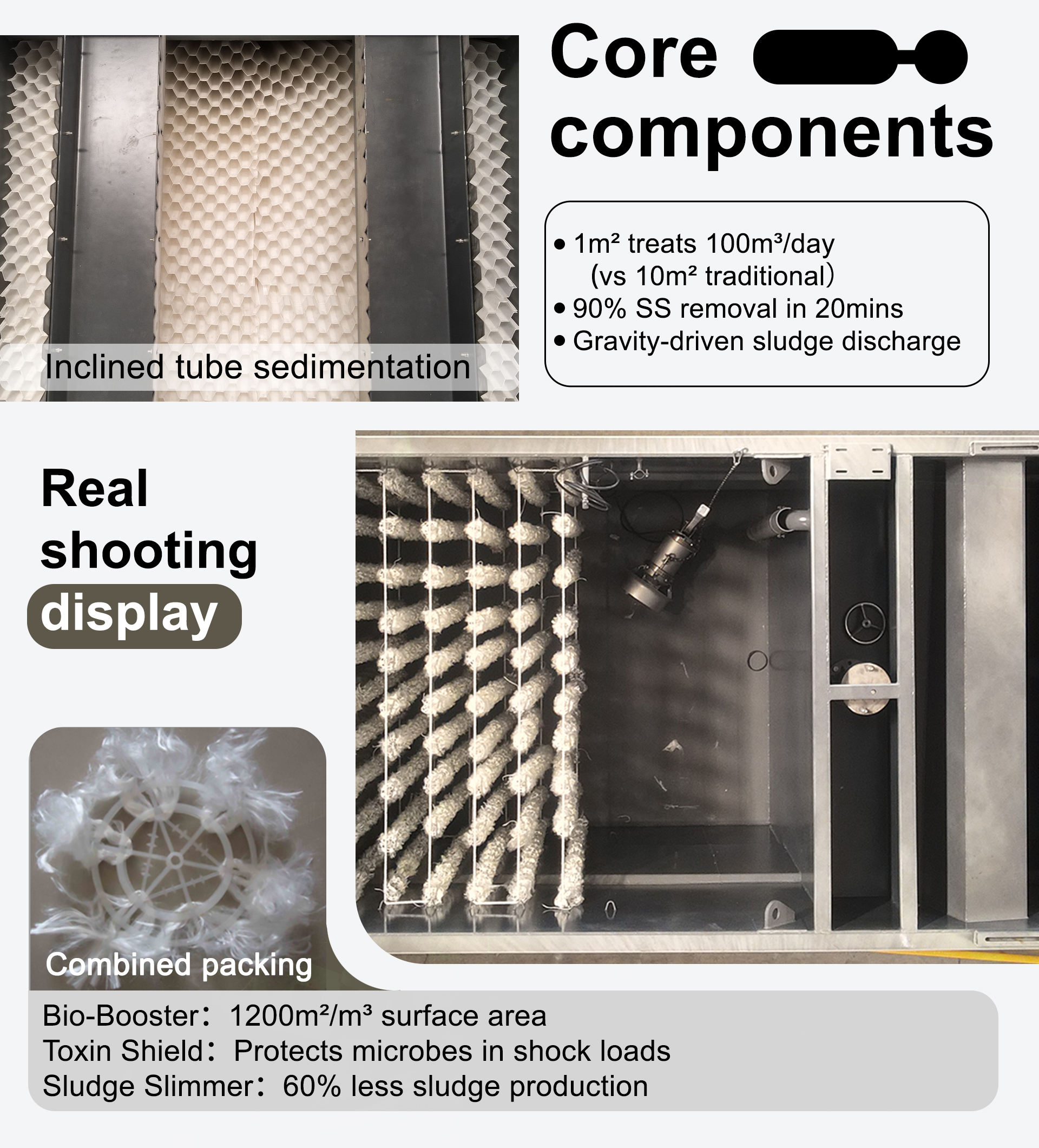
The core of the system is its advanced biofilm technology, utilizing high-performance media that provides an extensive surface area for a robust, attached microbial ecosystem. This offers exceptional resistance to shock loads, temperature variations, and influent fluctuations, ensuring stable nitrification, denitrification, and consistent, high-quality effluent.
Flexible & Scalable Modular Design
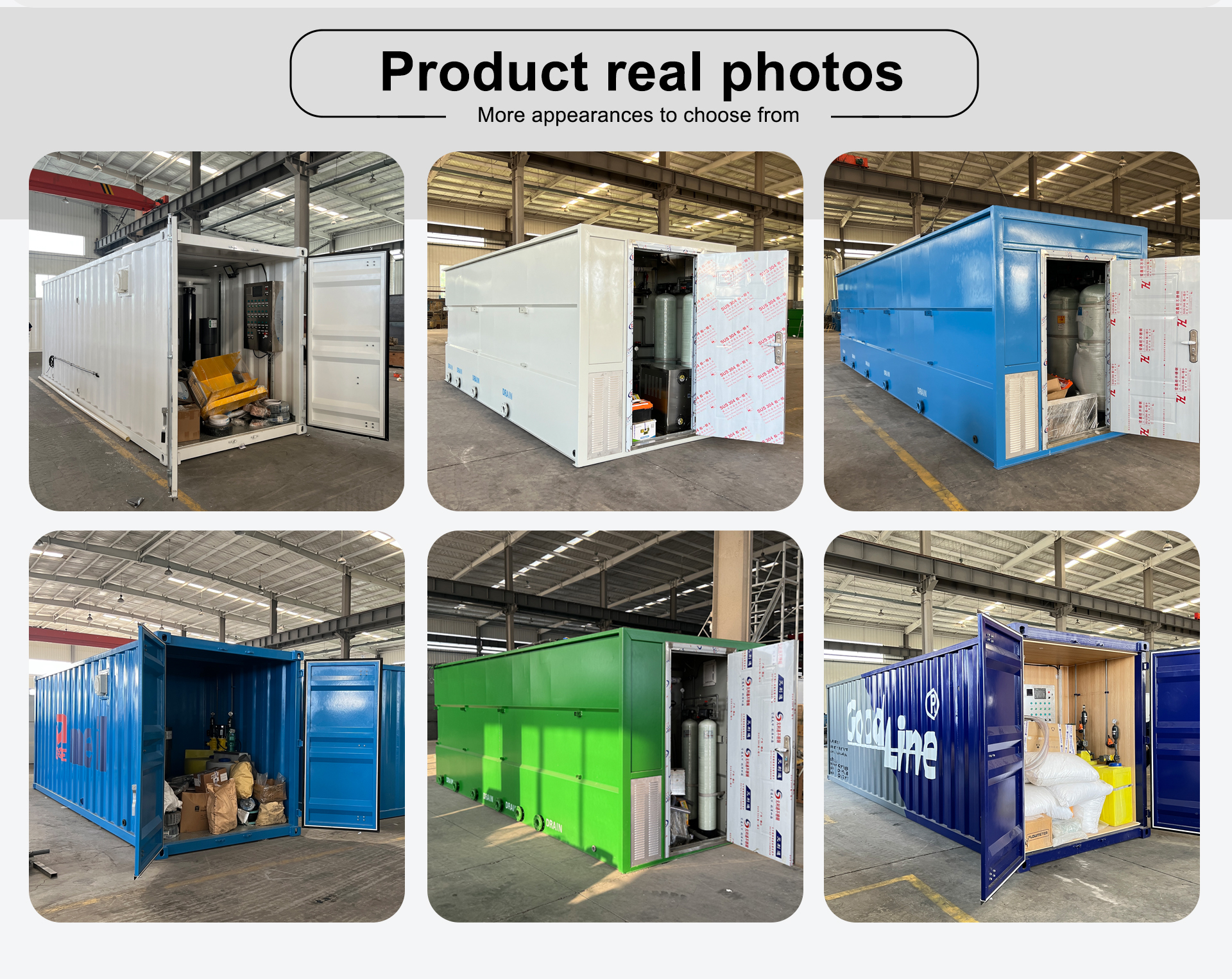
Built on a containerized modular design, each pre-assembled and pre-tested unit allows for rapid deployment and easy capacity expansion by adding modules. This approach significantly reduces civil works, installation time, and upfront investment, providing a highly flexible and scalable solution for growing communities or phased projects.
Smart, Energy-Efficient Operation
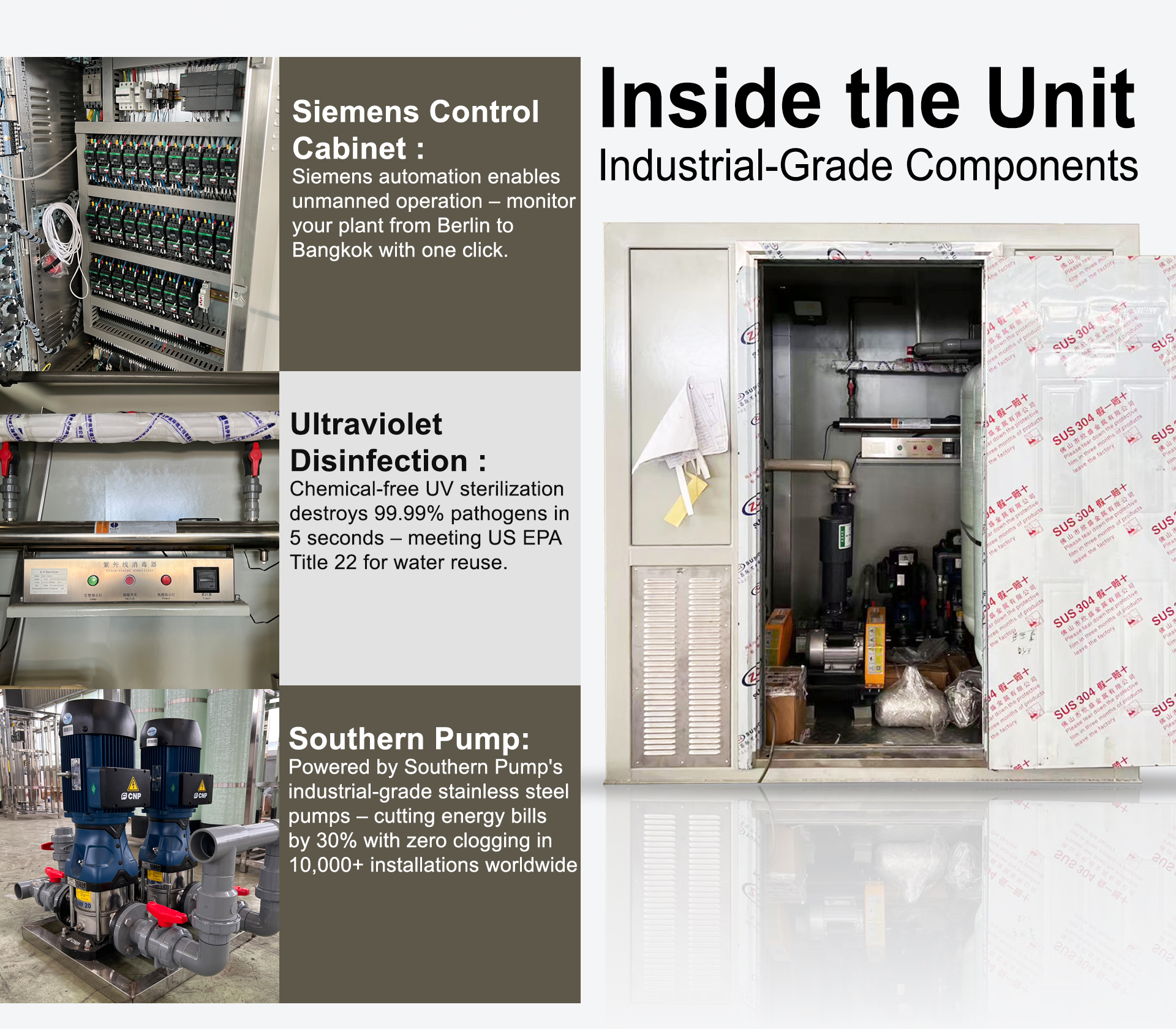
Integrated with an intelligent SCADA control system, the plant enables real-time monitoring, automated process adjustment, and remote management. This IoT-driven system optimizes aeration and chemical dosing, lowers energy consumption, and provides predictive alerts, ensuring efficient, automated operation with reduced need for on-site expertise.
Application Scenarios
Decentralized Municipal Communities
It serves as a perfect decentralized sewage treatment solution for urban expansions, remote towns, or villages lacking sewer networks. Its modular nature allows for installation close to the pollution source, and intelligent controls ensure compliant discharge with minimal operational burden.
Resorts, Hotels & Ecotourism Sites
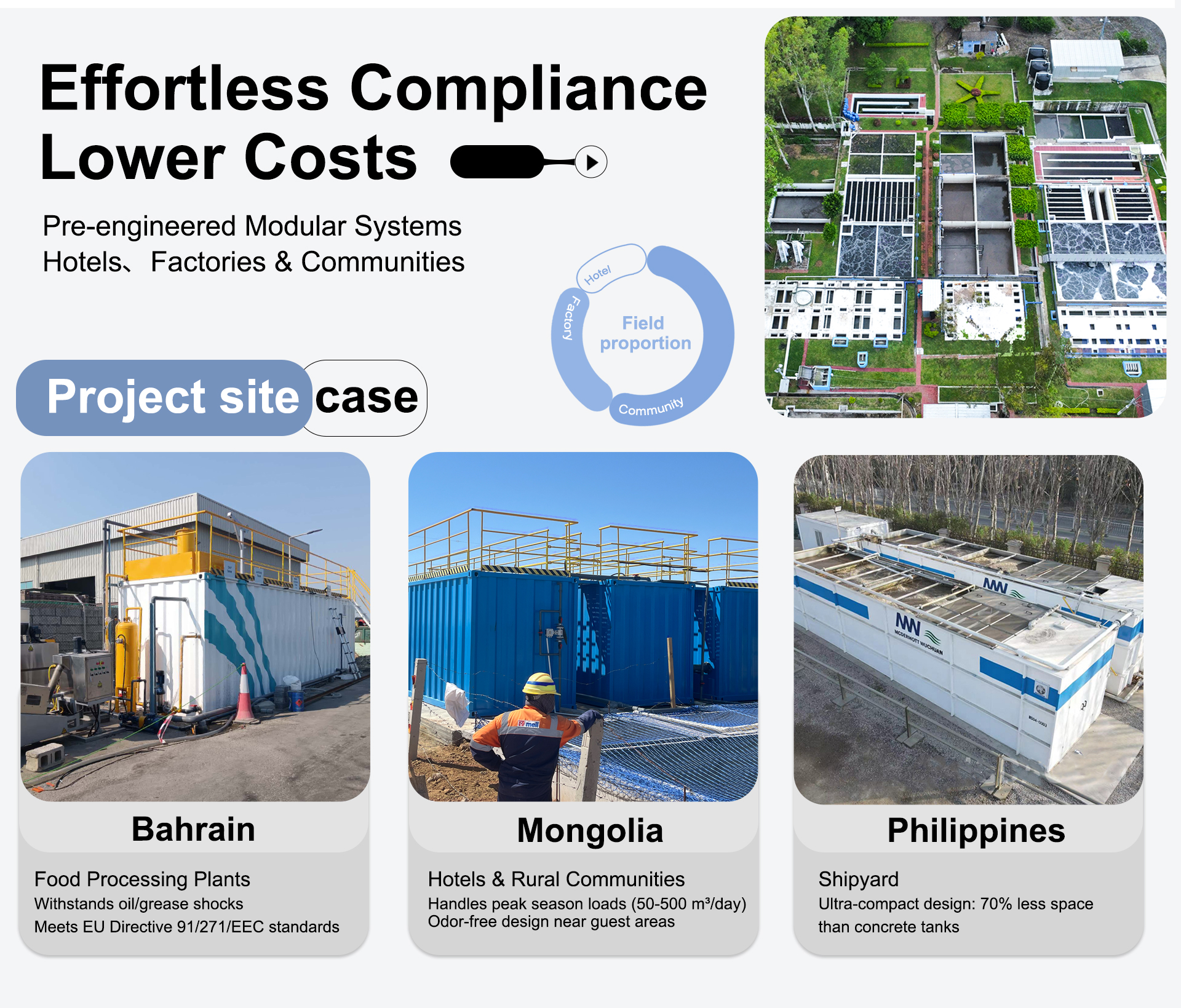
It is ideal for environmentally sensitive locations like island resorts. The compact and efficient system can handle seasonal load variations, and its high - quality effluent enables sustainable water reuse for irrigation, protecting local ecosystems and conserving freshwater.
Industrial Camps & Manufacturing Facilities
It provides reliable pretreatment or full treatment for industrial discharges, such as those from food processing. Its robust biofilm process can handle variable wastewater, and specific configurations can be tailored as a customized industrial treatment unit to meet precise compliance standards.
Plant Retrofit & Capacity Upgrade Projects
It offers an effective retrofit solution for existing plants requiring capacity or performance enhancements. New biofilm modules can be integrated into old infrastructure or added as standalone units, providing a fast - track, cost - effective upgrade path without major reconstruction.
Product Parameters
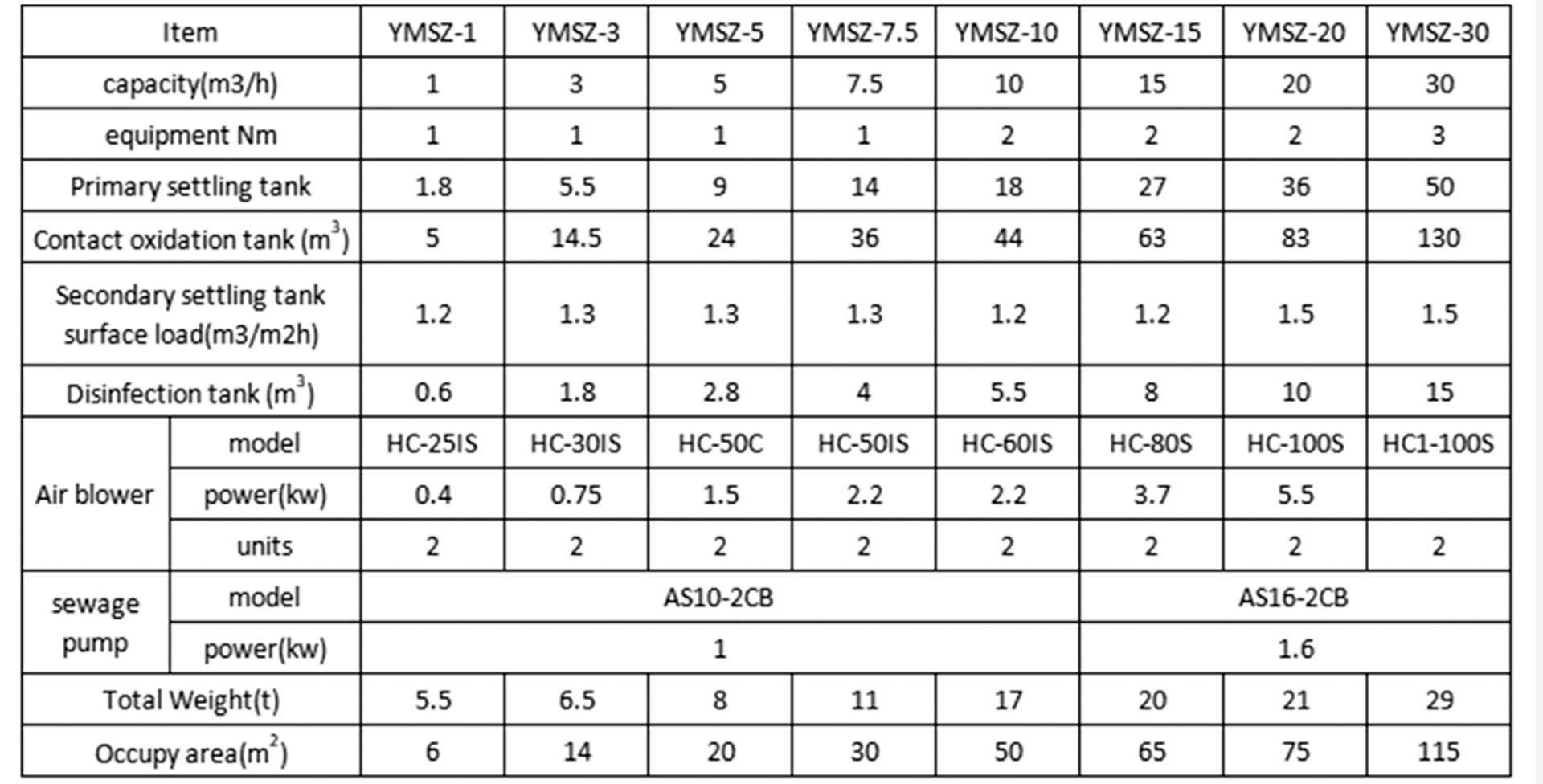
| Item | YMSZ-1 | YMSZ-3 | YMSZ-5 | YMSZ-7.5 | YMSZ-10 | YMSZ-15 | YMSZ-20 | YMSZ-30 | |
| capacity(m3/h) | 1 | 3 | 5 | 7.5 | 10 | 15 | 20 | 30 | |
| equipment Nm | 1 | 1 | 1 | 1 | 2 | 2 | 2 | 3 | |
| Primary settling tank | 1.8 | 5.5 | 9 | 14 | 18 | 27 | 36 | 50 | |
| Contact oxidation tank(m³) | 5 | 14.5 | 24 | 36 | 44 | 63 | 83 | 130 | |
| Secondary settling tank surface load(m3/m2h) | 1.2 | 1.3 | 1.3 | 1.3 | 1.2 | 1.2 | 1.5 | 1.5 | |
| Disinfection tank(m³) | 0.6 | 1.8 | 2.8 | 4 | 5.5 | 8 | 10 | 15 | |
| Air blower | model | HC-25IS | HC-30IS | HC-50C | HC-50IS | HC-60IS | HC-80S | HC-100S | HC1-100S |
| power(kw) | 0.4 | 0.75 | 1.5 | 2.2 | 2.2 | 3.7 | 5.5 | ||
| units | 2 | 2 | 2 | 2 | 2 | 2 | 2 | 2 | |
sewage pump | model | AS10-2CB | AS16-2CB | ||||||
| power(kw) | 1 | 1.6 | |||||||
| Total Weight(t) | 5.5 | 6.5 | 8 | 11 | 17 | 20 | 21 | 29 | |
| Occupy area(m²) | 6 | 14 | 20 | 30 | 50 | 65 | 75 | 115 | |
FAQ
Q: What is the required installation footprint and setup time?
A: As a packaged plant, it is highly compact. Site preparation primarily involves a level concrete base and connection points. The pre-assembled nature allows for commissioning within weeks, not months.
Q: How skilled does the operating staff need to be?
A: The system is designed for ease of use. We provide comprehensive training and a detailed manual. The automated control system handles most process adjustments, requiring only routine monitoring from the operator.
Q: Can it handle fluctuating wastewater flow and composition, common in industrial settings?
A: Yes. The hybrid biological process is renowned for its stability and resilience to shock loads, making our Industry Wastewater Packaged Sewage Treatment Plant ideal for variable industrial discharges.
Q: What are the advantages of the Stainless Steel MBR model?
A: The Stainless Steel MBR Packaged Sewage Treatment Plant offers the highest effluent quality via membrane filtration, a smaller footprint, and maximum durability. It is the premium choice for strict discharge standards and corrosive environments
Q: How do you support clients in remote locations?
A: We offer remote troubleshooting support via video call and a network of local partners. The design prioritizes ease of maintenance, and we ensure critical spare parts are readily available.



Product Introduction |
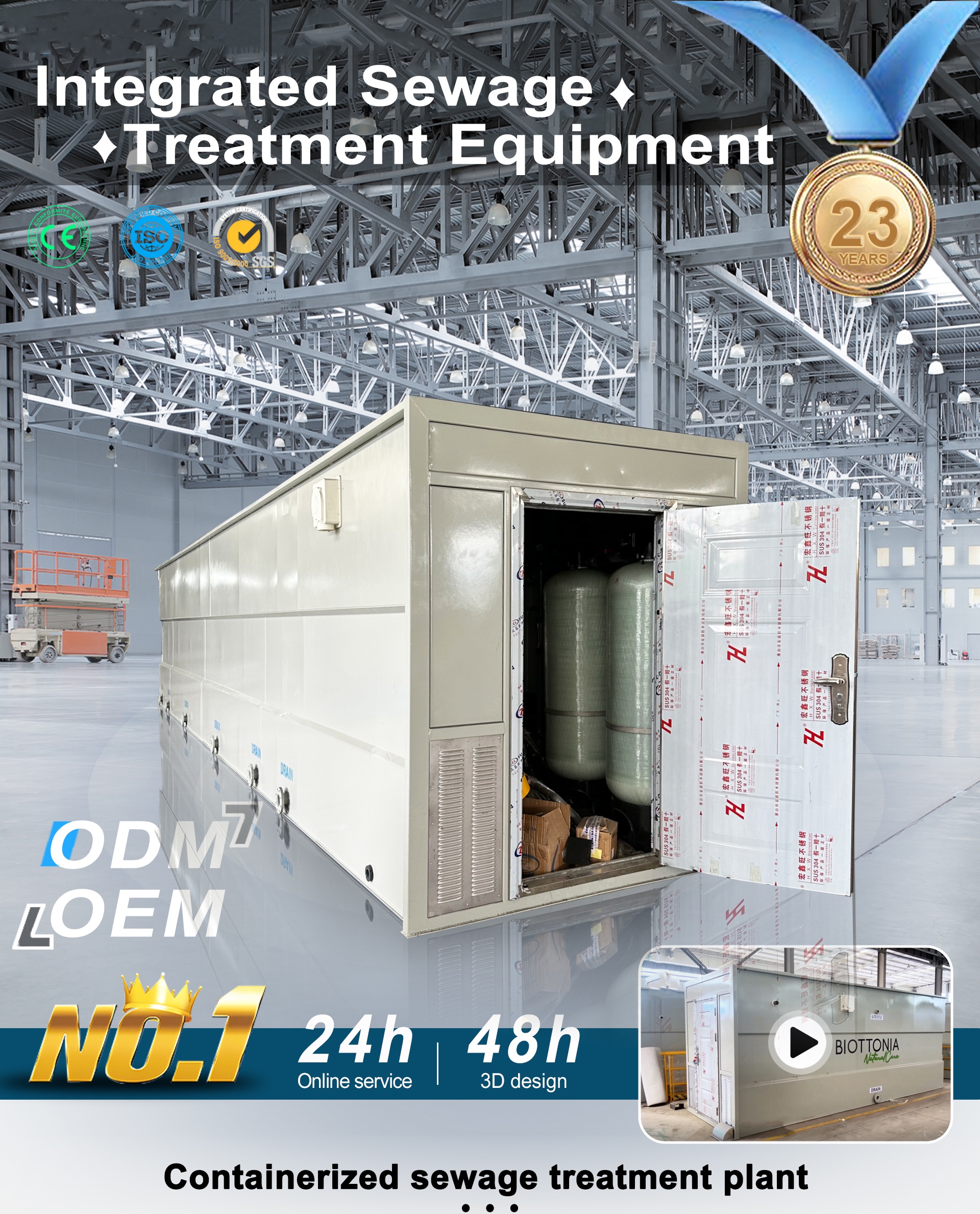
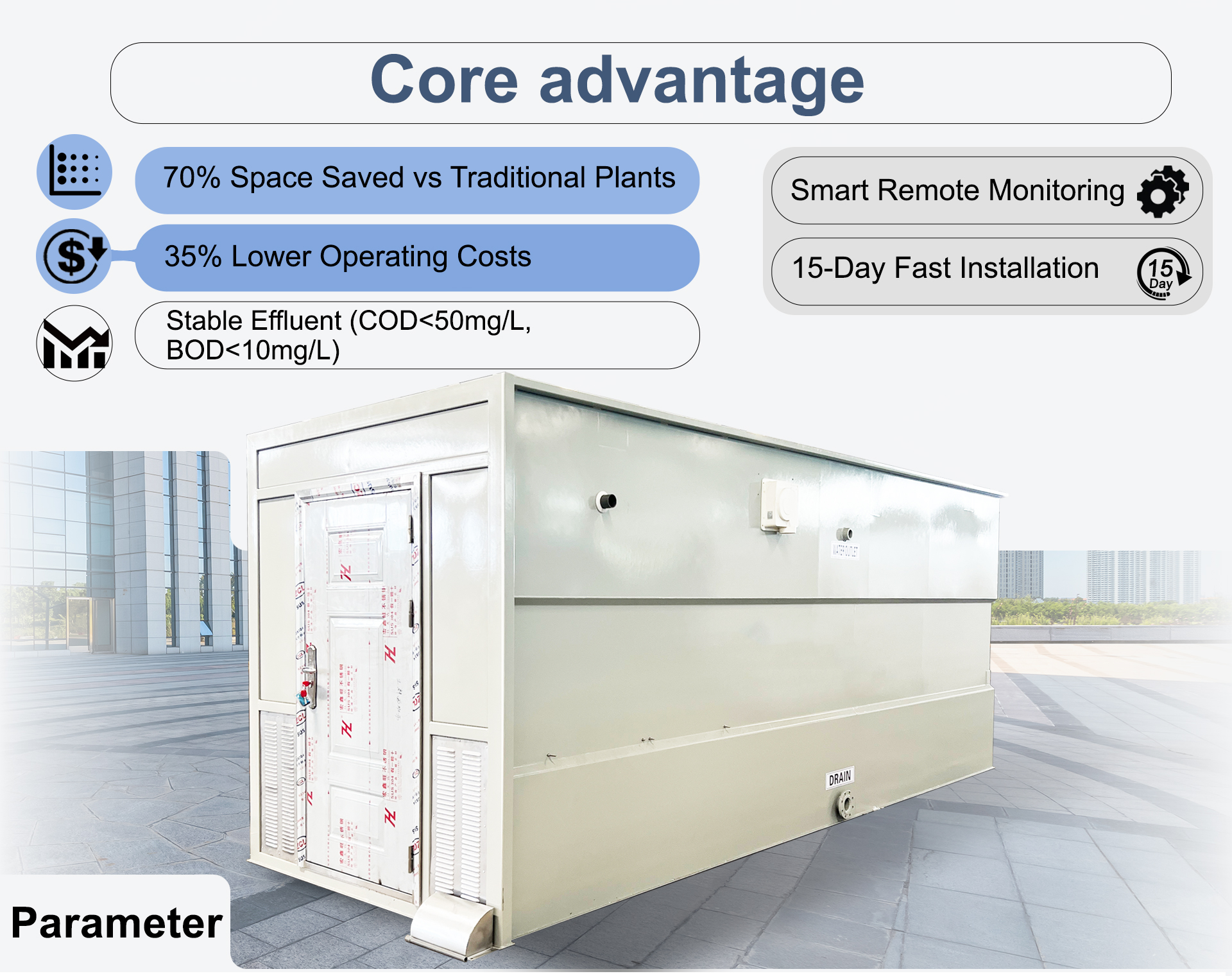
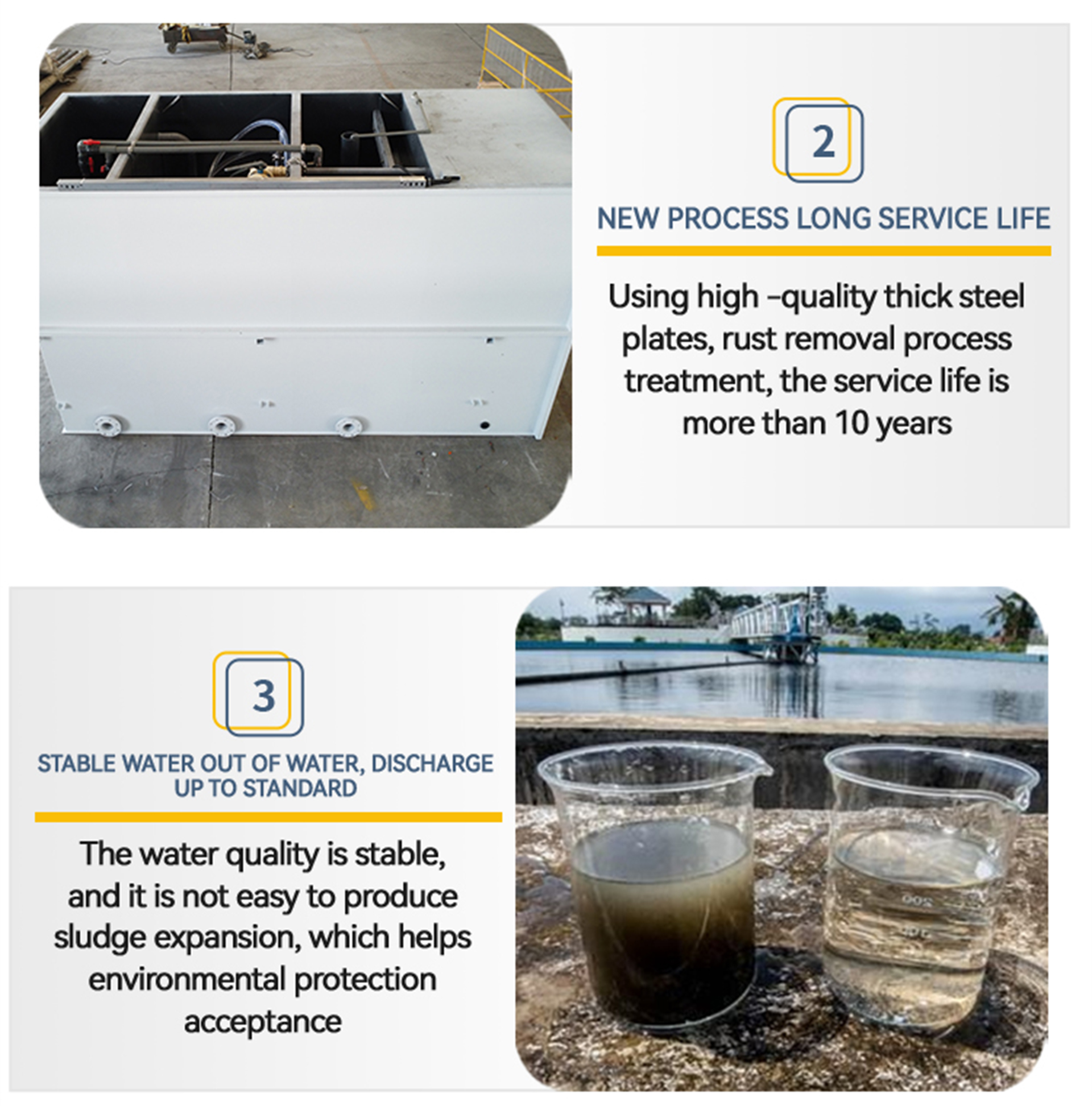
The Modular Biofilm Intelligent Packaged Sewage Treatment Plant is a prefabricated biological wastewater treatment system combining fixed biofilm technology, modular construction, and intelligent process control. It is designed for decentralized wastewater projects that require stable biological treatment, flexible capacity planning, and simplified operation.
At the core of the system is a fixed biofilm process. High-performance biological media provides a large surface area for microorganisms to attach and form a stable microbial ecosystem. Instead of relying only on suspended biological solids, the attached-growth environment helps retain active microorganisms within the treatment process and supports biological removal of BOD, COD, and nutrients.
The biofilm configuration is particularly useful where wastewater characteristics are not completely stable. The product is designed to tolerate shock loading, temperature variations, and changes in influent conditions while maintaining biological activity. The process supports both nitrification and denitrification, allowing the treatment system to address organic pollutants as well as nutrient-removal requirements.
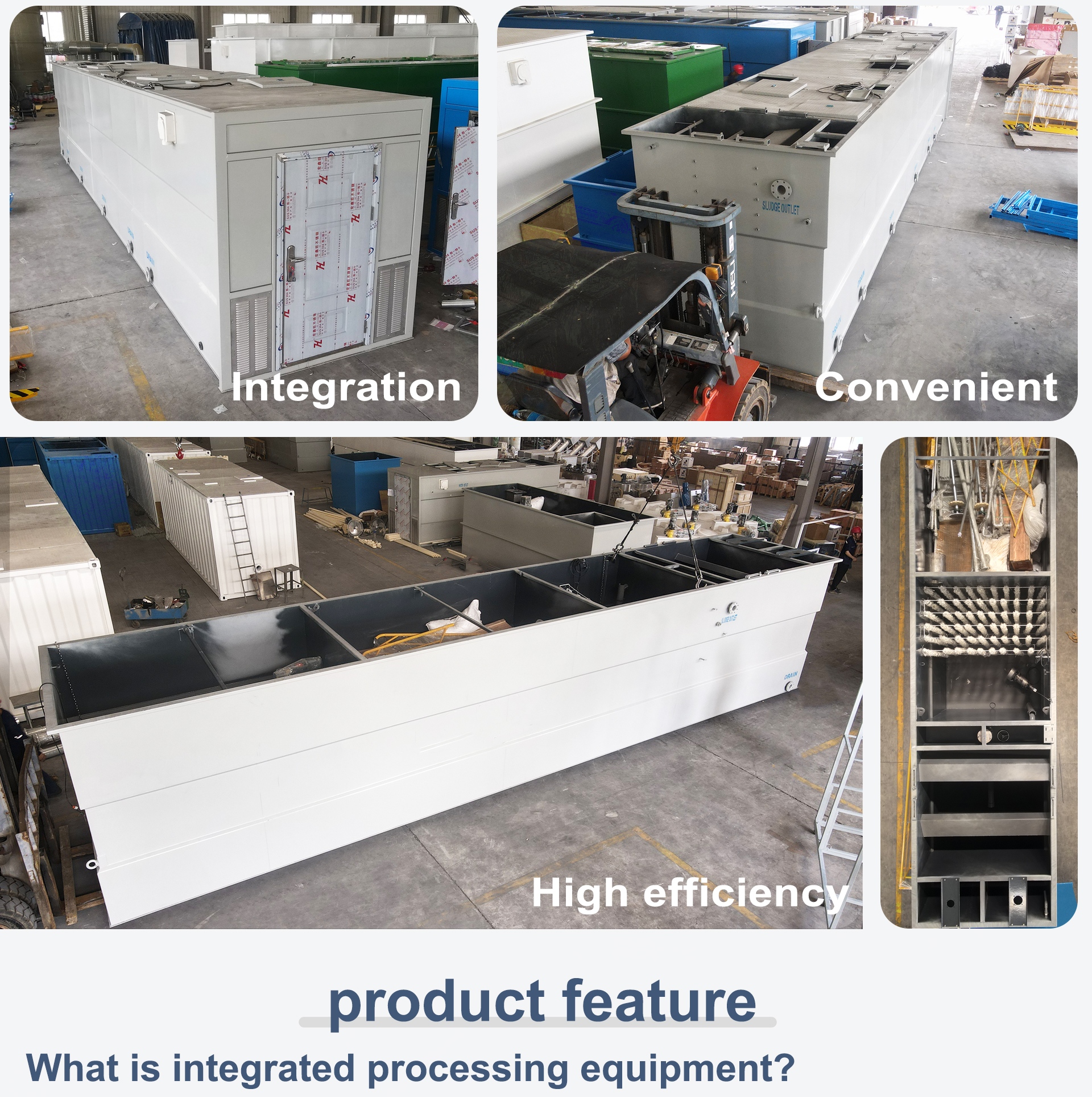
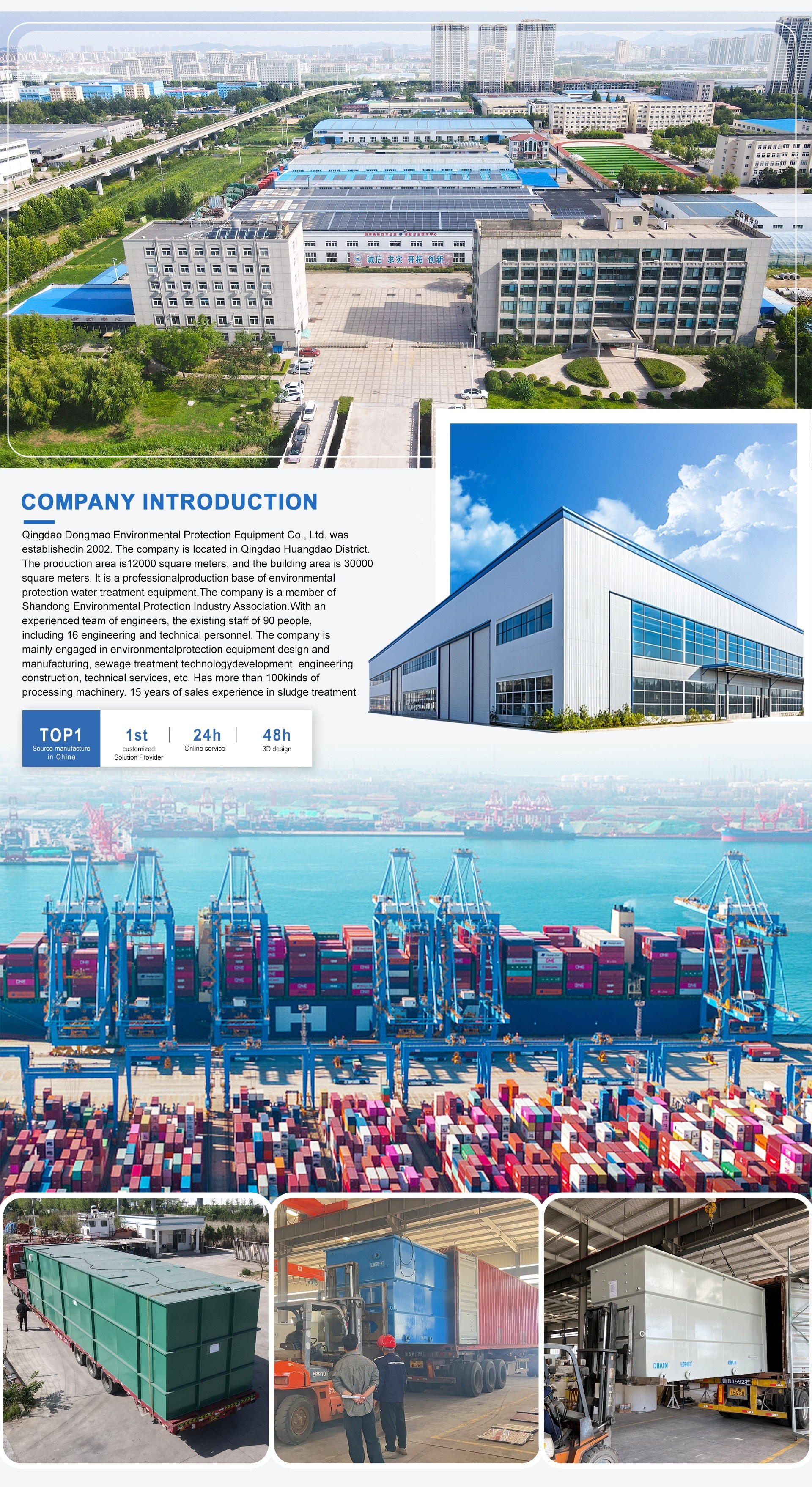
Another major feature is its modular packaged structure. Each treatment unit is pre-assembled and pre-tested before delivery and can be combined with additional modules when more treatment capacity is required. This gives project owners the option to install capacity according to current wastewater flow and expand the system later as a community, resort, industrial camp, or other facility develops.
The intelligent SCADA control system adds another level of operational management. Real-time monitoring, automatic process adjustment, remote management, aeration optimization, chemical dosing control, and predictive alerts are integrated into the treatment concept. This helps reduce dependence on continuous manual adjustment while providing operators with better visibility of system conditions.
The YMSZ series offers treatment capacities from 1 to 30 m³/h. Its combination of biological stability, modular expansion, intelligent controls, and prefabricated construction makes it particularly suitable for decentralized municipal sewage treatment, resorts and hotels, industrial facilities, and wastewater plant retrofit projects.
Product Parameters
Item | YMSZ-1 | YMSZ-3 | YMSZ-5 | YMSZ-7.5 | YMSZ-10 | YMSZ-15 | YMSZ-20 | YMSZ-30 | |
capacity(m3/h) | 1 | 3 | 5 | 7.5 | 10 | 15 | 20 | 30 | |
equipment Nm | 1 | 1 | 1 | 1 | 2 | 2 | 2 | 3 | |
Primary settling tank | 1.8 | 5.5 | 9 | 14 | 18 | 27 | 36 | 50 | |
Contact oxidation tank(m³) | 5 | 14.5 | 24 | 36 | 44 | 63 | 83 | 130 | |
Secondary settling tank | 1.2 | 1.3 | 1.3 | 1.3 | 1.2 | 1.2 | 1.5 | 1.5 | |
Disinfection tank(m³) | 0.6 | 1.8 | 2.8 | 4 | 5.5 | 8 | 10 | 15 | |
Air blower | model | HC-25IS | HC-30IS | HC-50C | HC-50IS | HC-60IS | HC-80S | HC-100S | HC1-100S |
power(kw) | 0.4 | 0.75 | 1.5 | 2.2 | 2.2 | 3.7 | 5.5 | ||
units | 2 | 2 | 2 | 2 | 2 | 2 | 2 | 2 | |
| model | AS10-2CB | AS16-2CB | ||||||
power(kw) | 1 | 1.6 | |||||||
Total Weight(t) | 5.5 | 6.5 | 8 | 11 | 17 | 20 | 21 | 29 | |
Occupy area(m²) | 6 | 14 | 20 | 30 | 50 | 65 | 75 | 115 | |
Features & Advantages |
Fixed biofilm technology is the main biological characteristic of this packaged sewage treatment plant.
Specialized carrier media provides a large surface area where microorganisms can attach and develop into a stable biofilm. Keeping a significant microbial population attached to the media helps retain biological activity within the reactor instead of depending entirely on suspended biomass.
This attached-growth environment provides a more stable microbial ecosystem for wastewater treatment.
The product is designed to support biological removal of BOD, COD, and nutrients while maintaining stable treatment under changing influent conditions.
Decentralized wastewater plants do not always receive a completely uniform influent.
Wastewater flow and pollutant concentration can change because of occupancy, production schedules, seasonal demand, or changes in the connected facilities.
The biofilm process is specifically designed to provide resistance to shock loading and influent fluctuations. Because microorganisms remain attached to the biological media, the active biological population can be retained within the reactor when wastewater conditions change.
This characteristic makes the system suitable for locations where wastewater loading is less predictable than in a continuously operated centralized sewage treatment facility.
Temperature changes can influence biological wastewater treatment because microbial activity depends on the operating environment.
The product page identifies resistance to temperature variation as one of the characteristics of the biofilm system.
The attached microbial ecosystem is designed to maintain stable biological treatment under changing conditions, supporting more consistent operation in decentralized installations exposed to seasonal wastewater or environmental variations.
The biological system is designed to support both nitrification and denitrification.
These processes are important for nitrogen removal in wastewater treatment.
Nitrification biologically converts ammonia nitrogen through aerobic microbial activity, while denitrification provides the complementary biological pathway required for further nitrogen removal under suitable process conditions.
By incorporating these biological processes into the packaged system, the plant is designed for wastewater projects that require treatment of nutrients in addition to general organic pollutants.
The system uses a containerized modular construction concept.
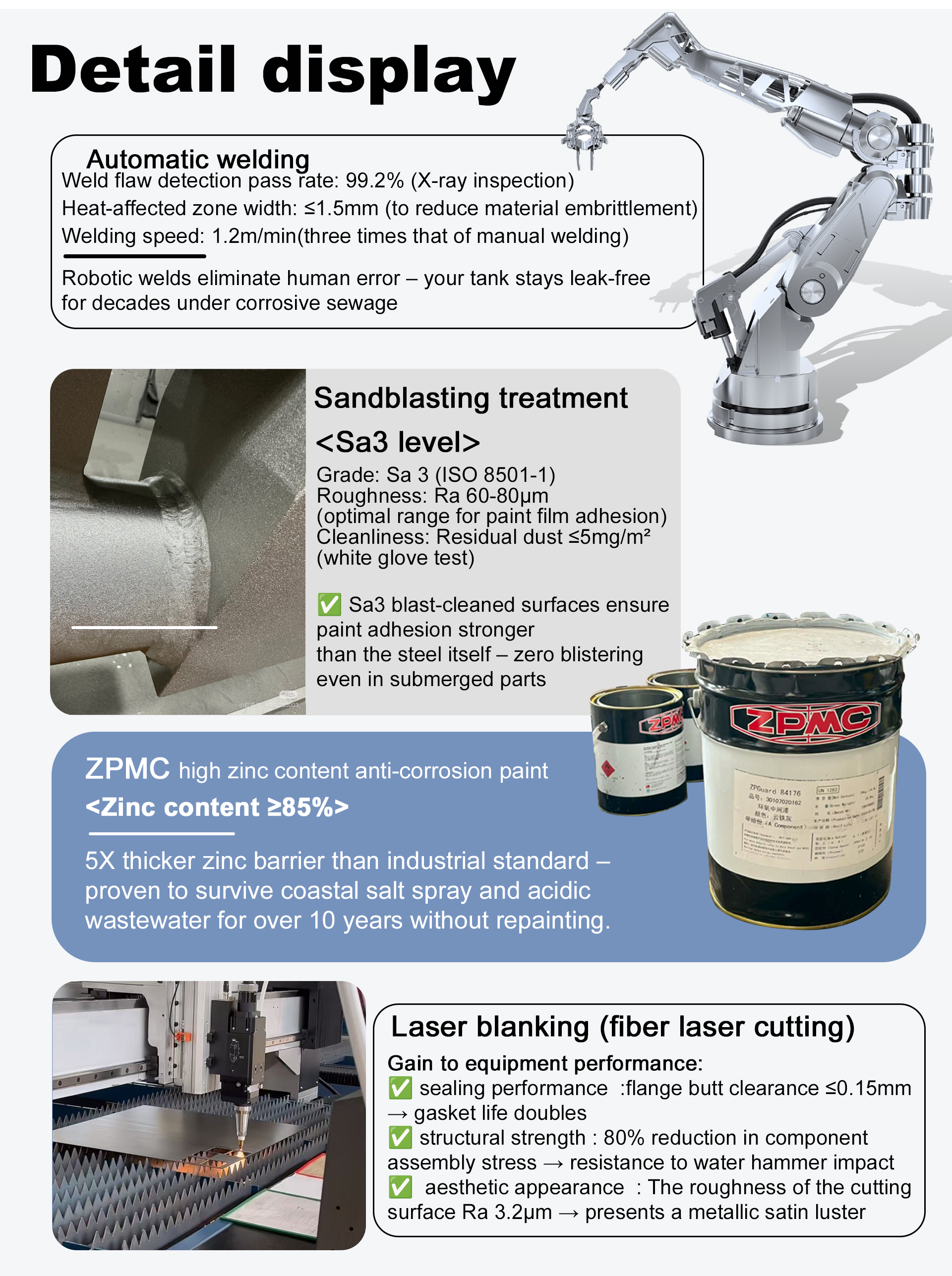
Each treatment module is pre-assembled and pre-tested before shipment, reducing the amount of equipment fabrication required after delivery to the project site.
The modular format also makes capacity planning more flexible.
Instead of installing a large final-capacity wastewater plant at the beginning of a project, treatment modules can be selected according to the current wastewater load.
Additional modules can then be added when treatment demand increases.
This approach is especially useful for phased developments, expanding communities, growing resorts, and industrial facilities where wastewater volume may increase gradually.
Capacity expansion is one of the strongest differences between this model and a fixed-size conventional treatment plant.
When additional wastewater treatment capacity is required, further biofilm treatment modules can be incorporated into the system.
This can reduce the need for major reconstruction when a project expands.
The modular design is therefore suitable for facilities that want wastewater treatment infrastructure to grow alongside actual demand rather than installing unnecessary capacity at the first project stage.
The packaged plant includes an intelligent SCADA control system for process management.
The control platform supports real-time monitoring of treatment operation and automatic process adjustment.
Operators can use the control system to review plant status and manage important operating functions rather than depending entirely on manual observation and adjustment.
For decentralized installations, this can simplify operation where specialist wastewater personnel are not permanently present at every site.
Remote management is integrated into the intelligent control concept.
This allows treatment personnel to supervise system operation without remaining continuously beside the equipment.
Remote access is particularly useful for companies or operators responsible for multiple decentralized treatment plants.
For example, several resorts, remote communities, or industrial locations may be supervised through a more centralized operating arrangement while local personnel perform routine physical inspections and maintenance.
Aeration is one of the major operating requirements of biological wastewater treatment.
The intelligent control system is designed to optimize aeration according to treatment conditions rather than treating aeration simply as a fixed manual operating function.
Controlling aeration more precisely helps support the biological process while reducing unnecessary operation of aeration equipment.
This forms part of the product's intelligent and energy-efficient operating concept.
The SCADA-based control system can also optimize chemical dosing where chemical addition is incorporated into the treatment configuration.
Instead of depending only on fixed manual adjustment, dosing can be managed as part of the overall intelligent treatment process.
This provides more coordinated operation between biological treatment and supporting process functions.
The intelligent control platform includes predictive alert functions.
These alerts help operators identify operating conditions that require attention before they develop into larger treatment problems.
For decentralized plants with limited on-site staffing, alerts provide an additional layer of operating visibility and allow maintenance or technical personnel to respond more efficiently.
The published YMSZ series includes:
YMSZ-1: 1 m³/h
YMSZ-3: 3 m³/h
YMSZ-5: 5 m³/h
YMSZ-7.5: 7.5 m³/h
YMSZ-10: 10 m³/h
YMSZ-15: 15 m³/h
YMSZ-20: 20 m³/h
YMSZ-30: 30 m³/h
This range provides multiple starting points for different wastewater treatment projects.
The number of equipment modules also increases with capacity. YMSZ-1 through YMSZ-7.5 use one equipment unit, YMSZ-10 through YMSZ-20 use two units, and YMSZ-30 uses three units.
The published model data include primary settling, contact oxidation, secondary settling, and disinfection sections.
Primary settling tank capacity increases from 1.8 on the YMSZ-1 configuration to 50 on YMSZ-30.
The listed contact oxidation tank volume increases from 5 m³ to 130 m³ across the model range.
The secondary settling tank surface load is listed between 1.2 and 1.5 m³/m²·h depending on the model.
Disinfection tank volume ranges from 0.6 m³ on YMSZ-1 to 15 m³ on YMSZ-30.
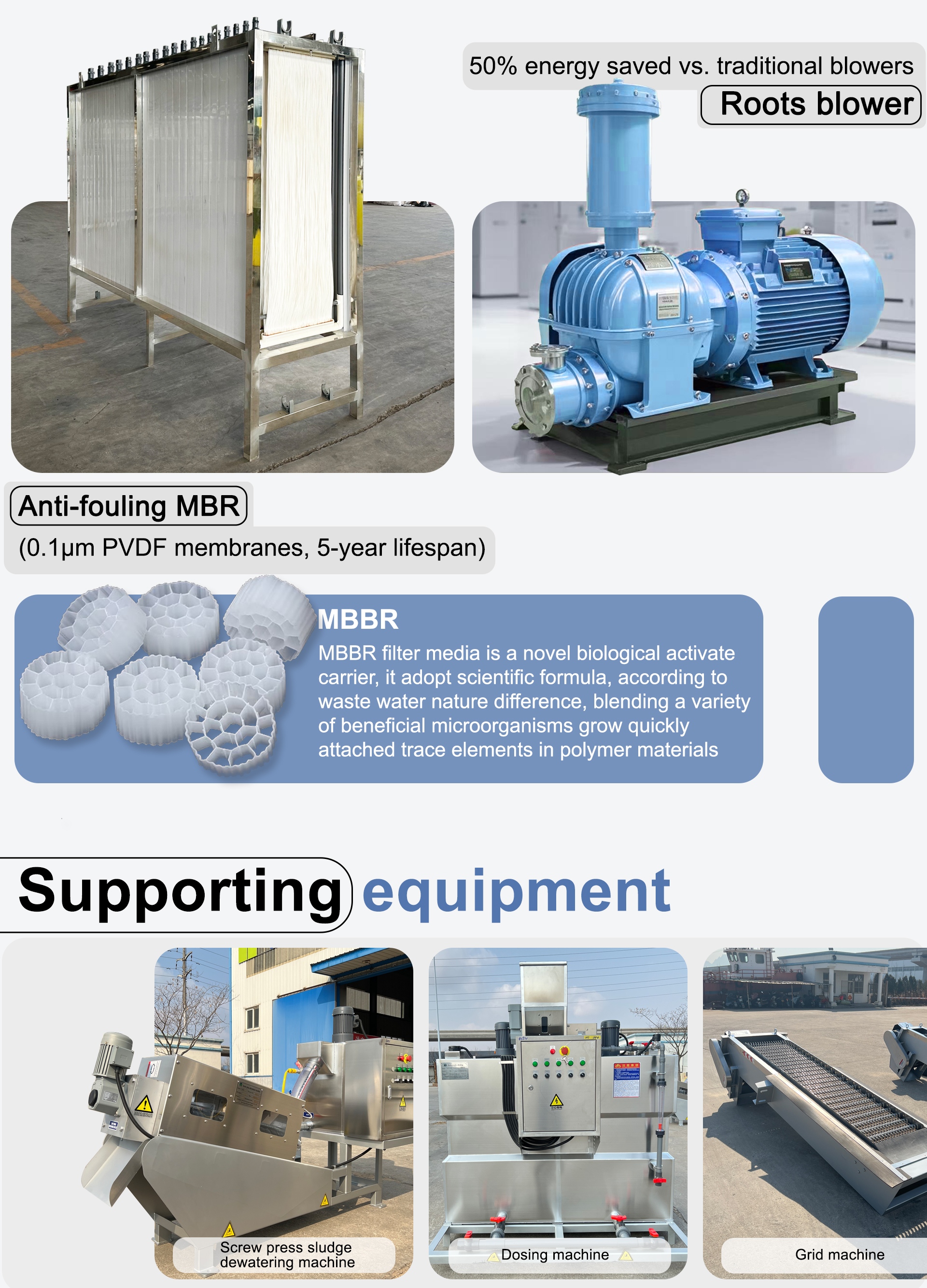
Air blowers and sewage pumps are also included in the published equipment configuration.
These different model sizes allow the packaged treatment system to be selected according to wastewater flow and project scale.
Applications |
The modular biofilm plant is suitable for decentralized sewage treatment in urban expansion areas, remote towns, and villages that do not have access to an established sewer network.
Instead of transporting sewage over long distances to a centralized municipal plant, treatment modules can be installed closer to the wastewater source.
This approach can be particularly useful where population development has moved beyond the existing municipal sewer infrastructure.
The modular system allows initial treatment capacity to be selected according to current community demand.
If the connected population increases later, additional modules can be added to increase total treatment capacity.
Intelligent controls also reduce the operational burden at remote or decentralized sites where specialist wastewater staff may be limited.
For phased residential developments, wastewater volume often increases gradually as additional buildings become occupied.
Installing full future treatment capacity during the first development stage may not always be necessary.
The modular biofilm configuration provides an alternative approach. Treatment capacity can be expanded by adding units as the wastewater load increases.
This allows the wastewater treatment infrastructure to develop together with the residential project.
Resorts and hotels are another important application for the modular biofilm treatment system.
Hospitality wastewater loads may change significantly according to occupancy, tourism seasons, weekends, or special events.
The biofilm process is designed to resist influent fluctuations, making it relevant where wastewater loading is not constant throughout the year.
The compact packaged layout also helps resorts allocate less site area to wastewater treatment infrastructure.
The product page specifically identifies environmentally sensitive locations such as island resorts and ecotourism developments.
These sites may lack centralized sewer networks and can face practical limitations on conventional wastewater plant construction.
Prefabricated treatment modules reduce the amount of equipment assembly required at the final location.
The product page also identifies treated-water reuse for irrigation as an application, allowing treated effluent to form part of a more sustainable local water-management strategy.
Industrial camps can generate domestic and operational wastewater in remote locations where municipal sewer infrastructure is unavailable.
A packaged biological treatment system allows wastewater to be treated directly at the camp.
The modular architecture is particularly useful because industrial camps may expand or contract according to project phases.
Treatment capacity can therefore be planned around the current site population and expanded when additional accommodation or facilities are added.
The system can also be configured for selected manufacturing wastewater applications.
The product page specifically identifies food-processing wastewater as one example.
The stable biofilm process is intended to handle variable wastewater characteristics, making it relevant where production conditions cause changes in influent flow or pollutant concentration.
For industrial projects, the treatment configuration should be matched to the actual wastewater characteristics and required treatment objective.
Food-processing facilities can experience variable wastewater loads according to production schedules, cleaning cycles, and raw material processing.
The biofilm system provides an attached microbial population designed to remain stable when influent conditions fluctuate.
Depending on the complete treatment requirement, the packaged system can be incorporated as either a pretreatment stage or a complete biological wastewater treatment solution.
The system is also designed for existing wastewater treatment plants that require improved capacity or biological treatment performance.
Instead of rebuilding the complete treatment facility, new biofilm modules can be integrated into existing infrastructure.
This allows plant owners to add biological treatment capacity while continuing to use suitable parts of the original treatment system.
Where wastewater flow has increased beyond the original plant design capacity, additional modular treatment units can be installed as standalone systems or connected to the existing treatment process.
This expansion approach can reduce the amount of major reconstruction required compared with replacing the complete wastewater treatment plant.
For municipal and industrial facilities expecting future growth, this modular upgrade capability can simplify long-term treatment planning.
FAQs |
The plant uses fixed biofilm technology. High-performance carrier media provides surface area for microorganisms to attach and form a stable microbial ecosystem for biological wastewater treatment.
The product page identifies biological treatment of BOD, COD, and nutrients as the main treatment objectives.
Yes. The product is specifically designed to resist shock loading, temperature variation, and influent fluctuations.
Yes. The biofilm process is designed to support both nitrification and denitrification.
The plant consists of pre-assembled and pre-tested treatment modules. Additional modules can be added when more wastewater treatment capacity is required.
Yes. Capacity expansion is one of the main advantages of the modular design. Additional modules can be installed as wastewater flow increases.
The YMSZ series includes capacities of 1, 3, 5, 7.5, 10, 15, 20, and 30 m³/h.
Yes. The plant is equipped with an intelligent SCADA control system that supports real-time monitoring, automatic process adjustment, and remote management.
Yes. Remote management is one of the stated functions of the intelligent control system.
The product page specifically identifies aeration and chemical dosing optimization as part of the intelligent control system.
Yes. Predictive alerts are included as part of the intelligent control concept to help operators identify conditions that require attention.
The product is suitable for decentralized urban expansion areas, remote towns, villages, and other communities without convenient access to centralized sewer networks.
Yes. Resorts, hotels, island resorts, and ecotourism locations are specifically identified as suitable applications.
The product page identifies water reuse for irrigation as an application, particularly for resorts and environmentally sensitive locations.
The product is identified for industrial camps and selected manufacturing facilities. Food-processing wastewater is specifically mentioned as an example.
Yes. New biofilm modules can be integrated into existing infrastructure or installed as standalone units to increase treatment capacity or improve treatment performance.
According to the product FAQ, site preparation mainly involves a level concrete base and suitable connection points for the packaged treatment plant.
The system is designed for automated operation. The SCADA system handles many process adjustments, while operators mainly perform routine monitoring and maintenance.
Yes. The product page states that remote troubleshooting by video call is available, together with support through local partners and access to critical spare parts.
Product Showcase |