| Availability: | |
|---|---|
| Quantity: | |
Key Features & Advantages
1. Fully Automatic, Intelligent Operation
This plant features a comprehensive Fully Automatic Control System that manages the entire treatment process, including aeration cycles, sludge return, and alarms. This Intelligent Packaged Sewage Plant enables Unattended Sewage Treatment Operation, significantly reducing the need for daily manual oversight. Remote monitoring capabilities provide real-time data access and control, ensuring optimal performance and peace of mind for operators.
2. Ultra-Compact, Space-Saving Design
Engineered with a Space-Saving Compact Treatment Plant design, it delivers maximum treatment capacity within a minimal footprint. Its highly integrated, Prefabricated Compact Sewage Unit is ideal for sites with severe space constraints or where excavation is difficult. This compact nature simplifies transportation, reduces civil work costs, and allows for flexible, rapid installation in diverse locations.
3. Robust & Efficient Extended Aeration Process
The core utilizes the proven Extended Aeration Sewage Treatment technology. This process provides long aeration times for superior organic matter degradation and effective sludge stabilization. It results in Highly Stable Effluent Quality, excellent nitrification, and significantly lower sludge production compared to conventional activated sludge systems, offering a simpler and more resilient biological treatment solution.
Application Scenarios
1. Small Residential Communities & Housing Estates
Perfect for housing developments, apartment complexes, or gated communities without access to municipal sewers. Its automatic operation and stable performance provide a hands-free, reliable sanitation solution for neighborhood-scale wastewater management.
2. Tourism Facilities: Campsites, Motels & Marinas
Well-suited for seasonal or permanent tourist accommodations like roadside motels, campgrounds, or marina facilities. The system's compact size fits limited spaces, and its automated design handles variable loads with minimal daily management from staff.
3. Educational & Institutional Campuses
Ideal for schools, military barracks, or correctional facilities. The durable extended aeration process and automated controls ensure consistent compliance with minimal specialized maintenance, providing a set-and-forget infrastructure asset.
4. Small Industrial Parks & Commercial Hubs
Serves clusters of light commercial buildings, food kiosks, or small workshops. It acts as a centralized treatment unit for communal wastewater, offering a compact and automatic alternative to individual septic systems for business districts.
Product Parameters
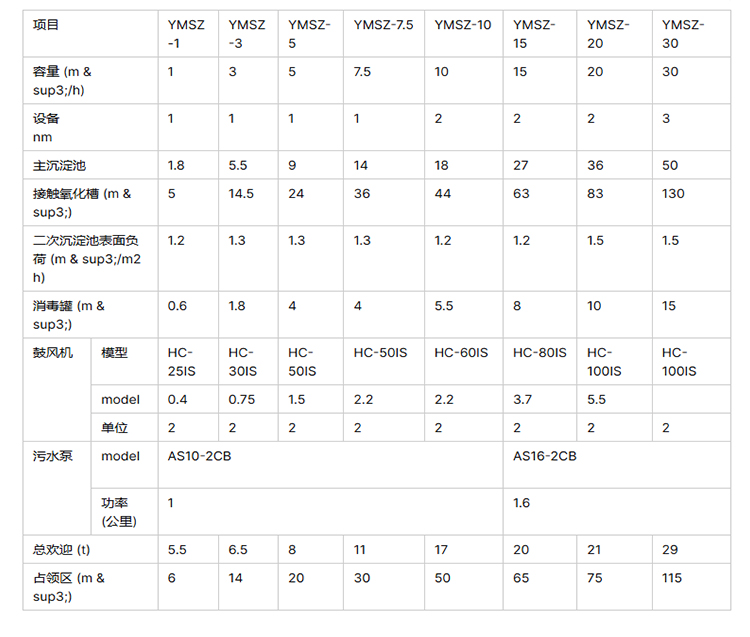
Item | YMSZ-1 | YMSZ-3 | YMSZ-5 | YMSZ-7.5 | YMSZ-10 | YMSZ-15 | YMSZ-20 | YMSZ-30 | |
capacity(m3/h) | 1 | 3 | 5 | 7.5 | 10 | 15 | 20 | 30 | |
equipment Nm | 1 | 1 | 1 | 1 | 2 | 2 | 2 | 3 | |
Primary settling tank | 1.8 | 5.5 | 9 | 14 | 18 | 27 | 36 | 50 | |
Contact oxidation tank(m³) | 5 | 14.5 | 24 | 36 | 44 | 63 | 83 | 130 | |
Secondary settling tank | 1.2 | 1.3 | 1.3 | 1.3 | 1.2 | 1.2 | 1.5 | 1.5 | |
Disinfection tank(m³) | 0.6 | 1.8 | 2.8 | 4 | 5.5 | 8 | 10 | 15 | |
Air blower | model | HC-25IS | HC-30IS | HC-50C | HC-50IS | HC-60IS | HC-80S | HC-100S | HC1-100S |
power(kw) | 0.4 | 0.75 | 1.5 | 2.2 | 2.2 | 3.7 | 5.5 | ||
units | 2 | 2 | 2 | 2 | 2 | 2 | 2 | 2 | |
sewage | model | AS10-2CB | AS16-2CB | ||||||
power(kw) | 1 | 1.6 | |||||||
Total Weight(t) | 5.5 | 6.5 | 8 | 11 | 17 | 20 | 21 | 29 | |
Occupy area(m²) | 6 | 14 | 20 | 30 | 50 | 65 | 75 | 115 | |
FAQ
Q: What is the required installation footprint and setup time?
A: As a packaged plant, it is highly compact. Site preparation primarily involves a level concrete base and connection points. The pre-assembled nature allows for commissioning within weeks, not months.
Q: How skilled does the operating staff need to be?
A: The system is designed for ease of use. We provide comprehensive training and a detailed manual. The automated control system handles most process adjustments, requiring only routine monitoring from the operator.
Q: Can it handle fluctuating wastewater flow and composition, common in industrial settings?
A: Yes. The hybrid biological process is renowned for its stability and resilience to shock loads, making our Industry Wastewater Packaged Sewage Treatment Plant ideal for variable industrial discharges.
Q: What are the advantages of the Stainless Steel MBR model?
A: The Stainless Steel MBR Packaged Sewage Treatment Plant offers the highest effluent quality via membrane filtration, a smaller footprint, and maximum durability. It is the premium choice for strict discharge standards and corrosive environments
Q: How do you support clients in remote locations?
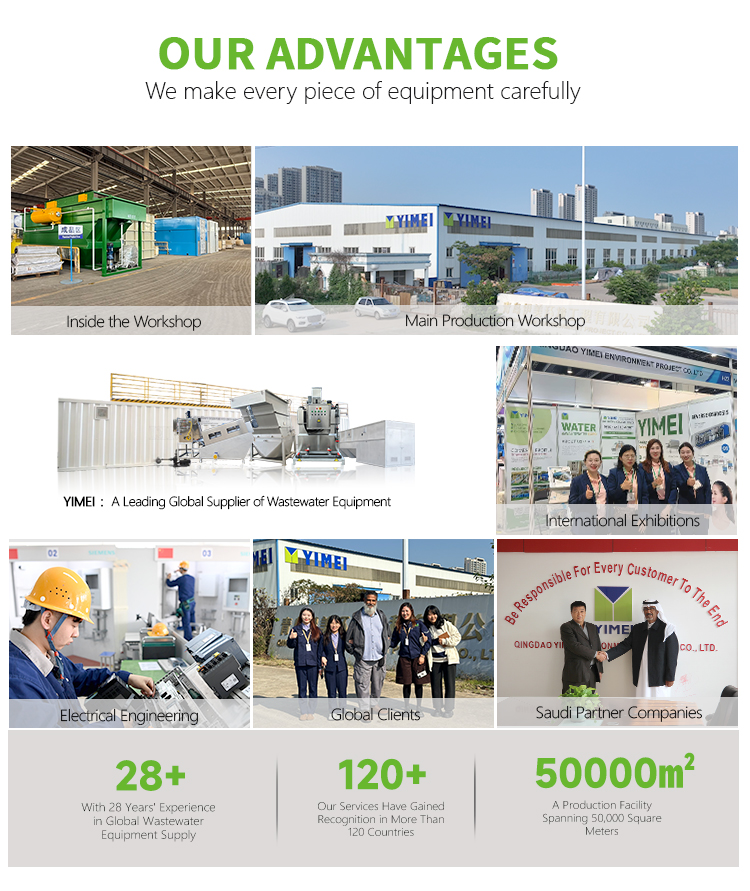
A: We offer remote troubleshooting support via video call and a network of local partners. The design prioritizes ease of maintenance, and we ensure critical spare parts are readily available.



Product Introduction |
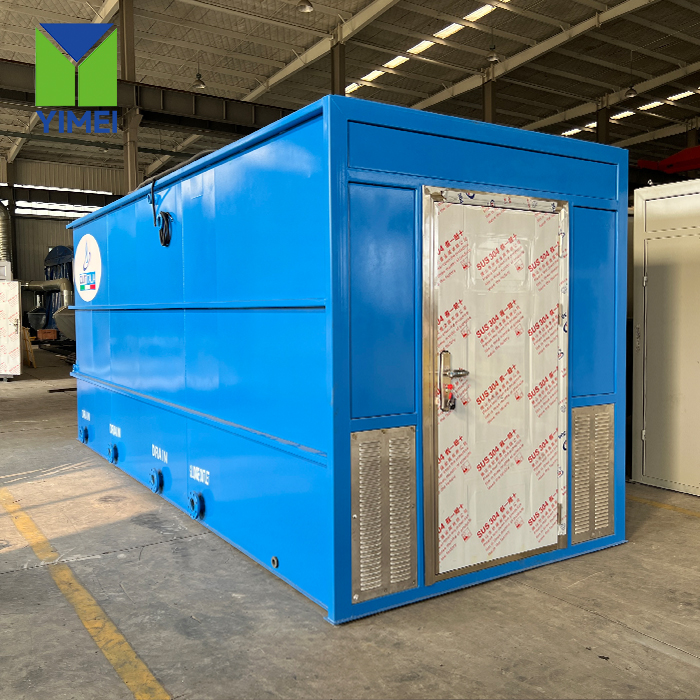
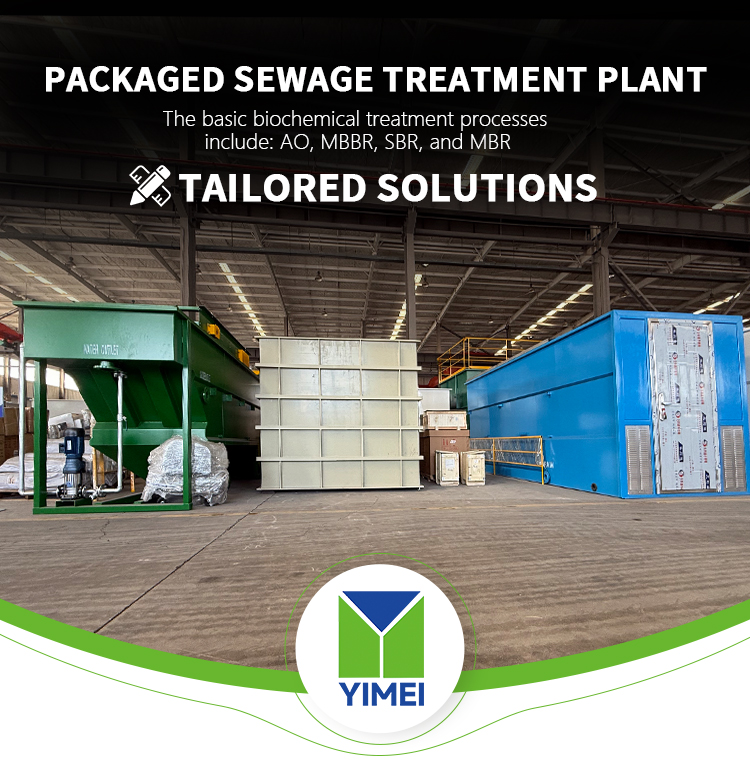
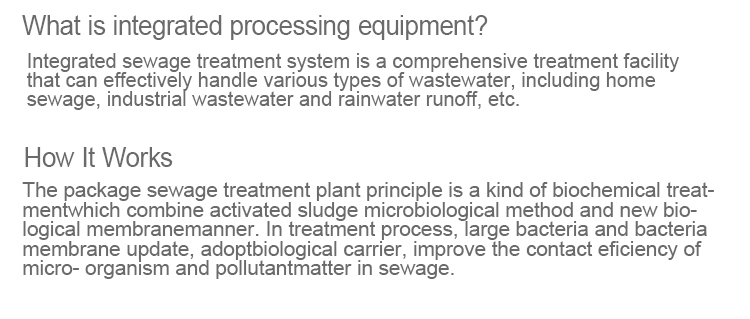
The Automatic Compact Extended Aeration Packaged Sewage Treatment Plant is an integrated biological wastewater treatment system designed for decentralized sites where reliable treatment, limited installation space, and simplified daily operation are important.
Its core treatment process is extended aeration activated sludge technology. Compared with biological systems based on shorter aeration periods, the extended aeration process maintains wastewater in the biological treatment stage for a longer period, supporting organic matter degradation, nitrification, and sludge stabilization. The process is designed to provide stable treatment performance while reducing the amount of excess sludge generated during normal operation.
A major characteristic of this model is its automatic control system. Aeration cycles, sludge return, and system alarms can be managed automatically, reducing the amount of routine manual adjustment required from operators. Remote monitoring functions also provide access to operating information and system control, which is particularly useful for decentralized wastewater plants that do not have full-time technical staff permanently stationed on site.
The treatment equipment is integrated into a compact prefabricated configuration. This minimizes the amount of site area required while also reducing the civil construction and field assembly associated with conventional wastewater treatment facilities. The packaged design is suitable for housing developments, tourism facilities, institutional campuses, and small commercial or industrial clusters where wastewater needs to be treated locally.
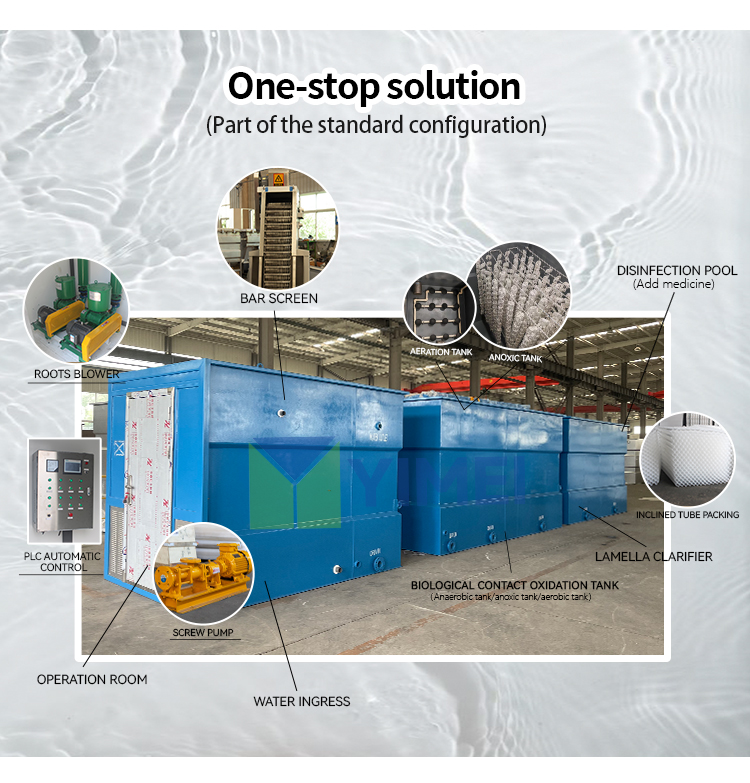
The YMSZ series covers treatment capacities from 1 to 30 m³/h. Different models combine primary settling, contact oxidation, secondary settling, disinfection, aeration, and sewage pumping functions within the packaged treatment system.
By combining extended aeration treatment, automated process management, remote monitoring, and a compact equipment layout, the plant provides a practical wastewater treatment option for projects that require stable operation without complicated day-to-day management.
Product Parameters
Item | YMSZ-1 | YMSZ-3 | YMSZ-5 | YMSZ-7.5 | YMSZ-10 | YMSZ-15 | YMSZ-20 | YMSZ-30 | |
capacity(m3/h) | 1 | 3 | 5 | 7.5 | 10 | 15 | 20 | 30 | |
equipment Nm | 1 | 1 | 1 | 1 | 2 | 2 | 2 | 3 | |
Primary settling tank | 1.8 | 5.5 | 9 | 14 | 18 | 27 | 36 | 50 | |
Contact oxidation tank(m³) | 5 | 14.5 | 24 | 36 | 44 | 63 | 83 | 130 | |
Secondary settling tank | 1.2 | 1.3 | 1.3 | 1.3 | 1.2 | 1.2 | 1.5 | 1.5 | |
Disinfection tank(m³) | 0.6 | 1.8 | 2.8 | 4 | 5.5 | 8 | 10 | 15 | |
Air blower | model | HC-25IS | HC-30IS | HC-50C | HC-50IS | HC-60IS | HC-80S | HC-100S | HC1-100S |
power(kw) | 0.4 | 0.75 | 1.5 | 2.2 | 2.2 | 3.7 | 5.5 | ||
units | 2 | 2 | 2 | 2 | 2 | 2 | 2 | 2 | |
sewage | model | AS10-2CB | AS16-2CB | ||||||
power(kw) | 1 | 1.6 | |||||||
Total Weight(t) | 5.5 | 6.5 | 8 | 11 | 17 | 20 | 21 | 29 | |
Occupy area(m²) | 6 | 14 | 20 | 30 | 50 | 65 | 75 | 115 | |
Features & Advantages |
Automation is one of the main differences of this packaged sewage treatment plant.
The integrated control system manages important treatment functions including aeration cycles, sludge return, and system alarms. Instead of requiring operators to continuously adjust these processes manually, the plant can maintain normal treatment operation through programmed control.
This is particularly useful for decentralized wastewater treatment sites where operators may be responsible for several facilities or where specialized wastewater personnel are not available throughout the day.
Routine personnel can focus on checking system status, pumps, blowers, liquid levels, and other basic operating conditions while the control system handles the main process adjustments.
The product also includes remote monitoring capability for real-time access to operating information and control.
For wastewater systems installed at residential communities, tourism facilities, campuses, or remote sites, treatment personnel may not remain next to the equipment continuously. Remote access provides a practical way to review operating conditions and respond to alarms or abnormal system status.
This function does not replace scheduled physical inspection and maintenance, but it reduces dependence on constant on-site supervision.
Remote monitoring also provides technical personnel with better visibility when troubleshooting or reviewing plant operation from another location.
Extended aeration activated sludge technology forms the biological core of the system.
Wastewater remains in the aeration process for an extended period so that microorganisms have sufficient time to degrade organic pollutants. The longer aeration period also supports biological nitrification and contributes to sludge stabilization.
The product page identifies stable effluent quality and lower sludge production compared with conventional activated sludge configurations as important characteristics of the extended aeration process.
This makes the technology particularly appropriate for decentralized wastewater plants where simple and stable biological treatment is more important than operating a highly complex process.
Wastewater flow at decentralized facilities may vary during different periods of the day.
Residential developments may experience morning and evening peaks. Tourism facilities can experience seasonal changes in occupancy, while schools and commercial facilities may have different weekday and weekend loads.
The extended aeration process provides a relatively stable biological environment that can help the system continue operating under these changing conditions.
Its longer aeration period and stabilized biomass are intended to provide a more resilient biological treatment process for applications where wastewater load is not completely constant.
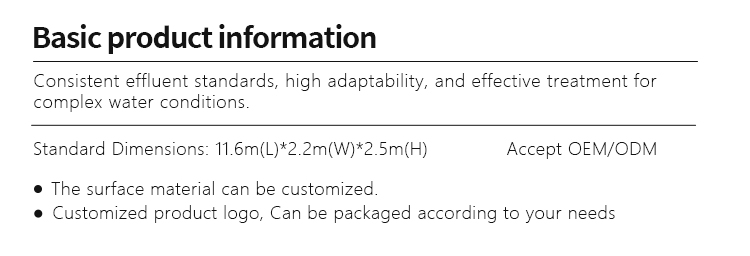
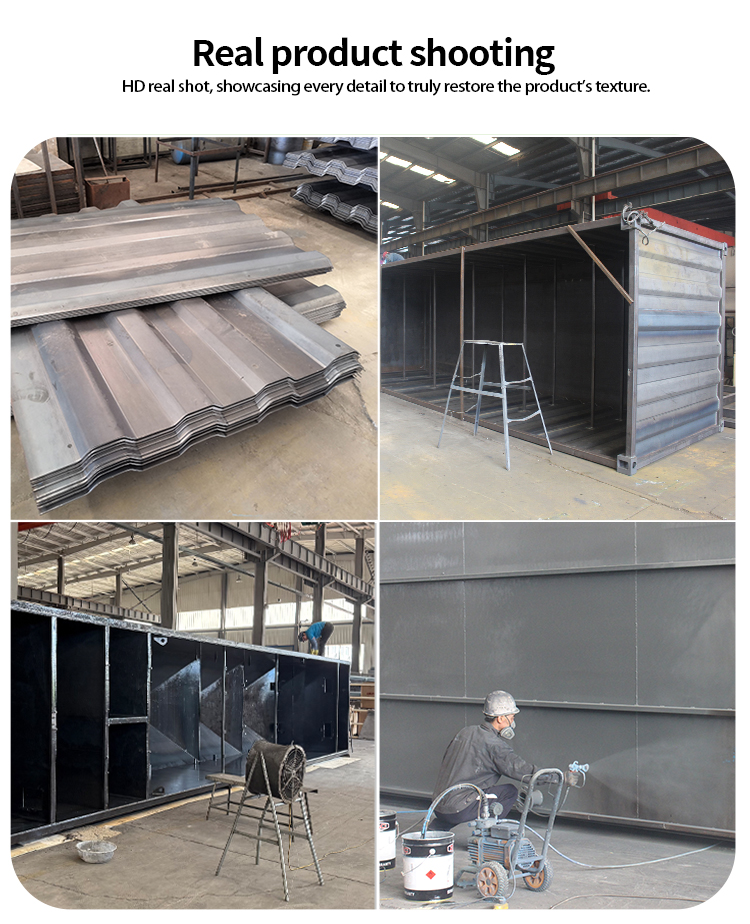
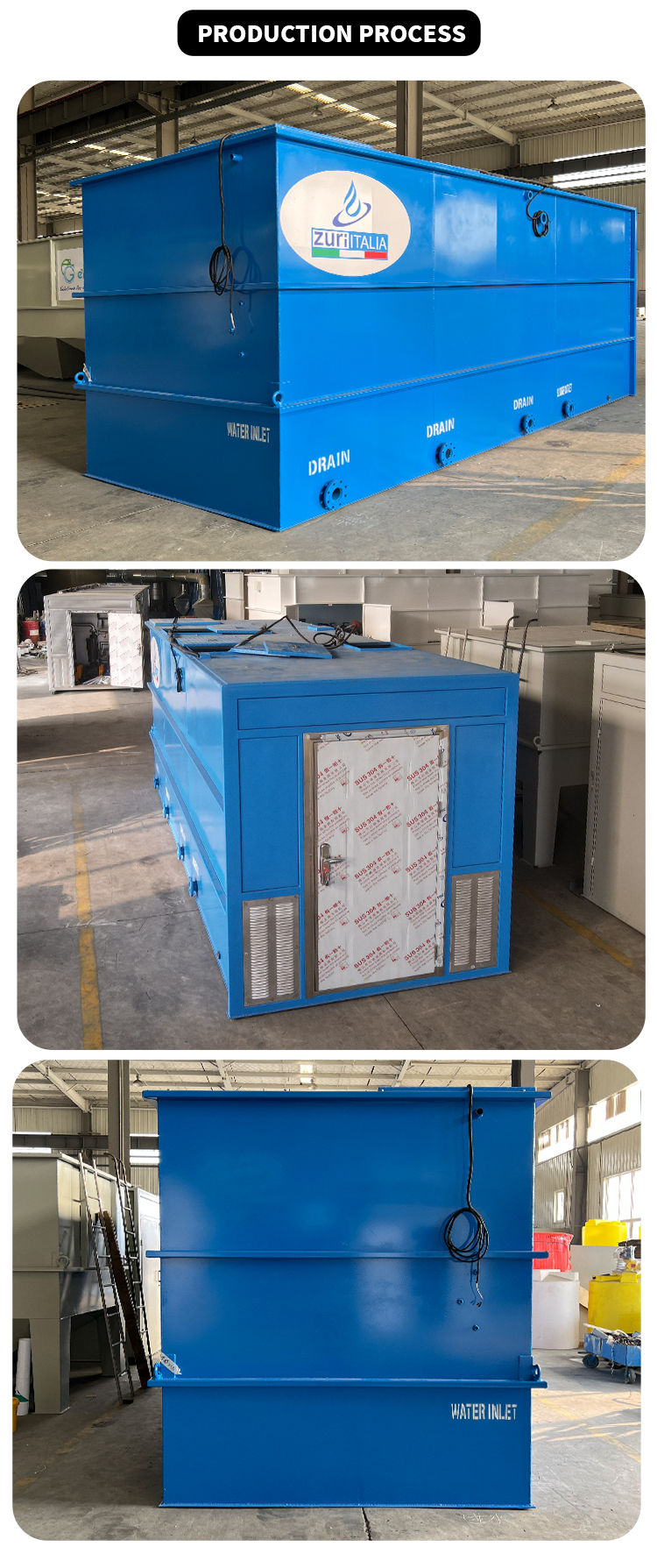
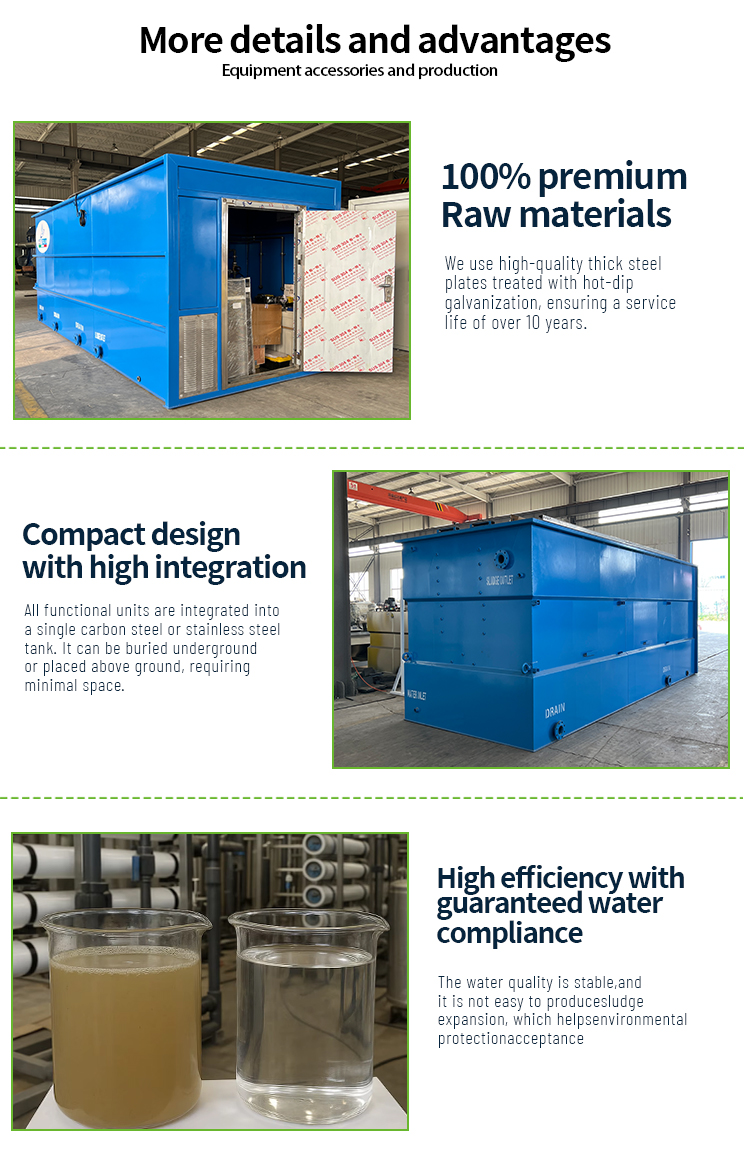
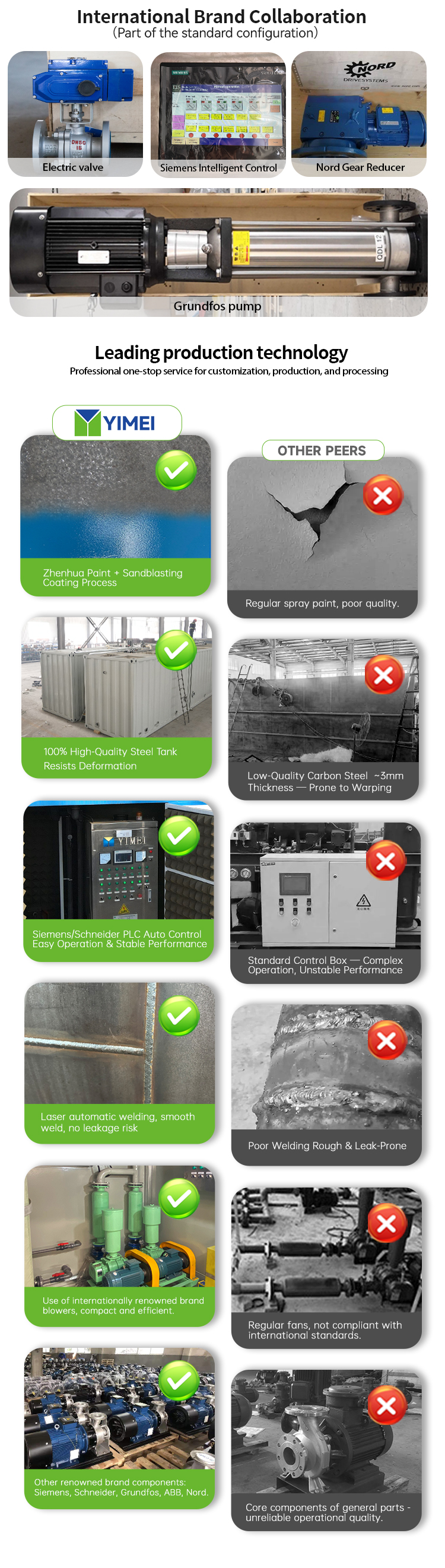
The equipment is designed as a compact treatment plant with the main process sections integrated into a prefabricated unit.
This reduces the physical space required compared with building separate tanks and process units across a larger wastewater treatment site.
The compact layout is particularly useful where land availability is limited or where large-scale excavation and civil works would be difficult.
It also simplifies transportation and installation because the main equipment is already integrated before arriving at the project site.
The prefabricated configuration reduces the amount of work that must be completed during installation.
According to the product information, site preparation primarily requires a level concrete base and suitable connection points.
Once the equipment is positioned, installation can proceed through the required wastewater inlet, treated-water outlet, power, aeration, sludge, and pump connections.
This approach reduces dependence on extensive on-site fabrication and shortens the construction process compared with a conventional wastewater treatment plant built entirely from separate structures.
The YMSZ configuration integrates several wastewater treatment functions into one packaged system.
The listed process equipment includes:
Primary settling tank
Contact oxidation tank
Secondary settling tank
Disinfection tank
Air blowers
Sewage pumps
Primary settling removes settleable material before biological treatment. The contact oxidation section provides the main biological treatment environment. Secondary settling separates biological solids from the treated wastewater, and the disinfection stage provides the final treatment step included in the published configuration.
This integrated arrangement allows the packaged plant to function as a complete decentralized wastewater treatment system rather than as a single treatment component.
The product is available in several YMSZ treatment capacities:
YMSZ-1: 1 m³/h
YMSZ-3: 3 m³/h
YMSZ-5: 5 m³/h
YMSZ-7.5: 7.5 m³/h
YMSZ-10: 10 m³/h
YMSZ-15: 15 m³/h
YMSZ-20: 20 m³/h
YMSZ-30: 30 m³/h
The number of equipment units also changes with capacity. YMSZ-1 through YMSZ-7.5 use one equipment unit, YMSZ-10 through YMSZ-20 use two units, and YMSZ-30 uses three.
This gives project designers multiple capacity options for matching the packaged plant to different wastewater flows.
The listed installation footprint increases gradually with treatment capacity:
YMSZ-1: 6 m²
YMSZ-3: 14 m²
YMSZ-5: 20 m²
YMSZ-7.5: 30 m²
YMSZ-10: 50 m²
YMSZ-15: 65 m²
YMSZ-20: 75 m²
YMSZ-30: 115 m²
These model differences allow the plant to be selected according to both required treatment capacity and available project space.
Applications |
The plant is suitable for housing estates, apartment complexes, gated communities, and other residential developments without direct access to a municipal sewer network.
Wastewater can be collected and treated locally rather than transported over long distances to a centralized sewage treatment facility.
Automatic process control is particularly useful in residential applications because the treatment plant does not need continuous manual process adjustment during normal operation.
The available 1–30 m³/h YMSZ range also allows different residential project sizes to select a treatment capacity appropriate to their expected wastewater flow.
Campsites often require decentralized wastewater treatment because they are located away from established municipal infrastructure.
Available land for treatment equipment may also be limited, especially where preserving usable guest or recreation space is important.
The compact packaged configuration provides a localized treatment system without requiring a large conventional wastewater plant.
Because campsite occupancy can vary significantly between seasons, stable extended aeration treatment and automatic operation are particularly relevant to this application.
Roadside motels and other small tourism facilities can use the plant to treat domestic wastewater generated by guest rooms and supporting facilities.
Tourism wastewater loads may fluctuate according to occupancy, weekends, or seasonal demand.
The extended aeration process provides a stable biological treatment environment, while automation reduces the amount of daily treatment adjustment required from facility staff.
The compact layout also helps when wastewater equipment must be installed within an already developed tourism property.
Marinas are another application identified on the product page.
These facilities may require decentralized sewage treatment in coastal or waterfront locations where extending municipal sewer infrastructure is difficult.
Space at a marina can also be highly constrained because available land is needed for docks, storage, service facilities, parking, and visitor areas.
A compact packaged treatment plant allows wastewater treatment capacity to be incorporated into a smaller designated equipment area.
Automatic operation and remote monitoring are also useful where wastewater treatment is not the primary responsibility of marina personnel.
Schools and educational campuses generate domestic-type wastewater from classrooms, dormitories, dining areas, and sanitation facilities.
Where a campus is not connected to municipal sewer infrastructure, the packaged plant can provide a centralized on-site treatment solution.
Wastewater volume may vary considerably between teaching hours, weekends, holidays, and vacation periods.
The extended aeration process and automatic control system are suitable for this type of variable operating pattern.
Remote monitoring can also allow maintenance personnel to review the plant without requiring permanent wastewater treatment staff at the facility.
The product page identifies military barracks and similar institutional sites as suitable applications.
These sites can generate concentrated domestic wastewater from accommodation, kitchens, sanitary facilities, and communal buildings.
A packaged treatment plant allows these wastewater streams to be handled through one centralized system.
The compact layout is useful where treatment infrastructure needs to be incorporated within a defined facility area, while automated controls reduce day-to-day process adjustment requirements.
Correctional facilities can also require self-contained wastewater treatment where connection to municipal infrastructure is unavailable or impractical.
These facilities generally need treatment equipment capable of continuous operation with limited process intervention.
Extended aeration provides the biological treatment stage, while the automatic control system manages important operating functions such as aeration cycles, sludge return, and alarms.
The integrated packaged configuration keeps the major treatment sections within one centralized system.
The plant can serve clusters of small commercial buildings that generate communal wastewater.
Instead of installing multiple independent septic or small treatment systems, wastewater from several businesses can be collected and treated using one packaged plant.
This is particularly relevant to commercial developments located outside municipal sewer service areas.
The range of YMSZ capacities allows equipment selection to reflect the combined wastewater load of the connected facilities.
Clusters of food kiosks and similar small commercial food operations are identified as another possible application.
Where several businesses operate in one area, centralized treatment can provide a more organized wastewater management arrangement than separate individual systems.
The packaged design allows the wastewater treatment equipment to be concentrated into a designated service area.
Groups of small workshops can also use the plant for communal wastewater where the wastewater characteristics are appropriate for the biological treatment process described on the product page.
In this application, the compact system can serve a business or workshop cluster that does not have convenient access to a municipal sewer.
The packaged arrangement provides a centralized alternative to installing multiple small sanitation systems across the site.
FAQs |
It is a packaged biological wastewater treatment system that uses an extended aeration activated sludge process. Wastewater remains in the aeration stage for a longer period to support organic matter degradation, nitrification, and sludge stabilization.
The product page states that the automatic control system manages aeration cycles, sludge return, and system alarms.
Yes. Remote monitoring is provided for real-time data access and control, allowing operators to review system conditions without remaining continuously beside the treatment equipment.
The plant is designed to minimize daily manual intervention. The automatic control system handles most process adjustments, while operators mainly carry out routine monitoring, inspection, and maintenance.
The YMSZ series includes 1, 3, 5, 7.5, 10, 15, 20, and 30 m³/h models.
The published configuration includes primary settling, contact oxidation, secondary settling, and disinfection, together with air blowers and sewage pumps.
The published occupied area ranges from 6 m² for YMSZ-1 to 115 m² for YMSZ-30.
The product page states that the packaged plant mainly requires a level concrete base and appropriate connection points before installation.
The product page identifies long aeration time, organic matter degradation, sludge stabilization, nitrification, stable effluent quality, and reduced sludge production as advantages of the extended aeration process.
The plant can serve housing developments, apartment complexes, gated communities, and other decentralized residential sites without municipal sewer access.
Yes. Campsites, motels, campgrounds, and marinas are specifically identified as application scenarios.
Yes. Schools, military barracks, and correctional facilities are listed applications for the packaged treatment system.
Yes. The product page identifies small industrial parks and commercial hubs, including clusters of light commercial buildings, food kiosks, and small workshops, as suitable centralized wastewater treatment applications.
Yes. The product page states that remote troubleshooting through video calls is available and also refers to local partner support and access to critical spare parts.
Product Showcase |