

Views: 0 Author: Site Editor Publish Time: 2026-09-14 Origin: Site


Operating remote sites involves strict environmental compliance. You see this challenge constantly across mining camps, offshore rigs, and disaster relief zones. Traditional wastewater infrastructure requires heavy civil engineering, extended timelines, and specialized labor. Remote sites simply cannot afford these demands. Decentralized sanitation requires systems that are robust, mobile, and rapidly deployable. Teams need reliable solutions that work immediately upon arrival. A modular approach to Package Sewage Treatment Plants bypasses traditional construction hurdles. It transforms complex wastewater management into a simplified, plug-and-play procurement decision. You get high-performance treatment without pouring massive concrete foundations or fighting unpredictable weather conditions during installation. This article explores how modern containerized systems solve logistical nightmares while keeping your remote projects fully compliant.
Standardized Logistics: Built within ISO-standard shipping containers, these systems utilize existing global freight infrastructure for low-cost, predictable transport.
Minimal Civil Works: Deploying a containerized sewage treatment plant eliminates the need for deep excavations and heavy concrete pouring, requiring only a level foundation and utility tie-ins.
Scalability: Capacity can be adjusted based on camp population by simply running additional modular units in parallel.
Compliance-Ready: Pre-engineered internal environments (climate-controlled) ensure stable biological treatment processes, consistently meeting stringent local effluent discharge standards.
Managing raw sewage in isolated locations presents a unique set of logistical hurdles. Traditional wastewater plants require massive on-site construction. You must excavate land, pour tons of concrete, and install complex piping networks. This exposes projects to severe weather delays. It also demands highly specialized labor, which is incredibly expensive to house and feed at a remote camp. Supply chain bottlenecks further complicate these builds. If a single custom part is delayed, the entire construction schedule halts.
Failing to manage raw sewage correctly brings severe consequences. Ecologically sensitive areas have zero tolerance for wastewater spills. Untreated discharge leads to immediate project shutdowns. Regulatory bodies will issue heavy fines for non-compliance. Furthermore, environmental negligence causes irreversible reputational damage to the operating company. Local communities and stakeholders demand strict adherence to environmental protection laws.
Prefabricated systems solve this massive infrastructure problem. Package sewage treatment plants consolidate screening, aeration, clarification, and disinfection processes. They pack these distinct treatment phases into a single, self-contained unit. This shifts the bulk of the work from unpredictable on-site construction to controlled off-site manufacturing. Factories build, assemble, and test the equipment indoors. By the time the unit reaches your site, it is fully operational. You eliminate the variables of site-built infrastructure.
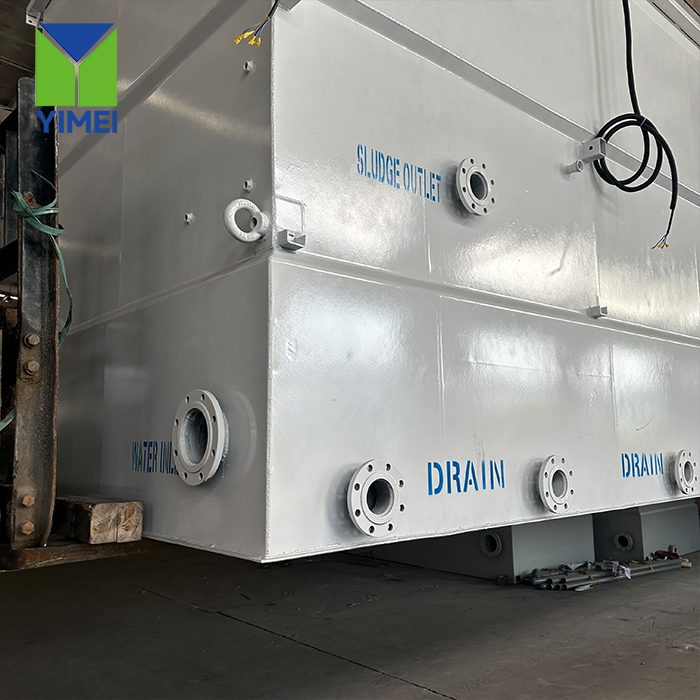
Transporting heavy industrial equipment across rugged terrain is notoriously difficult. A standard Containerized Sewage Treatment Plant solves this through ISO container footprints. Engineers design these systems to fit precisely within standard 20-foot or 40-foot shipping containers. You can ship them via standard truck, rail, or cargo ship. They fit neatly onto standard flatbed trailers. You avoid the high costs and logistical headaches of oversize load permits.
The plug-and-play architecture drastically reduces commissioning time. Manufacturers install internal piping, wiring, and control panels at the factory. They perform rigorous Factory Acceptance Testing (FAT) prior to shipment. On-site installation becomes a highly simplified process. Site crews only need to connect the raw sewage inlet, the treated effluent outlet, and the main power supply. This rapid deployment gets remote camps fully operational in days, not months.
Climate resilience is another critical engineering advantage. Remote sites often experience brutal weather extremes. Containerization allows for factory-installed thermal insulation. Manufacturers seamlessly integrate HVAC systems for winterization. This climate control protects sensitive biological processes. The bacteria in the aeration tank remain active and healthy. The heavy-duty steel shell also protects equipment from extreme heat or freezing temperatures common in desert or arctic camps.
Finally, these systems provide unmatched security and enclosure. A rugged steel shell protects critical internal components. It prevents unauthorized access by curious personnel. It also keeps destructive wildlife away from sensitive pumps and wiring. The container defends the equipment against harsh environmental wear, such as blowing sand, heavy snow loads, and torrential rain. This enclosed design maximizes the lifespan of the internal machinery.
Project managers must evaluate specific technical criteria before procuring a system. You must ensure the chosen technology aligns with your site conditions. The biological treatment method is the most important decision. Moving Bed Biofilm Reactor (MBBR) and Membrane Bioreactor (MBR) are the two leading technologies. Each serves different operational goals.
Chart: Technology Comparison for Remote Treatment Plants
Technology Type | Key Mechanism | Primary Advantages | Best Use Case |
|---|---|---|---|
MBBR (Moving Bed Biofilm Reactor) | Suspended plastic media carriers for bacterial growth. | Highly resilient to shock loads; minimal footprint; low maintenance. | Variable camp populations; standard discharge limits. |
MBR (Membrane Bioreactor) | Ultrafiltration membranes separate solids from liquids. | Produces ultra-pure effluent; highly compact. | Strict environmental zones; non-potable water reuse applications. |
Capacity planning requires careful analysis. You must assess the daily hydraulic load based on peak workforce populations, rather than just historical averages. A mining camp might average 300 workers but peak at 500 during shift changeovers. Evaluate flow rates in Gallons Per Day (GPD) or Kiloliters Per Day (KLD). The system must handle morning and evening flow spikes without washing out the biological culture.
Energy efficiency heavily influences daily operations. Remote sites rarely connect to stable municipal power grids. They rely on diesel generators or limited solar microgrids. You must evaluate the peak Kilowatt (KW) demand of the treatment plant. Ask vendors about Variable Frequency Drives (VFDs) on aeration blowers. These drives scale power consumption up or down based on actual treatment needs, saving precious diesel fuel.
Automation limits the need for specialized on-site staff. Modern plants feature PLC-based control panels. They include IoT sensors for remote monitoring. These sensors track dissolved oxygen levels, tank levels, and pump statuses. Off-site engineers can perform remote diagnostics via a simple internet connection. This eliminates the need for full-time wastewater operators at the remote camp.
Vendors sometimes exaggerate claims of "zero preparation." You must plan for practical site realities. A containerized system still requires a structurally sound foundation. Water is incredibly heavy. A full 40-foot container weighs tens of thousands of pounds. You must prepare a level concrete pad or a deeply compacted gravel base. It must support the operating weight without sinking or shifting over time.
Here is a typical implementation rollout sequence for remote deployments:
Geotechnical Survey: Verify the soil bearing capacity at the designated installation spot.
Foundation Construction: Pour the concrete pad or lay engineered, compacted gravel.
Utility Trenching: Run underground power lines and sewage feed pipes to the pad location.
Unit Placement: Use a standard crane or heavy forklift to position the container.
Final Tie-ins: Connect inlet flanges, outlet pipes, and energize the main control panel.
Inlet feed logistics require advance planning. Remote sites must determine how raw sewage reaches the container. Natural topography sometimes allows gravity flow directly into the plant. However, flat sites require lift stations. You must plan for macerating pumps that grind solids and push the raw sewage up into the container's inlet port.
All biological treatment plants produce excess sludge. Procurement teams must factor in sludge management. Bacteria consume organic waste, multiply, and eventually die off, creating a biosolid layer. You must schedule periodic sludge removal using vacuum trucks. Additionally, site staff must perform basic routine maintenance. They will need to clear inlet screens, check blower belts, and inspect chemical dosing pumps.
Modular expansion makes future growth simple. Camps often expand unexpectedly. If a workforce grows from 500 to 1,000 workers, you do not need to tear down the plant. You simply order a second modular unit. Plumbers manifold the new container into the existing piping network. Both units run in parallel. This phases scaling perfectly without disrupting your current daily operations.
Financial modeling for decentralized sanitation looks very different from municipal projects. While the initial hardware cost of prefabricated plants may seem high, the Return on Investment (ROI) is much faster. You eliminate massive on-site civil engineering costs. You save heavily on specialized labor housing. Furthermore, automated operations reduce ongoing manual labor expenses. These combined savings quickly offset the initial equipment purchase price.
Asset relocation offers immense financial value. Poured-in-place concrete plants are sunk costs. When a mining vein dries up or a construction project ends, you abandon that concrete infrastructure. Conversely, modular plants are capitalized, movable assets. You can clean them, decommission them, load them onto a flatbed, and deploy them to your next project site. This continuous reuse completely changes the financial equation for temporary camps.
Water reuse generates additional daily savings. Advanced systems treat effluent to incredibly high standards. You can safely reuse this water for non-potable applications. Remote sites use treated effluent for road dust suppression, equipment washing, and landscape irrigation. This offsets the exorbitant cost of trucking in fresh water. Every gallon you reuse is a gallon you do not have to buy or transport.
Containerized sewage treatment systems successfully bridge the gap between rapid deployment and rigorous environmental compliance. They strip away the complexities of heavy civil construction. They replace those headaches with a standardized, predictable equipment delivery. Remote project managers can now achieve municipal-grade sanitation virtually anywhere on the globe.
When shortlisting vendors, project managers should prioritize specific operational realities. Scrutinize their factory testing protocols. Ensure their chosen biological process matches your footprint and effluent requirements. Verify their post-deployment technical support capabilities. A reliable vendor acts as an ongoing operational partner, not just an equipment manufacturer.
Take immediate action before breaking ground on your next remote site. Consult with a qualified wastewater engineer. Audit your site's peak flow rates, climate extremes, and local discharge regulations. Gathering these precise metrics ensures you request an accurately customized system quote, guaranteeing long-term project success and flawless environmental compliance.
A: Assuming the foundation, power supply, and inlet/outlet piping are pre-arranged, physical placement and final connections typically take 1 to 3 days. The factory handles all internal assembly and testing prior to shipping, drastically reducing on-site commissioning time.
A: Yes. Units designed for extreme cold feature high-grade internal insulation, automated space heaters, and heat-traced external piping. These modifications maintain internal temperatures, protecting the biological activity required for effective wastewater treatment.
A: Because the systems are modular, capacity is expanded easily. You simply deliver an additional containerized unit to the site and connect it in parallel. This requires no disruption to the existing treatment process and scales perfectly with workforce growth.
A: No. Most modern package systems are fully automated with PLC controls. They require only part-time supervision by site maintenance staff for basic chemical top-ups, daily screening checks, and scheduled pump maintenance.


