

Views: 0 Author: Site Editor Publish Time: 2026-02-28 Origin: Site


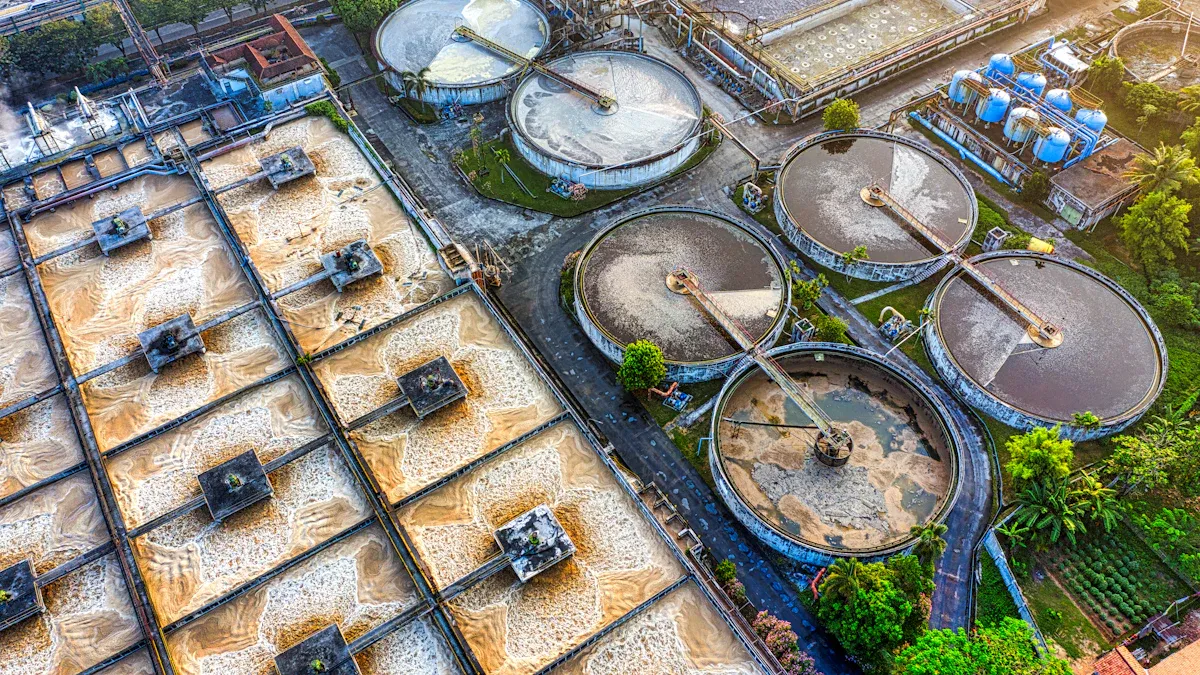
You need a Dissolved Air Flotation Machine: The Ultimate Guide. It is the best way to remove grease, oils, and solids from wastewater in 2026. This process uses air under pressure to lift contaminants to the surface, helping you meet strict treatment rules. Qingdao Yimei Environment Project Co., Ltd. is a leader in this field, manufacturing advanced DAF systems that focus on being green and incorporating new ideas.
The global market for dissolved air flotation systems is growing at 6.3% each year and could reach $4.5 billion by 2030.
Asia Pacific holds 26.4% of the market, with China making significant progress.
Contribution Type | Description |
|---|---|
High-Quality Systems | Advanced air flotation helps clean wastewater and industrial water. |
Focus on Sustainability | It protects the environment and saves resources. |
Advanced Technology | It uses automation and AI to help fix problems before they happen. |
Energy Efficiency | It saves energy and enhances the overall efficiency of the process. |
Dissolved Air Flotation systems help take out grease, oils, and solids from dirty water. These machines are very important for places like food factories and paper mills.
You need to check and clean DAF systems often. This helps them work better and follow rules about the environment.
Picking the best DAF system means you must know what is in your dirty water. You should choose a company that knows a lot and can help you.
New DAF technology uses things like automation and smart controls. These changes help the machines work faster and use less energy.
Buying a good DAF system can save money over time. You will use fewer chemicals and pay less to get rid of sludge.
It is important to know about dissolved air flotation. This process uses air and water to clean wastewater. Many industries use it, like food processing and paper factories. The machine puts air into water using pressure. When the water goes into a tank, small bubbles appear. These bubbles stick to grease, oils, and solids. The bubbles lift these things to the top. Workers can then take them away easily.
Dissolved air flotation systems help meet tough environmental rules. They remove dirty stuff fast and well. Many places pick high-efficiency machines because they save space and energy. You can put these machines in new or old plants. Qingdao Yimei Environment Project Co., Ltd. makes great DAF systems. Their machines have smart features and work well for all kinds of wastewater.
You should learn the main ideas of a DAF system. First, air gets pushed into water at high pressure. This lets water hold more air. When the water enters the tank, the pressure drops. This makes the air come out and form tiny bubbles.
Next, bubbles spread through the tank. They float up and bump into dirty particles. Then, the bubbles stick to the dirt and make it lighter. The dirt floats to the top. Workers skim off the sludge, leaving clean water.
Tip: You can make your DAF system work better. Change the air-to-solids ratio and use the right chemicals. This helps remove more dirt and makes the system more efficient.
Qingdao Yimei has made big improvements in dissolved air flotation. Their DAF systems give you many benefits:
Advancement | Impact |
|---|---|
Enhanced impurity removal | DAF systems bring solids to the top for easy cleaning. |
Compliance with environmental regulations | Yimei's DAF plants help places follow government rules for clean water. |
Increased processing capacity | New DAF technology cleans more water faster and costs less. |
You can trust Qingdao Yimei’s high-efficiency machine for good results. Their DAF system works for many jobs, like cleaning paper factory water. These machines help you get cleaner water and reach your green goals.

You can learn how dissolved air flotation works by looking at each step. The system uses aeration to help remove contaminants. Here is how the process goes:
Chemical pre-treatment is the first step. You add chemicals to the wastewater. This helps small particles stick together. It makes them easier to remove.
The system uses aeration in the saturator. Clean water mixes with compressed air. This makes a supersaturated solution.
The supersaturated water goes into the flotation tank. When pressure drops, aeration makes micro-bubbles.
Micro-bubbles attach to the flocs. The bubbles lift the flocs up. You skim off the sludge to remove it.
This process gives high removal efficiency. You get cleaner water and better results in wastewater treatment. The High-Efficiency Dissolved Air Flotation Machine from Qingdao Yimei Environment Project Co., Ltd. uses advanced aeration and smart controls. You get reliable contaminant removal in many industries, like Paper Industry Wastewater Treatment.
Tip: You can get better removal by changing chemical dosing and aeration. This helps you get the best results for your wastewater.
You should know the main parts of a DAF system. Each part helps with aeration and removal. Here are the important components:
Flotation Tank: This is where aeration happens and micro-bubbles form. The tank holds the wastewater and lets bubbles rise.
Saturator: The saturator mixes water and compressed air. It makes the supersaturated solution needed for aeration.
Chemical Dosing Unit: This unit adds chemicals for coagulation and flocculation. It helps with removal by making particles stick together.
Sludge Skimmer: The skimmer removes sludge from the surface. It collects the floated contaminants for disposal.
Control Panel: The panel lets you change aeration, flow rate, and chemical dosing. Smart controls help you watch the system.
Design Consideration | Description |
|---|---|
System Layout | Good planning helps wastewater flow smoothly for better removal. |
Air Management | Compressed air is important for aeration and micro-bubble formation. |
Chemical Dosing | You need to check and change dosing for high removal efficiency. |
Sludge Management | Proper sludge removal keeps the system working well. |
Flow Rate | Slower flow gives better removal in wastewater treatment. |
You should look at the size of the High-Efficiency Dissolved Air Flotation Machine before you install it. Regular maintenance and checking help keep aeration and removal working well.
You can improve removal by focusing on the air-to-solids ratio and chemical dosing. The air-to-solids ratio means how much air you use for each unit of sludge solids. Most systems use a ratio between 0.02 and 0.06 kg air per kg dry solids. This ratio affects how well sludge floats and how much removal you get in wastewater treatment.
Aeration must be steady and strong. You need to keep the right pressure for micro-bubble formation. Regular maintenance helps the compressor last longer and keeps aeration working.
For chemical dosing, you can use the jar test. This test helps you find the best amount of chemicals for removal. Real-time monitoring and automation, like turbidity sensors and pH-based dosing, make chemical dosing more accurate. You get better removal and save on chemicals.
Use the jar test to set chemical dosing.
Watch aeration and dosing with smart controls.
Change settings for different wastewater types, like Paper Industry Wastewater Treatment.
Note: Knowing your site conditions helps you set the right air-to-solids ratio and chemical dosing. This leads to high removal efficiency and better results in wastewater treatment.
The High-Efficiency Dissolved Air Flotation Machine gives you strong aeration, smart dosing, and reliable removal. You can trust this system for many wastewater treatment processes.
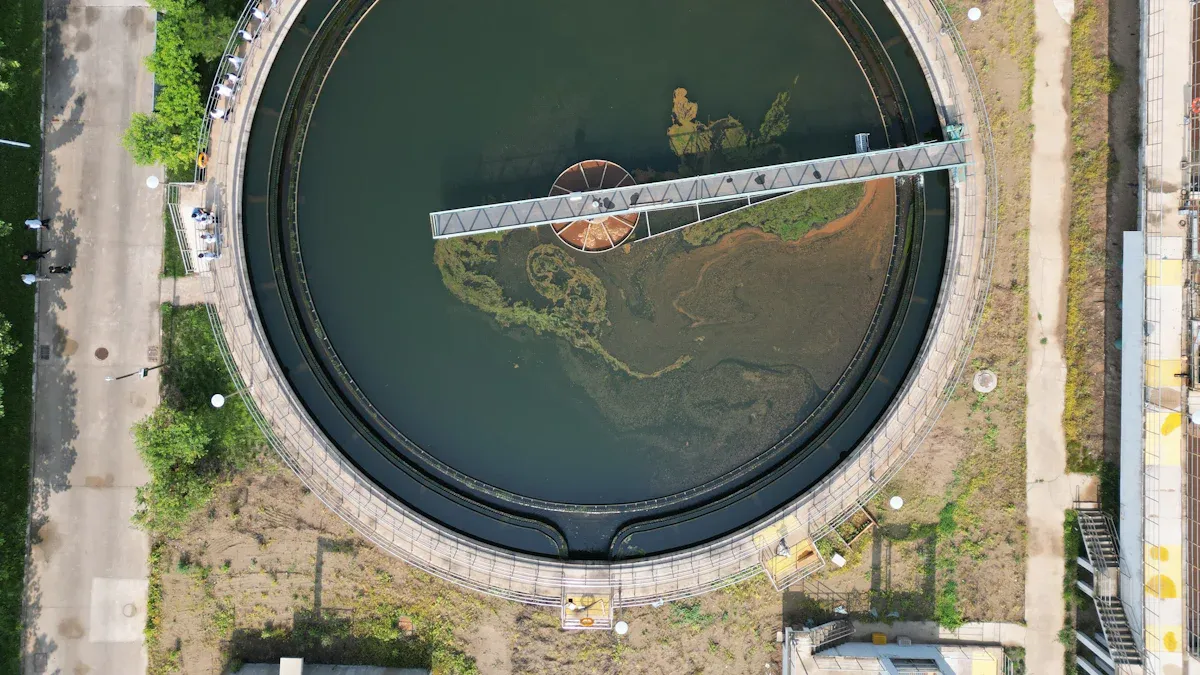
Dissolved air flotation helps many industries clean water. It removes grease, oils, and solids from wastewater. Mining, oil and gas, and food processing all need good water treatment. DAF works well in these fields and shows strong results.
Industry | Application Description | Benefits |
|---|---|---|
Food Processing | Cleans fats, oils, and solids from dairy and meat wastewater. | Lowers pollution and saves useful by-products. |
Mining | Cleans water from minerals and takes out tiny particles and chemicals. | Helps recycle water and follow safety rules. |
Oil and Gas | Takes out oil, grease, and solids from refinery water. | Cuts pollution and helps reuse water. |
The High-Efficiency Dissolved Air Flotation Machine works for Paper Industry Wastewater Treatment. It gives strong cleaning and helps you follow strict rules. You get better water quality and reliable results.
City water plants need good ways to clean water. DAF machines take out solids, oils, and other dirty stuff from city wastewater. Air bubbles lift dirt to the top. This makes water clear and safe. Cities use DAF for their water plants. These systems save money and help meet safety rules. You get clean water and protect people’s health.
Food and petrochemical plants have tough water problems. They need to remove fats, oils, grease, and solids from wastewater. DAF systems help solve these problems and clean water well.
Industry | Challenges Addressed |
|---|---|
Food Processing | Takes out organic matter, fats, oils, grease, and solids from water. |
Splits solids from liquids in fruit washing, meat, and dairy work. | |
Petrochemical | Cleans water with lots of oil, grease, solids, and chemicals. |
Splits oil and solids from water in refineries and plants. |
You can trust these systems for city and industrial water cleaning. They give strong cleaning and work well in many places.
Tip: Pick Qingdao Yimei’s systems for good cleaning and long-lasting results in all your water treatment needs.
It is important to measure how well your dissolved air flotation system works. Efficiency metrics show how much you save and how good the process is. You can use these numbers to compare different systems. This helps you pick the best one for your water.
Here is a table with key efficiency metrics:
Metric | Description |
|---|---|
Operational Efficiency | You use fewer chemicals and make less sludge. This saves money and helps nature. |
System Robustness | The system keeps working even if water quality changes. You get steady wastewater treatment. |
TSS Removal Improvement | Advanced DAF systems can remove up to 30% more solids. |
BOD Measurement | You check biochemical oxygen demand to see how well the system treats water. |
Look for a High-Efficiency Dissolved Air Flotation Machine for strong results. These machines work well and give reliable performance, especially for Paper Industry Wastewater Treatment.
You need to pick the right size and capacity for your DAF system. The size decides how much water you can clean and how well it works. Match the system to your water flow and space.
Here is a table about sizing and capacity choices:
DAF System Type | Key Considerations |
|---|---|
Rectangular DAF | Good for big water flows and small spaces. |
Circular DAF | Best for places with little room. |
High-Rate DAF | Cleans more water in a small area. Works well where space is tight. |
Integrated DAF Systems | Easy to install and needs less building work. |
Treatability Studies | Test your own wastewater to find the best size. |
Always check your water flow and space before you install a High-Efficiency Dissolved Air Flotation Machine. This helps you get good cleaning and strong performance.
Pick the right materials for your DAF system. Good materials help the system last longer and work well in tough places. You want your dissolved air flotation system to handle many types of wastewater and keep working for years.
Here is a table with common materials and their features:
Material Type | Properties |
|---|---|
Stainless steel (304 or 316) | Strong against rust. Best for tough wastewater. |
Carbon steel with coatings | Saves money in places that are not very corrosive. |
Heavy duty durable polypropylene | Works in many temperatures and pH levels. Gives you more ways to treat water. |
Robust materials | Lasts long and stands up to hard industrial use. The system stays strong. |
Choose a High-Efficiency Dissolved Air Flotation Machine with stainless steel or polypropylene for best durability. This helps you get good operation in Paper Industry Wastewater Treatment and other jobs.
Tip: Always check what the system is made of before you buy. Good materials mean better cleaning and a system that lasts longer.
You should follow the right steps when you start or stop your dissolved air flotation system. This helps keep everything safe and working well. Here is an easy guide:
Look at the dissolved air releaser for damage. Make sure all connections are tight. Check the water before you start.
Begin by slowly adding water and air. Keep the pressure steady. Watch the bubbles as they come out.
Watch how the system works. Look at the bubbles and change the air or water if you need to.
When you finish, turn off the air and water in order. Clean the system and check all parts for damage.
Tip: Always use these steps to keep your equipment safe and get good results from your wastewater treatment.
You need to take care of your DAF system often. Regular checks help you stop problems and make your equipment last longer.
Component | Maintenance Task Description |
|---|---|
Air Saturation System | Clean the air saturator tank. Check the air compressor and look at pressure relief valves. |
DAF Cell (Floatation Tank) | Take care of skimmer blades. Check sludge scrapers. Clean the effluent discharge systems. |
Dissolved Air Injection System | Clean nozzles and diffusers. Take care of the recycle pump. Check pipes for scale or blockages. |
Chemical Dosing System | Set dosing pumps. Clean mixing tanks so they do not clog. |
Controls and Automation System | Set sensors. Check control panels to make sure they work. |
Sludge Management System | Take care of sludge pumps. Clean sludge thickening and storage areas. |
General Mechanical Components | Check valves. Oil bearings and seals. Look at gearboxes and drives for damage. |
Note: Regular care helps your High-Efficiency Dissolved Air Flotation Machine and Paper Industry Wastewater Treatment work well.
Sometimes you may have problems when you use the system. Use this table to find and fix issues fast:
Operational Issue | Troubleshooting Steps |
|---|---|
Poor Flotation Performance | Look at the air compressor for clogs. Clean air filters. Check chemical dosage and set pumps. Look at air release valves for blockages. |
High Effluent Turbidity | Check skimmer blades for damage. Change or fix them if needed. Wash media filters. Watch inlet water and change chemical dosage. |
Equipment Leaks | Look at pipes for leaks. Check valve packing and seals. Look at tanks for rust or damage. Fix or change parts if needed. |
Remember: Fixing problems quickly helps your dissolved air flotation system work well and keeps your water treatment safe.
Dissolved air flotation systems have many good points for cleaning wastewater. They remove lots of bad stuff from water. These systems work for many kinds of water and fit in small spaces. Here is a table that lists the main benefits:
Benefit | Description |
|---|---|
Efficient Contaminant Removal | Removes up to 99% of solids, oils, and greases. |
Flexibility | Handles many types of wastewater, so it works in lots of places. |
Space-Saving Design | Needs less room than other systems, great for cities. |
Low Sludge Production | Makes less sludge than other ways, so you save on disposal. |
DAF systems clean better than sedimentation and filtration. Their small size lets you set them up fast and make them bigger if needed. DAF is used in many jobs, like Paper Industry Wastewater Treatment. The High-Efficiency Dissolved Air Flotation Machine helps you follow strict rules and use fewer resources.
There are some problems you might have with a DAF system. You must watch chemical dosing and air pressure all the time. If you do not, the system may not clean as well. You also need to clean and check the system often to keep it working. Sometimes, you need trained workers to run the system and change settings.
Note: Training and regular care help stop most problems and keep your system working well.
Pick dissolved air flotation when you need to take out oils, grease, and solids from water. DAF is best when you want high cleaning and a small system. You can use it in city water plants to remove many pollutants. DAF also helps in factories, especially when you need to take out heavy metals, chemicals, and particles.
City water plants use DAF to make water safe to release.
Factories use DAF to meet rules and fix hard water problems.
You can count on DAF systems to work well in many places. The High-Efficiency Dissolved Air Flotation Machine gives strong results in Paper Industry Wastewater Treatment and more.
You might ask how DAF and sedimentation are different. Both help clean water, but they work in their own ways. DAF uses tiny bubbles to lift light stuff, oils, and grease up. Sedimentation lets heavy things sink to the bottom.
Here is a table that shows how they are not the same:
Method | Contaminant Removal Efficiency | Operational Efficiency |
|---|---|---|
DAF | Up to 95-99% for FOG, algae, and light solids | Needs less space and shorter process times |
Sedimentation | 50-70% for primary treatment, not good for light solids and FOG | Needs more space and longer process times |
DAF is better for getting rid of small or mixed solids. It can remove more total suspended solids than sedimentation. Studies say DAF can take out up to 98% of algae, which is much more than sedimentation. The High-Efficiency Dissolved Air Flotation Machine is good for hard jobs like Paper Industry Wastewater Treatment.
Filtration and DAF both help treat wastewater, but they do not do the same job. Filtration uses a filter to trap stuff as water goes through. DAF uses air bubbles to float things to the top.
DAF can take out oils, grease, and tiny particles that filters might miss. Filtration is good for bigger particles and as a last cleaning step. If you need to get rid of fats, oils, and grease, DAF works better. You can use both together to get the cleanest water.
Tip: Use DAF before filtration. This helps your system last longer and work better.
You might also want to know how DAF and biological treatment compare. Biological treatment uses bacteria to break down waste in water. DAF quickly removes solids, oils, and grease before this step.
DAF helps you save money on energy and fixing things. It also makes less sludge, so you spend less to get rid of it. DAF can take out tough stuff, which helps the biological process work better. New DAF systems let you change settings to save energy and chemicals.
Note: DAF and biological treatment work well together. You get cleaner water and a better process.
If you want to set up a dissolved air flotation system, you should think about the first cost and the cost to keep it running. For a regular 50 m³/hour DAF system, you might pay between USD 18,000 and USD 55,000 to install it. The price changes based on what materials you pick and how much automation you want. Running the system uses about 0.65 kWh of energy for every cubic meter of water cleaned. Most energy is used by air saturation and recycle pumps. In small and medium city plants, the cost to run and fix the system is about 12% to 18% of what you spend each year.
How much you pay to install depends on size and features.
Each cubic meter of water uses little energy.
Maintenance costs are only a small part of your yearly spending.
You can save money in the future by using dissolved air flotation systems for cleaning wastewater. The table below shows how you can benefit:
Aspect of Savings | Description |
|---|---|
Improved Operational Efficiency | You get more fibers back and make later steps easier. |
Reduced Chemical Consumption | Smart controls help you use fewer chemicals and polymers. |
Minimized Sludge Handling Costs | Thicker sludge means you pay less to get rid of it and need less equipment. |
Enhanced Water Quality for Reuse | Better cleaning lets you use water again in your plant, saving even more. |
A High-Efficiency Dissolved Air Flotation Machine helps you get these savings, especially when cleaning water in paper factories.
You can figure out your return on investment (ROI) for a DAF system by looking at three main things:
Component | Description |
|---|---|
Capital Investment | This means buying, installing, and taking care of the system. |
Operational Costs | These are for energy, chemicals, upkeep, and getting rid of sludge. |
ROI Calculation | You find ROI by taking away your capital investment from your yearly operating costs. |
Using a dissolved air flotation system helps you spend less over time and makes your water cleaning better. This means you get a good return on your money and keep your water safe and clean.
By 2026, dissolved air flotation systems will change a lot. Companies are making new designs to clean water faster. These new systems handle sludge better, so you do not spend much time fixing them. Energy-saving designs help you pay less and protect nature. You can use digital tools and IoT devices to watch your system. These tools show you live data and let you change things quickly. The High-Efficiency Dissolved Air Flotation Machine from Qingdao Yimei Environment Project Co., Ltd. uses these new ideas. It works well for Paper Industry Wastewater Treatment.
Automation helps your system work better.
Improved sludge handling saves you money.
Energy-saving designs help you reach green goals.
Digital tools let you check your system right away.
You can make your DAF system smarter with automation and controls. Sensors and smart devices help you watch and change the process. This keeps your system working well and gives you good results every time. The table below shows how these features help you:
Evidence Description | Impact on Operational Efficiency |
|---|---|
Advanced sensors and automation | Real-time monitoring and adjustments keep your system reliable. |
IoT and PLC-based controls | You need less manual work and get better efficiency. |
Smart controls help you use fewer chemicals and save energy. These systems work well for cleaning wastewater in many industries.
You want your dissolved air flotation system to help the planet. New systems use less energy and make less waste. You can check how well your system works with these numbers:
Metric | Description |
|---|---|
Removal Efficiency | Shows how well the system takes out solids and pollutants from water. |
Hydraulic Loading Rate | Tells you how much water moves through the tank and how bubbles interact with contaminants. |
Scum Layer Formation | Lets you see how thick the scum layer is, which affects cleaning and maintenance. |
You can reach your green goals with the High-Efficiency Dissolved Air Flotation Machine. These systems help you clean water better and support a healthy future. Qingdao Yimei keeps making new solutions for Paper Industry Wastewater Treatment and other jobs, so you stay ahead in technology and sustainability.
When you pick a dissolved air flotation system, you must think about a few key things. First, learn about your wastewater. Check how much solids, oils, and chemicals are in it. You also need to know the flow rate and pH. This helps you find a system that fits your needs.
Here is a table to help you compare important points:
Criteria | Description |
|---|---|
Wastewater Characterization | Test water for TSS, FOG, BOD5, COD, pH, and flow rate. |
Hydraulic/Mechanical Sizing | Pick low hydraulic loading and fine bubbles for better cleaning. |
Operational Flexibility | Choose systems with automation, energy-saving parts, and tough materials. |
Total Cost of Ownership (TCO) | Think about long-term costs, like upkeep and how well it works. |
Vendor Support | Choose a vendor with good results and strong promises in your field. |
Tip: Always pick a system that matches your water and process for the best outcome.
You should look at different vendors before buying a DAF system. See if they have lots of experience with wastewater. Check if they give support and training. Ask for examples from other jobs like yours. A good vendor will help you set up and take care of your system. Qingdao Yimei Environment Project Co., Ltd. is known for its High-Efficiency Dissolved Air Flotation Machine and great help in Paper Industry Wastewater Treatment.
Look at the vendor’s past work.
Ask about help after you buy.
Check if they have industry certificates.
Every place is different. You can ask for special features to fit your needs. Some vendors offer different tank sizes, smart controls, or special chemical dosing units. Custom features help you get better cleaning and save money.
Note: Custom choices help you deal with changes in water and follow strict rules.
You help make wastewater treatment better for the future. Dissolved air flotation systems let you take out bad stuff from water in a safe way. You get good results if you use your daf system the right way and take care of it often. Pick a trusted company like Qingdao Yimei for smart solutions. Keep learning about new technology and ways to protect the environment with dissolved air flotation.
Dissolved air flotation helps clean water. Tiny air bubbles lift dirt and oil. This process removes grease, oils, and solids. Many industries use this system for treatment.
First, you add chemicals to the wastewater. Then, air is pressed into water. Microbubbles stick to particles when released. The bubbles lift dirt to the top. Workers skim off the contaminants. The water is cleaner for more treatment.
You can use these systems in food factories and city plants. They also work in Paper Industry Wastewater Treatment. These systems help meet strict rules. They improve water quality in many places.
DAF systems remove lots of solids, oils, and grease. The High-Efficiency Dissolved Air Flotation Machine saves space and energy. You can put it in new or old plants. It gives reliable water cleaning.
You check pumps and clean tanks often. You also adjust chemical dosing. Regular care keeps the system working well. This stops problems and helps wastewater treatment run smoothly.


