

Views: 0 Author: Site Editor Publish Time: 2026-06-24 Origin: Site


Untreated industrial discharge represents far more than a simple environmental hazard. It stands as a critical operational liability threatening your entire business continuity. You risk severe operational halts when ignoring proper waste protocols. We must shift the industrial narrative away from basic regulatory compliance. We need to focus on building lasting operational resilience.
Failing to implement adequate treatment infrastructure triggers compounding daily costs. You face harsh regulatory penalties and significant supply chain disruptions. Over time, these unmanaged financial risks erode profit margins completely. They also damage corporate reputations beyond quick repair. Ignoring effluent quality is a gamble no modern facility can afford.
This comprehensive guide provides a clear evaluation framework. You will understand exactly why robust treatment facilities are strictly necessary today. We will explore how to evaluate the right infrastructure for your specific production needs. You will learn how to transform a heavy compliance burden into a distinct operational advantage.
Regulatory Survival: Non-compliance with evolving effluent standards guarantees steep fines and potential operational shutdowns.
Cost Control: Effective treatment transitions waste management from a sunk cost into a utility savings mechanism via water reuse.
Complexity Demands Specialization: Standard municipal systems cannot process high-strength industrial contaminants; specialized infrastructure is non-negotiable.
Strategic Procurement: Evaluating a system requires balancing upfront CAPEX with long-term OPEX, scalability, and ease of integration.
Regulatory compliance acts as the absolute baseline for industrial operations today. Environmental protection agencies enforce strict discharge limits nationwide. Local municipalities mirror these federal guidelines closely. They monitor industrial effluents constantly using advanced sensor networks. Exceeding these discharge parameters brings severe financial penalties immediately. You expose your organization to massive legal liabilities. Repeated permit violations often trigger mandatory operational shutdowns.
Discharging untreated water directly to Publicly Owned Treatment Works (POTWs) triggers prohibitive commercial surcharges. POTWs penalize manufacturing facilities heavily for high contaminant loads. You pay premium tariffs for every excess pound of waste you discharge. These municipal surcharges accumulate rapidly over a fiscal year. Proper industrial wastewater management eliminates these recurring penalty fees completely. It shifts your budget away from paying fines. You begin investing in valuable long-term asset infrastructure instead.
Brand reputation relies heavily on environmental stewardship in modern markets. Stakeholders demand verifiable and transparent sustainability practices. Strong waste management aligns perfectly with these ESG (Environmental, Social, and Governance) mandates. It bolsters your corporate sustainability reporting significantly. Proactive treatment protects your brand against public environmental backlash. It demonstrates clear corporate responsibility to investors, partners, and local communities alike.
Relying on outdated effluent sampling methods instead of continuous monitoring.
Underestimating the compounding financial impact of daily municipal surcharges.
Failing to update treatment protocols when introducing new manufacturing chemicals.
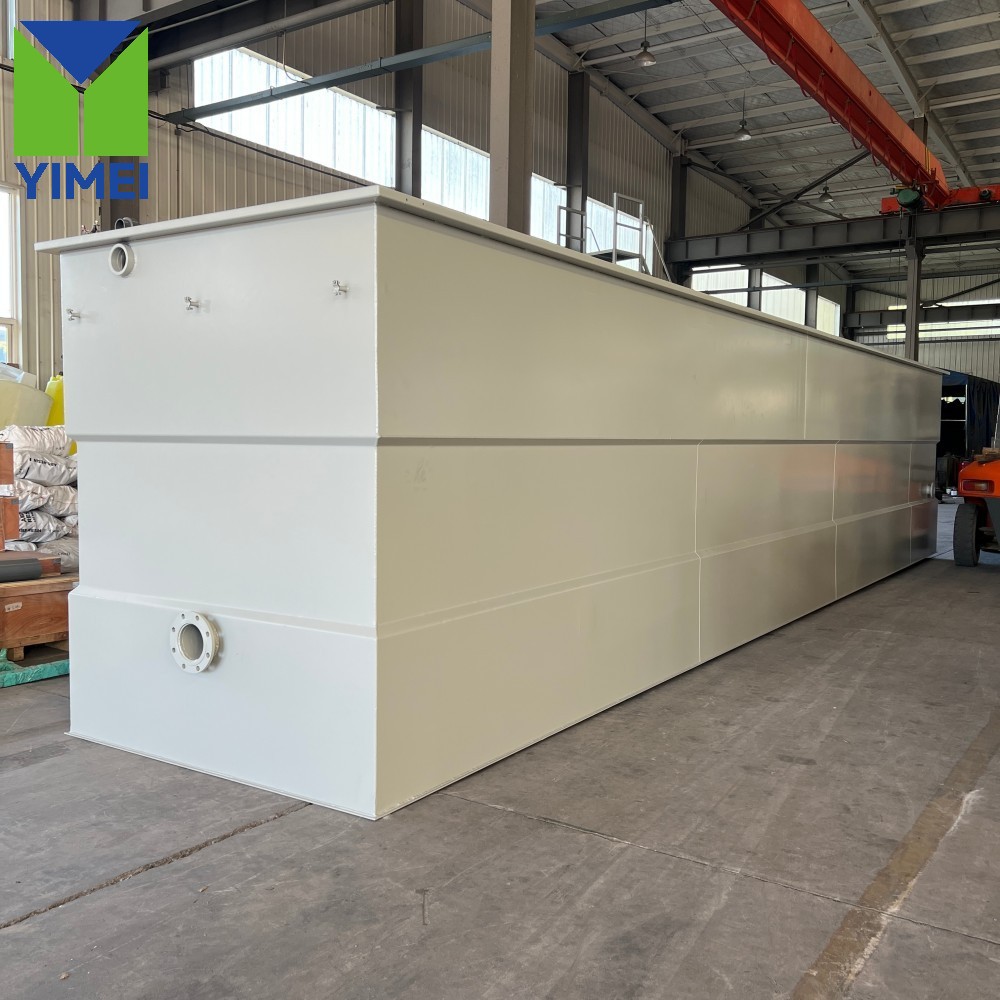
Municipal treatment plants primarily handle standard domestic sewage. They rely heavily on biological processes utilizing fragile bacteria cultures. These public facilities fail catastrophically when processing heavy industrial effluents. You need dedicated infrastructure for high COD wastewater. High Chemical Oxygen Demand (COD) overwhelms municipal aeration basins quickly. Biological Oxygen Demand (BOD) and excessive suspended solids require immediate on-site processing.
Industrial streams routinely contain highly toxic and recalcitrant compounds. Standard public infrastructure cannot handle heavy metals safely. Volatile organic compounds (VOCs) strip through standard municipal processes easily. Extreme pH fluctuations destroy biological treatment phases instantly. If you send toxic chemical loads to a municipal plant, you risk killing their helpful bacteria. This disruption causes major community sanitation failures.
Furthermore, industrial flow rates vary wildly during normal production cycles. Batch dumps create sudden, massive spikes in effluent volume. Continuous processing flows present entirely different hydraulic challenges. Dedicated equalization tanks manage these dangerous inconsistencies effectively. They normalize the flow rate and chemical concentration before downstream treatment begins.
Parameter | Municipal Wastewater | Industrial Wastewater |
|---|---|---|
Contaminant Profile | Predictable, primarily organic waste. | Highly variable, contains heavy metals, VOCs, acids. |
pH Levels | Neutral (6.5 - 7.5). | Extreme fluctuations (2.0 - 12.0). |
Flow Consistency | Steady diurnal patterns. | Erratic, driven by batch production dumps. |
Treatment Approach | Standardized biological aeration. | Custom physical, chemical, and biological trains. |
Modern treatment philosophy extends far beyond mere regulatory compliance. It provides valuable resource recovery opportunities for forward-thinking facilities. Closed-loop systems treat wastewater to extremely high purity standards. You can safely direct this treated water back into your production cycle. Facilities commonly reuse this water for cooling towers. You can also use it safely for critical boiler feeds. This strategy dramatically reduces your daily freshwater intake.
Effective industrial water recycling lowers your monthly utility costs significantly. It serves as a powerful financial hedge against unpredictable municipal rate hikes. You protect your facility against rising municipal freshwater tariffs. You also mitigate severe risks tied to drought-related water scarcity. In regions facing strict water rationing, recycling ensures continuous factory operation.
Waste streams often contain valuable byproducts previously viewed as trash. You can recover precious metals from plating operations. Food processing plants can recover valuable nutrients for agricultural fertilizers. Anaerobic treatment processes generate combustible biogas. You can capture this biogas to power your facility boilers. Capturing these hidden resources offsets your daily operational costs tremendously.
Segregate waste streams at the source to make byproduct recovery easier.
Implement anaerobic digestion to convert organic waste into usable energy.
Use Reverse Osmosis (RO) systems to achieve boiler-quality feed water.
Selecting the right industrial wastewater treatment system demands careful, evidence-based analysis. You cannot rely on guesswork when designing complex environmental infrastructure.
First, you must assess your specific facility treatment needs accurately. Identify the exact contaminants present in your daily effluent.
Physical Treatment: Deploy Dissolved Air Flotation (DAF) systems to remove suspended solids, fats, oils, and greases efficiently.
Chemical Treatment: Apply controlled coagulation and flocculation processes. Use automated pH adjustment systems to precipitate dissolved heavy metals out of solution.
Biological Treatment: Utilize Moving Bed Biofilm Reactors (MBBR) or Membrane Bioreactors (MBR). These systems consume complex dissolved organics reliably.
Many modern manufacturing facilities require a customized hybrid treatment train. Engineers combine physical, chemical, and biological steps sequentially. This ensures comprehensive contaminant removal across all required regulatory parameters.
You must balance upfront capital expenses carefully against long-term operating expenses. Do not judge a system solely by its initial purchase price. Analyze the raw equipment purchase costs closely. Compare them against ongoing daily chemical consumption rates. Factor in expected daily energy usage carefully. Calculate monthly sludge disposal fees, as heavy sludge generation destroys operating budgets. Do not forget to include specialized maintenance labor costs. A cheaper initial system often costs significantly more to run over ten years. Smart procurement evaluates the entire lifecycle expenditure.
Evaluate your available facility spatial constraints strictly. Factory floor space costs premium money. Modular or containerized treatment systems save valuable square footage. They minimize the need for massive concrete civil works. Containerized units also simplify future production expansions. You can add secondary treatment capacity easily as your factory grows. This modular approach prevents you from overbuilding capacity during your initial factory launch phase.
Modern industrial facilities require smart, automated controls. Assess your genuine need for deep SCADA network integration. Remote monitoring prevents critical system failures during unmanned shifts. Automated chemical dosing reduces expensive chemical waste drastically. It prevents dangerous overdosing scenarios. These advanced technologies reduce your daily dependency on specialized on-site operators. Automation ensures consistent effluent quality regardless of human shift changes.
Installing new environmental infrastructure involves distinct operational risks. You must navigate the engineering rollout carefully to protect production.
You must mandate comprehensive treatability studies internally. Pilot testing is absolutely critical for project success. It validates all theoretical engineering design assumptions before deploying major capital. Never buy off-the-shelf treatment equipment blindly based on sales brochures. Test your specific, real-world wastewater through a scaled-down pilot system first. This identifies hidden chemical interferences early. It prevents catastrophic full-scale treatment failures.
Installing complex infrastructure alongside active production lines causes immense logistical headaches. Plan for potential integration downtime carefully with your production managers. Use phased implementation strategies whenever possible. Install standalone equalization tanks first. Follow up with modular treatment skids during planned factory maintenance shutdowns. This careful choreography keeps your core production lines running smoothly during the upgrade process.
A massive operational gap exists between installing a system and running it efficiently. You need strong change management protocols immediately upon commissioning. Vendor-supplied operator training is completely non-negotiable. Establish strict preventative maintenance schedules during the first week of operation. Operators must understand how to calibrate sensors and clean delicate membranes properly. Comprehensive training ensures your capital investment operates flawlessly for decades.
Vendors refusing to run a pilot test on your specific effluent.
Overlooking the costs of hauling away generated sludge during the design phase.
Failing to allocate dedicated personnel for daily system monitoring.
Investing in Industrial Wastewater Treatment remains a strict baseline requirement for modern manufacturing. It ensures vital operational legality while simultaneously boosting long-term financial efficiency. Moving beyond basic compliance protects your profit margins from unpredictable municipal surcharges and regulatory fines.
We advise corporate decision-makers to prioritize reliable engineering vendors. Choose collaborative partners offering comprehensive facility water audits. Favor engineering firms conducting rigorous pilot testing over those pushing simple equipment sales. Evidence-based design always outperforms theoretical assumptions.
Take decisive action today to protect your facility. Schedule a comprehensive facility water audit immediately. Request a formal laboratory treatability study from specialized engineers. Define your exact physical and chemical system requirements before making critical purchasing decisions.
A: Municipal systems treat domestic sewage primarily composed of biodegradable organics. They rely on standard biological processes. Industrial effluents feature complex contaminant profiles. They contain heavy metals, extreme pH levels, and toxic chemicals. Industrial volumes also fluctuate violently between batch dumps and continuous flows. Municipal plants simply cannot process these high-strength, highly variable chemical loads safely.
A: Sizing requires comprehensive flow rate analysis. You must measure your daily baseline volumes accurately. Calculate your absolute peak load requirements during maximum production hours. You also need to forecast future production expansions over the next decade. Engineers use these metrics to design equalization tanks. This ensures your system handles both current spikes and future growth seamlessly.
A: Yes, advanced systems can achieve ZLD. However, they are not universally practical. ZLD requires intense thermal evaporation and crystallization processes. These processes consume massive amounts of energy. We generally recommend ZLD only when facing extreme regulatory limits or severe local water scarcity. Standard closed-loop recycling offers a much better financial return for most facilities.
A: A complete custom installation typically takes six to twelve months. The initial water auditing and treatability studies take four to eight weeks. Detailed engineering and equipment manufacturing consume another three to six months. Finally, site installation and biological commissioning require four to eight weeks. Complex multi-stage systems often extend this standard timeline slightly.


