

Sludge dewatering is a critical part of both municipal and industrial wastewater treatment. Even after sedimentation, dissolved air flotation, chemical precipitation, or biological treatment, the separated sludge may still contain a large amount of water. Without proper dewatering, the sludge occupies more storage space, requires more transportation, and increases subsequent disposal costs.
A Screw Dehydrator provides a compact and continuous solution for reducing sludge volume. It uses a low-speed screw shaft, fixed rings, and moving rings to separate water from conditioned sludge. Compared with many conventional dewatering systems, it can handle relatively low-concentration sludge while requiring limited floor space, cleaning water, and operator attention.
However, not every sludge behaves in the same way. The suitability of a Sludge Screw Dehydrator depends on sludge concentration, particle structure, viscosity, oil content, flocculation performance, and treatment capacity. Understanding the requirements of different industries is therefore essential before selecting a dewatering system.
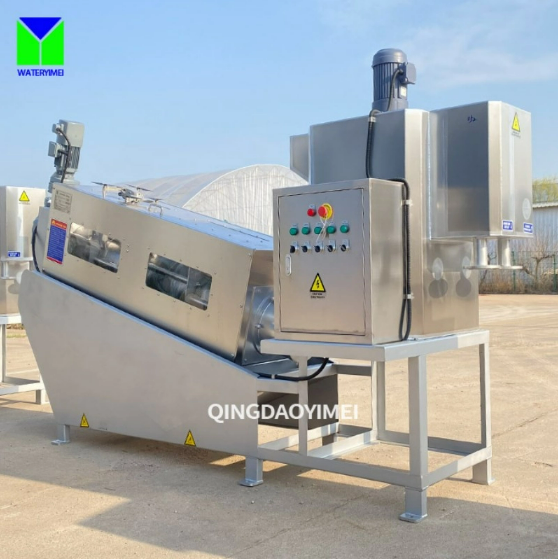 | 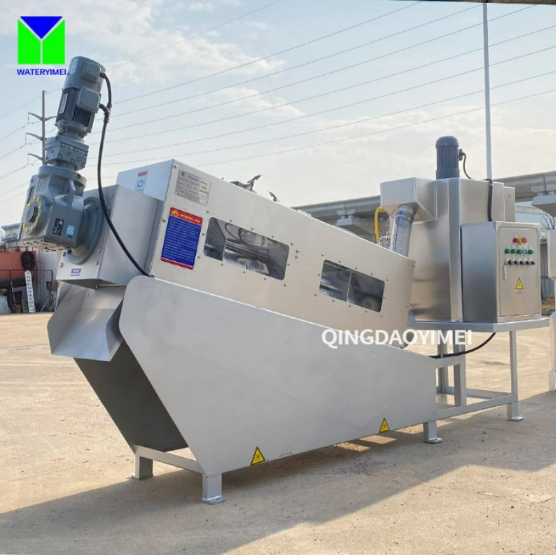 | 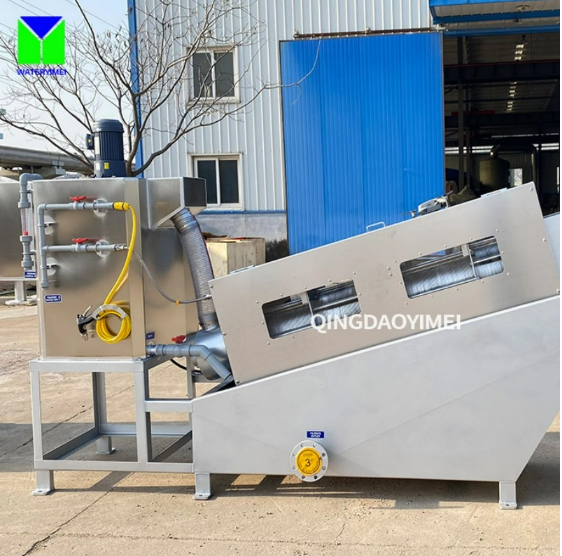 |
A Screw Dehydrator, also known as a screw press sludge dewatering machine, is designed to separate free water from sludge through gradual compression.
The system normally consists of a sludge conditioning tank, flocculation unit, screw dewatering chamber, filtrate collection section, sludge cake outlet, and automatic control cabinet.
Before sludge enters the dewatering chamber, it is mixed with a polymer or flocculant. Fine suspended particles combine into larger and stronger flocs, making solid-liquid separation easier.
The conditioned sludge then enters the screw chamber. As the screw shaft rotates slowly, the sludge is conveyed toward the discharge outlet. The spacing between the fixed and moving rings becomes progressively smaller, creating increasing internal pressure.
Water passes through the gaps between the rings, while concentrated solids continue toward the outlet and are discharged as sludge cake.
The moving rings shift continuously during operation and help clean the filtration gaps. This self-cleaning action reduces the risk of blockage and allows the equipment to process certain oily, sticky, or low-concentration sludge streams.
The design also reduces dependence on high-pressure washing systems. This can help lower water consumption and simplify daily maintenance.
Municipal wastewater treatment plants generate primary sludge, secondary biological sludge, and mixed sludge. These sludge streams often contain high moisture levels and must be reduced before transportation, composting, digestion, incineration, or landfill disposal.
A Screw Dehydrator is particularly suitable for small and medium municipal wastewater plants, decentralized sewage treatment facilities, rural sanitation projects, hotels, residential communities, and public institutions.
These facilities often have limited installation space and fewer operators than large centralized plants. A compact, automated dewatering unit can therefore simplify sludge handling without requiring a large dewatering building.
Continuous dewatering can reduce the volume of excess activated sludge and decrease the number of sludge transportation trips. Automated controls can coordinate sludge feeding, polymer dosing, screw operation, and equipment cleaning.
However, biological sludge can be difficult to dewater when it contains weak flocs or excessive extracellular polymers. Correct sludge conditioning is necessary to obtain stable cake dryness and clear filtrate.
Food and beverage factories generate wastewater containing proteins, fats, starches, sugars, fibers, and suspended organic materials. Sludge may come from dissolved air flotation systems, primary clarification, anaerobic treatment, or aerobic biological processes.
A Sludge Screw Dehydrator can be used in:
Meat and poultry processing plants
Dairy factories
Breweries and wineries
Fruit and vegetable processing facilities
Seafood processing plants
Beverage and soft drink factories
Edible oil and food ingredient plants
Food-processing sludge is often soft, biodegradable, and rich in organic matter. Once properly flocculated, it can be gradually compressed inside the screw chamber.
Reducing the water content helps factories control odor, reduce sludge storage requirements, and lower disposal costs. The discharged sludge cake may also be easier to transport for composting, digestion, or other approved treatment methods.
Because production recipes and raw materials can change, sludge characteristics may vary during different production periods. Polymer dosage and operating parameters should be adjusted accordingly.
Paper mills generate large quantities of sludge from pulping, screening, flotation, clarification, coating, and biological wastewater treatment.
Paper sludge often contains cellulose fibers, fillers, clay, calcium carbonate, and biological solids. Fibrous materials can form relatively stable flocs, making many paper sludge streams suitable for screw dewatering.
A Screw Dehydrator may be used for primary sludge, secondary sludge, or a controlled mixture of both. The actual dewatering performance depends on the ratio of fibers to biological solids.
Dewatering reduces the mass and volume of sludge that must be transported or stored. Depending on the sludge composition and local regulations, the dewatered material may be sent for landfill disposal, incineration, fuel preparation, or material recovery.
Paper mills should evaluate abrasive fillers and inorganic content when choosing screw materials and wear-resistant components.
Textile wastewater may contain dyes, surfactants, sizing agents, fibers, salts, alkalis, and organic chemicals. Sludge is commonly generated through coagulation, sedimentation, flotation, and biological treatment.
The composition of textile sludge can change significantly with fabric types, dye formulations, production batches, and wastewater treatment chemicals. Some sludge streams are easy to flocculate, while others form weak or highly viscous flocs.
A Sludge Screw Dehydrator can provide stable continuous operation when the sludge is properly conditioned. It is especially useful in factories that need automated sludge reduction but have restricted space.
The following factors should be controlled carefully:
Sludge feed concentration
Polymer selection and concentration
Mixing intensity
Flocculation retention time
Screw rotation speed
Back-pressure adjustment
Sludge cake discharge rate
Laboratory or on-site sludge testing is recommended before final machine selection.
Chemical and petrochemical facilities generate sludge through oil-water separation, chemical precipitation, dissolved air flotation, biological treatment, and process wastewater clarification.
Some oily sludge streams can be treated by a Screw Dehydrator, particularly when oil and solids form stable flocs after chemical conditioning. The self-cleaning ring structure may offer advantages where traditional filter openings are more likely to become blocked.
However, high concentrations of free oil can reduce dewatering efficiency and affect filtrate quality. Upstream oil separation may be necessary before sludge enters the dewatering unit.
Chemical sludge may contain acids, alkalis, salts, solvents, or corrosive compounds. Equipment material should therefore be selected according to sludge pH, temperature, chloride concentration, and chemical composition.
Stainless steel, corrosion-resistant coatings, customized seals, and suitable piping materials may be required for aggressive conditions.
Electroplating, surface treatment, machining, and metal-finishing plants generate wastewater containing suspended metal particles, oils, acids, alkalis, and dissolved heavy metals.
Heavy metals are commonly removed through pH adjustment and chemical precipitation. This process produces metal hydroxide sludge, which must be separated, concentrated, and dewatered.
A Sludge Screw Dehydrator may be suitable when the precipitated particles form strong flocs. Dewatering reduces sludge volume and makes hazardous sludge easier to store and transport.
Dewatering does not eliminate heavy metals. It only separates part of the water from the solid material.
Sludge containing chromium, nickel, copper, zinc, cadmium, or other regulated substances must still be classified, stored, transported, and disposed of according to applicable environmental regulations.
Livestock farms, manure treatment systems, slaughterhouses, anaerobic digesters, and biogas plants generate sludge and digestate containing organic matter, nutrients, fibers, and suspended solids.
A Screw Dehydrator can be installed after screening, sedimentation, anaerobic digestion, or biological treatment. It can reduce the volume of sludge or digestate before composting, storage, transportation, or further treatment.
Agricultural wastewater may contain straw, hair, plastic, sand, and coarse fibers. These materials can affect pumps and dewatering equipment.
Screening and grit removal should therefore be considered before sludge enters the system. Stable polymer conditioning is also necessary when the sludge contains fine organic particles.
Pharmaceutical factories, fermentation plants, biotechnology companies, and biochemical production facilities often generate biological sludge with a relatively low solids concentration.
A Screw Dehydrator can accept certain low-concentration sludge streams without requiring a separate large thickening system. This can reduce the footprint and complexity of the sludge treatment line.
The slow-speed operation also produces relatively low vibration and noise, which is beneficial for indoor wastewater treatment facilities.
Pharmaceutical and fermentation plants may require enclosed feeding, odor control, customized cleaning arrangements, or specific stainless steel grades.
Sludge viscosity, biological activity, chemical residues, and cleaning requirements should be reviewed during system design.
A Screw Dehydrator can process many biological and industrial sludge streams, but suitability should be confirmed through sludge analysis.
The equipment may be considered for:
Excess activated sludge
Dissolved air flotation sludge
Food-processing sludge
Paper and pulp sludge
Textile treatment sludge
Livestock and biogas sludge
Chemically precipitated sludge
Mixed organic and inorganic sludge
Special testing may be required for sludge with:
High sand or grit content
Large hard particles
Excessive free oil
Very weak floc structure
Highly corrosive chemicals
High-temperature conditions
Large amounts of fibers or debris
Extremely high inorganic solids
Pretreatment, dilution, thickening, screening, or chemical conditioning may be needed before dewatering.
Selecting equipment only according to the wastewater flow rate can lead to poor performance. Sludge production and solids loading are more important than total water volume.
The supplier should know the sludge flow rate, operating hours, feed solids concentration, and daily dry solids load. These parameters determine the required screw diameter, number of dewatering shafts, and operating schedule.
Polymer type and dosage directly affect filtration speed, filtrate quality, and sludge cake dryness. A sludge sample test can help determine whether cationic, anionic, or nonionic polymer is more suitable.
Different disposal methods require different sludge cake characteristics. The target should be based on transportation, landfill, composting, incineration, or further drying requirements.
The dewatering machine should be coordinated with:
Sludge storage tanks
Feed pumps
Polymer preparation systems
Flocculation tanks
Filtrate return pipelines
Sludge conveyors
Collection containers
Odor-control systems
A complete process design is more reliable than selecting a standalone machine.
Yes. One of the main advantages of a Sludge Screw Dehydrator is its ability to process certain low-concentration biological sludge streams. Actual performance still depends on sludge characteristics and flocculation results.
Most sludge streams require polymer conditioning before dewatering. Polymer helps small particles form larger flocs that retain solids while releasing water.
Sludge type, feed concentration, polymer dosage, floc strength, screw speed, ring spacing, back pressure, and operating stability all influence the final sludge cake.
A Screw Dehydrator can be integrated with pumps, dosing units, level sensors, and control systems for automatic operation. Regular inspection and maintenance are still required.
It is suitable for many industries, but not every sludge stream. Sample testing and technical evaluation are important, especially for oily, corrosive, abrasive, or highly variable sludge.
A Screw Dehydrator can be used in municipal wastewater treatment, food and beverage production, paper manufacturing, textile dyeing, chemical processing, electroplating, agriculture, biogas, pharmaceutical production, and many other sludge-generating industries.
Its compact design, continuous operation, low-speed compression, self-cleaning ring structure, and automated control make it a practical option for facilities seeking to reduce sludge volume and simplify sludge handling. However, successful operation depends on more than the machine itself. Sludge characteristics, polymer conditioning, equipment sizing, upstream pretreatment, and downstream disposal requirements must all be considered.
Qingdao Yimei Environment Project Co., Ltd. provides wastewater treatment and sludge dewatering equipment for municipal and industrial applications. Based on the sludge type, treatment capacity, site conditions, and discharge requirements, our technical team can help configure a suitable Sludge Screw Dehydrator and integrate it with the complete wastewater treatment process.
For more information about Screw Dehydrator selection, sludge sample evaluation, equipment configuration, and customized wastewater treatment solutions, please contact Yimei Water and discuss your project requirements with our technical team.
