

Views: 269 Author: Site Editor Publish Time: 2026-08-21 Origin: Site


Decentralized wastewater management carries incredibly high stakes for modern infrastructure projects. Choosing between MBBR and MBR processes is not merely a technical preference for engineers. This critical choice dictates a facility's compliance reliability. It also heavily impacts ten-year operating expenditures. Both systems represent advanced biological wastewater treatment variations. However, they rely on fundamentally different solid-liquid separation methods to clean effluent. MBR uses microscopic physical barriers. MBBR utilizes floating biological media paired alongside gravity settling. This guide bypasses typical marketing jargon. We provide a skeptical, evidence-based framework for facility planners. We will help you evaluate which plant architecture fits your site constraints perfectly. You will learn exactly how physical footprint, budget limits, effluent targets, and operator expertise shape this vital engineering decision.
Effluent Quality vs. Cost: MBR provides unmatched, reuse-quality effluent but requires higher upfront CAPEX and ongoing energy/maintenance OPEX.
Resilience vs. Precision: MBBR systems are highly robust against flow fluctuations and toxic shocks, requiring less skilled daily intervention than membrane systems.
Space Constraints: Both offer compact footprints compared to conventional activated sludge, but MBR allows for the absolute smallest footprint by eliminating secondary clarifiers entirely.
Decision Driver: Your choice ultimately hinges on local discharge regulations (strict nutrient limits favor MBR) versus operational bandwidth (lean maintenance teams favor MBBR).
Decentralized projects face strict regulatory oversight globally. Resorts, remote mining camps, industrial sites, and small municipalities share common struggles. They lack the massive budgets of mega-facilities. They also lack sprawling acreage for traditional treatment lagoons. A successful deployment balances initial capital against realistic long-term maintenance realities. Planners often ignore maintenance capabilities during the design phase. This mistake leads to catastrophic environmental failures later.
Your baseline evaluation must start locally. You must examine local discharge permits carefully before selecting any equipment. Environmental protection agencies enforce strict penalties for non-compliance. Title 22 compliance for water reuse demands advanced filtration. Stringent Biological Oxygen Demand (BOD) rules dictate biological capacity. Total Suspended Solids (TSS) limits dictate your physical separation needs. Total Nitrogen and Phosphorus limits often force facilities into specific technology brackets.
We recommend evaluating these systems through three core lenses. You must apply these lenses sequentially to avoid costly design errors.
Regulatory discharge requirements versus water reuse goals: Determine if you simply need to discharge water safely or reuse it for irrigation.
Available real estate and site layout flexibility: Measure your exact available footprint. Consider vertical height restrictions and underground tank possibilities.
Availability of skilled operators: Assess your local labor pool. This lens represents the most frequently underestimated risk in wastewater planning. Complex systems fail rapidly without skilled daily oversight.
Membrane Bioreactor (MBR) technology integrates biological degradation directly alongside physical filtration. The system submerges ultrafiltration or microfiltration membranes directly into the aeration tank. This clever design eliminates the need for a secondary clarifier entirely. The microbiology digests the organic waste. The membranes then pull clean water through microscopic pores. The sludge remains trapped in the bioreactor.
Primary Advantages:
Provides an absolute physical barrier for suspended solids. TSS drops essentially to zero.
Proves exceptional for high-grade water reuse applications. You can safely utilize effluent for landscape irrigation or industrial cooling towers.
Operates at very high Mixed Liquor Suspended Solids (MLSS) concentrations. It can handle up to 12,000 mg/L. This capability drastically shrinks overall tank dimensions.
The Skeptical View (Limitations):
High energy consumption plagues MBR operations constantly. Continuous membrane scouring via aeration demands massive electrical power from blowers.
Strict pre-screening requirements remain non-negotiable. Hair, plastics, and fine debris will destroy expensive membranes rapidly. You need ultra-fine screens (typically 1-2mm).
Membrane fouling risks mandate frequent intervention. You must perform periodic chemical cleaning (CIP) using sodium hypochlorite and citric acid. These chemicals restore flux rates but require careful handling.
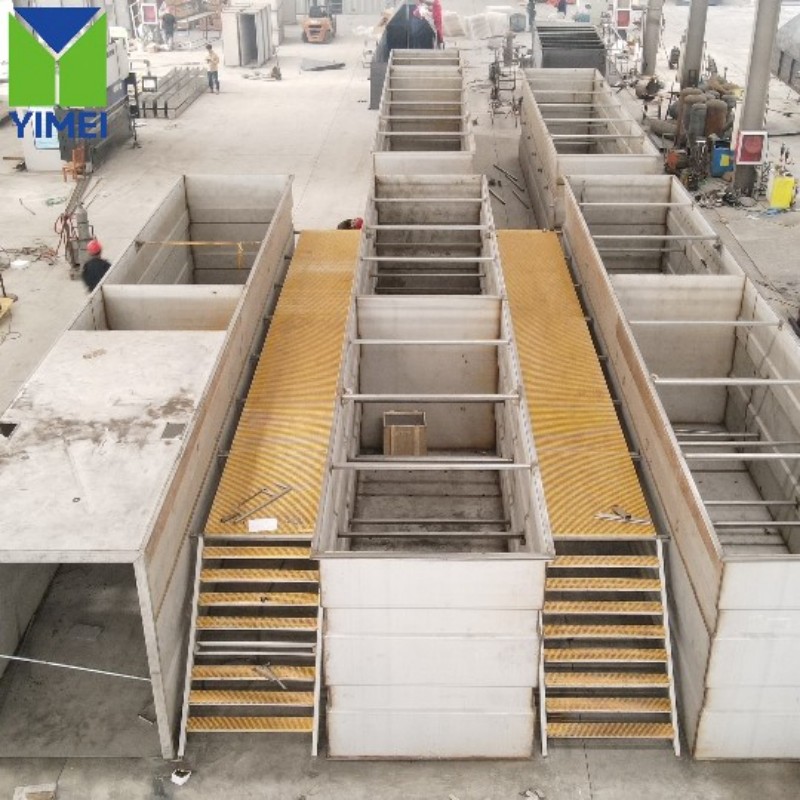
A Containerized MBBR Treatment Plant takes a highly resilient approach to wastewater. It utilizes a Moving Bed Biofilm Reactor design. The system suspends thousands of engineered plastic carriers inside the aeration tank. These small carriers feature massive internal surface areas. They house dense active biofilm colonies. A clarification stage always follows this biological step to separate sloughed biomass from clean water.
Primary Advantages:
Remains highly resilient to hydraulic and organic shock loads. The vital biofilm stays protected within the plastic media structure. Sudden flow spikes will not wash out the biology.
Features a significantly lower energy profile compared to MBR. The system requires no aggressive air scouring for physical membranes.
Relies on natural "self-regulating" biology. As organic loads increase, the biofilm grows thicker. It requires far less daily operator tweaking to maintain stability.
The Skeptical View (Limitations):
Requires a dedicated downstream solid-liquid separation step. You must install a clarifier or Dissolved Air Flotation (DAF) unit. This extra equipment takes up slightly more space.
Effluent quality proves excellent for standard municipal discharge. However, it rarely meets ultra-strict direct-reuse standards without adding tertiary filtration down the line.
Media washout remains a real operational risk. Improperly maintained retaining screens can burst. This failure releases thousands of plastic carriers into the downstream environment.
Choosing between these two robust technologies requires a deep dive into financial and spatial metrics. You must look beyond the initial purchase order. You must evaluate the lifecycle impact of your choice.
Let us compare initial equipment costs directly. MBR generally carries a significantly higher CAPEX. You must purchase costly proprietary membrane modules. You also need precision pumping equipment and automated chemical dosing skids. MBBR utilizes inexpensive plastic carriers and standard aeration blowers. However, civil works costs can alter this math considerably. MBR offers a smaller physical footprint. This density might reduce costly concrete pouring and foundation excavation on tight, rocky sites.
We must provide a realistic assessment of long-term expenses. Energy consumption diverges sharply here. MBR consumes significantly more electricity than MBBR. Membrane scouring requires continuous, high-volume air delivery. You also must factor in major replacement costs over a decade. Membranes require complete replacement every five to eight years. These replacements cost tens of thousands of dollars. Conversely, MBBR polyethylene media can last fifteen to twenty years easily. Chemical costs also impact your budget. MBR requires regular, costly cleaning chemicals. MBBR generally operates without needing these harsh chemical agents.
Both systems function as highly compact Package Sewage Treatment Plants. They both dwarf conventional activated sludge plants regarding space efficiency. However, MBR wins strictly on footprint density. It processes more gallons per square foot by completely removing the bulky secondary clarifier.
MBR vs. MBBR Parameter Comparison Chart
Evaluation Parameter | MBR (Membrane Bioreactor) | MBBR (Moving Bed Biofilm Reactor) |
|---|---|---|
Effluent Quality | Exceptional (Reuse Quality, TSS ~0) | Good (Standard Discharge Quality) |
Footprint Requirement | Ultra-compact (No clarifier needed) | Compact (Requires clarifier/DAF) |
Energy Consumption | High (Requires continuous membrane scouring) | Low to Moderate (Standard aeration only) |
Operator Skill Level | High (Complex automation, chemical handling) | Moderate (Basic mechanical/biological oversight) |
Shock Load Resilience | Low to Moderate (Prone to fouling under stress) | Very High (Biofilm protected in media) |
We must address a dangerous industry narrative. The "plug-and-play" myth dominates commercial wastewater marketing. Vendors often exaggerate automation capabilities. They suggest package plants require zero human oversight. This myth leads directly to catastrophic environmental compliance failures. Every biological system needs dedicated supervision. You cannot simply turn it on and walk away.
MBR systems place a heavy technical burden on site operators. They must constantly monitor transmembrane pressure (TMP) trends. If TMP spikes, the membranes are fouling rapidly. Operators must execute complex, hazardous chemical cleaning cycles safely. The system requires highly trained personnel. If skilled local labor remains unavailable, you must purchase sophisticated remote monitoring packages. You will need external engineers to troubleshoot alarms.
MBBR introduces different, primarily mechanical vulnerabilities. Pre-treatment failures cause unique problems here. If fats, oils, or grease bypass the headworks, they coat the plastic media. This coating suffocates the biofilm. Additionally, poor biology can lead to severe sludge bulking in secondary clarifiers. Effluent screens inside the bioreactor can clog rapidly if debris slips through. Operators must perform regular visual inspections of the rolling media.
Consider the reality of supply chains and replacement parts globally. Sourcing proprietary MBR membrane replacements is difficult. You must buy them from the original manufacturer. Lead times can stretch for months. Conversely, you can source generic MBBR carriers from dozens of global suppliers. MBBR uses standard centrifugal pumps and blowers. Local technicians can rebuild these standard components easily.
Engineers rely on decision matrices to remove emotion from procurement. Use the following criteria to shortlist the correct technology for your specific facility.
When to Choose MBR:
Local discharge limits mandate under 5 mg/L BOD. They also demand near-zero TSS levels.
The ultimate project goal involves direct water reuse. You intend to use effluent for flushing toilets or irrigation.
Physical footprint is absolutely constrained. Examples include retrofitting underground basements or developing hyper-dense urban properties.
You have budget allocated for highly trained operators and ongoing chemical supplies.
When to Choose a Containerized MBBR Treatment Plant:
Influent flow rates and organic loads fluctuate heavily throughout the year. Seasonal resorts and batch industrial processes fit this profile perfectly.
Skilled daily operational labor remains limited. You want to avoid paying premium salaries for specialized membrane technicians.
Standard municipal discharge limits apply to your environmental permit. You do not need to produce drinking-quality water.
Minimizing ten-year OPEX remains your primary financial goal. You want to avoid massive membrane replacement bills in year five.
Do not request generic quotes immediately. You must gather essential site data first. Collect historical flow logs if replacing an old system. Perform detailed wastewater characterization testing on your raw sewage. Confirm your exact regulatory permit limits in writing. You need this specific data before vendors can size equipment properly.
Neither wastewater process is universally better than the other. The ideal choice represents a careful, balanced calculation. You must weigh regulatory necessity, site constraints, and operational capacity equally. MBR delivers pristine water but demands high energy and intense maintenance. MBBR offers rugged reliability and lower lifecycle costs but requires slightly more space. We encourage technical buyers to avoid generic brochure specifications. Instead, engage directly with a qualified process engineer. Have them run a thorough lifecycle cost analysis based strictly on your specific influent data. This evidence-based approach ensures long-term compliance, protects local ecosystems, and guarantees financial predictability for your organization.
A: MBR uses microscopic physical membranes for solid-liquid separation, yielding high-grade, reuse-quality water. It operates without a clarifier. MBBR uses suspended plastic media to grow robust biological colonies. It relies on a downstream clarifier to settle solids. MBBR focuses on resilience and low maintenance, while MBR focuses on extreme precision.
A: Technically, you can add membrane filtration downstream of an MBBR system. However, retrofitting submerged membranes directly into an existing MBBR tank is hydraulically complex. It requires removing the media, altering the aeration grid, and upgrading the blowers. This phased approach is rarely cost-effective compared to buying a purpose-built MBR initially.
A: Sequential Batch Reactors (SBR) are batch-driven processes requiring complex timing controls and larger footprints. Lagoons are natural, incredibly land-heavy systems requiring vast acreage. In contrast, MBR and MBBR are continuous, high-rate solutions designed specifically for minimal footprints and rapid processing.
A: Industry averages show that MBR flat sheet or hollow fiber membranes typically last 5 to 8 years before requiring complete replacement due to irreversible fouling. High-density polyethylene MBBR media is incredibly durable. It routinely lasts 15 to 20 years or more, as it experiences minimal physical degradation during operation.


