

Views: 0 Author: Site Editor Publish Time: 2026-06-17 Origin: Site


Industrial facilities face a severe dual squeeze today. Rising municipal water procurement costs strain operational budgets heavily. Simultaneously, regulators enforce increasingly strict wastewater discharge limits. Treating water simply as a consumable expense fails financially. Facilities must adapt quickly to survive these growing pressures. Shifting to a circular water economy through on-site recycling offers a proven solution. It mitigates regulatory risks while stabilizing long-term operational expenses.
For plant managers, the core challenge has fundamentally shifted. You no longer need to ask why you should recycle. Instead, you must figure out how to select the right setup. Implementing an efficient Industrial Wastewater Treatment system remains critical. The ideal solution delivers a verifiable return on investment. Furthermore, it operates seamlessly without disrupting your daily production output. You will learn how to navigate these technical choices below.
On-site water recycling directly reduces both incoming municipal water bills and municipal sewer/discharge surcharges.
Selecting the right industrial wastewater management system requires matching specific contaminant profiles (BOD, COD, TSS, heavy metals) with appropriate filtration or biological technologies.
Successful deployments rely on rigorous pilot testing to validate membrane lifespan, energy consumption, and actual recovery rates before full-scale capital investment.
A credible ROI model must account for maintenance, sludge disposal, and operational energy use.
Factory margins face constant threats from utility expenses. Understanding the hidden costs of water discharge reveals substantial saving opportunities. Municipalities do not simply charge a flat rate for sewer usage. They actively penalize facilities for sending heavily contaminated effluent down the drain. You pay steep surcharges for high Biological Oxygen Demand (BOD) and Chemical Oxygen Demand (COD). Total Suspended Solids (TSS) also trigger massive financial penalties.
Local treatment plants must work harder to process your complex waste. They pass these elevated processing costs directly back to your facility. These surcharges quietly erode your profitability month after month. Reducing these contaminant loads before municipal discharge yields immediate financial relief.
Beyond direct financial penalties, regulatory pressures continue mounting globally. Environmental compliance standards grow stricter every year. The EPA consistently lowers allowable limits for industrial pollutants. Local watershed authorities impose their own strict discharge caps. They actively monitor factory outfalls to protect local rivers and lakes. One accidental breach can trigger severe fines or forced operational shutdowns.
Corporate sustainability mandates also accelerate this shift. Stakeholders expect robust Environmental, Social, and Governance (ESG) reporting. Companies must actively prove they minimize their environmental footprint. Closed-loop water systems help fulfill these demanding ESG commitments. They demonstrate tangible progress toward corporate sustainability goals.
Defining success requires a balanced approach. A successful project maximizes your water recovery rates. Most factories target a 70% to 90% recovery window. However, pushing for higher recovery often requires disproportionate spending. You must balance this desired yield against acceptable capital expenditure (CAPEX). Operating expenditure (OPEX) also plays a crucial role in long-term viability. Finding this financial sweet spot guarantees a successful rollout.
Navigating the equipment market requires a basic understanding of treatment tiers. Effective industrial wastewater management relies on stacking different technologies. You match the specific equipment to your unique effluent profile. The process typically unfolds across three distinct treatment stages.
This category handles the heavy lifting for high-organic load facilities. Food and beverage plants rely heavily on these systems. Pulp and paper mills also generate massive organic waste streams. Primary treatment physically separates large solids and oils from the water. Secondary treatment uses biological organisms to consume dissolved organic matter.
Two key technologies dominate this space. Dissolved Air Flotation (DAF) excels at removing suspended solids and grease. It injects microscopic air bubbles to float contaminants to the surface. Membrane Bioreactors (MBR) combine biological digestion with advanced microfiltration. MBR systems effectively handle fluctuating organic loads while maintaining a compact physical footprint.
Achieving process-grade reusable water requires tertiary treatment. This stage removes dissolved salts, microscopic particles, and trace chemicals. It acts as the true engine of any water recycling initiative. Ultrafiltration (UF) serves as a robust pre-treatment step here. UF membranes block larger pathogens and fine suspended solids.
Reverse Osmosis (RO) drives the final purification process. RO forces water through semi-permeable membranes under extreme pressure. This strips away dissolved minerals and produces incredibly pure water. RO technology remains essential for achieving true circular economy standards in manufacturing.
Some regulatory environments prohibit any liquid waste discharge entirely. Zero Liquid Discharge (ZLD) systems offer the ultimate compliance solution. They push water recovery to the absolute physical limits. ZLD processes utilize thermal evaporators and crystallizers to boil away remaining moisture. This converts the final liquid brine into a solid, dry cake.
While highly effective, ZLD presents significant operational challenges. It consumes massive amounts of thermal and electrical energy. Capital costs for titanium-grade evaporators are exceptionally high. Most facilities only pursue true ZLD when local laws strictly mandate it.
Treatment Tier | Primary Function | Key Technologies | Best Use Case |
|---|---|---|---|
Primary / Secondary | Organics and solids removal | DAF, MBR | Food processing, high BOD/COD streams |
Tertiary / Filtration | Dissolved solids and ion removal | UF, RO | Creating process-grade reusable water |
Zero Liquid Discharge | Complete liquid waste elimination | Evaporators, Crystallizers | Strict regulatory zones, toxic brines |
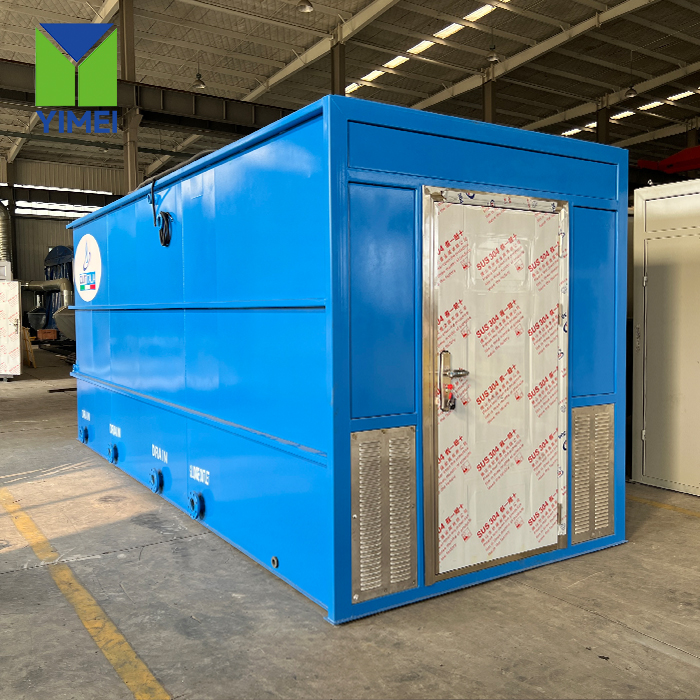
Purchasing capital equipment requires a rigorous evaluation framework. You cannot buy these systems directly from a standard catalog. Each factory generates a highly unique chemical signature in its effluent. Evaluating vendors requires matching their technology features to your specific operational outcomes.
Contaminant Specificity & Scaling Risk: Evaluate whether the technology handles your specific chemical profile. High-silica environments destroy standard RO membranes quickly. Heavy oils blind filtration media in days. You must assess the risk of premature membrane fouling. Ask vendors how their pre-treatment stages specifically protect downstream recycling engines.
Footprint & Modularity: Factory floor space usually commands a premium. Traditional concrete treatment basins consume massive square footage. Modern systems utilize skid-mounted designs to save space. Modular units allow you to expand capacity gradually. You can add new membrane racks later as your production volume increases.
Energy Efficiency vs. Yield: High water recovery rates require exponential energy inputs. Pushing RO recovery past 80% requires incredibly powerful high-pressure pumps. You must map the trade-off carefully. Sometimes recovering 75% of your water yields better financial returns than chasing 90%. The energy costs to extract that final 15% often outweigh the water savings.
Automation & Remote Monitoring: Labor shortages impact utility management severely. Manual chemical dosing and backwashing waste valuable operator hours. Assess the software layer of any proposed system. Ensure it integrates seamlessly with your existing SCADA architecture. Remote monitoring capabilities allow off-site engineers to troubleshoot minor issues before they escalate.
Theoretical chemistry often clashes with factory floor realities. Implementing a recycling system carries inherent operational risks. Facilities must proactively plan for these challenges to avoid costly downtime. Experience dictates a cautious, phased approach to deployment.
You must never bypass feasibility studies or pilot testing. Pilot testing serves as your ultimate insurance policy. Vendors will install a miniature version of their system on your site. This unit runs on your actual, fluctuating daily plant discharge. It validates theoretical membrane lifespans against real-world fouling conditions. Pilot data proves energy consumption models before you sign large capital contracts.
Managing integration downtime requires careful engineering foresight. You cannot halt factory production to pipe in a new utility system. Smart installations rely on temporary bypass lines. Contractors build and test the new system parallel to your existing discharge routing. The final tie-in usually happens during a scheduled holiday shutdown or weekend maintenance window.
Facilities must also address the hidden reality of secondary waste streams. Recycling water does not magically make pollutants disappear. It simply concentrates them into smaller volumes of sludge and brine. You must actively manage this residual waste. Dewatering presses shrink sludge volume to reduce hauling fees. You still need reliable logistics to transport this concentrated waste to appropriate disposal sites.
Finally, operator training determines long-term success. The most advanced system fails if operators mismanage it. Advanced filtration membranes require precise chemical cleaning routines. You must factor in a significant learning curve for your utility team. Invest heavily in hands-on training sessions during the commissioning phase.
Securing board approval requires a bulletproof financial narrative. Engineers often focus heavily on the technology specifications. However, executives approve budgets based on clear financial metrics. You must build a comprehensive return on investment (ROI) calculation.
Your financial model must capture all relevant savings and expenses. On the savings side, calculate your dramatically reduced municipal intake costs. Add the complete elimination of municipal BOD/TSS discharge fines. On the cost side, detail the initial system CAPEX. You must also forecast OPEX accurately. This includes daily chemical usage, projected membrane replacements, electrical load, and dedicated operator labor.
Shortlisting the right vendors streamlines the procurement phase. The market contains hundreds of equipment assemblers, but few true process experts. Use a strict vetting checklist to filter potential partners.
Do they offer firm performance guarantees based solely on your pilot test data?
Do they possess verified references within your specific industry vertical?
What Service Level Agreement (SLA) do they provide for emergency support?
Can they guarantee fast delivery times for critical consumable parts?
Your immediate next action should focus on data gathering. Recommend a comprehensive facility water audit to your management team. Hire an independent firm to execute a detailed wastewater characterization study. You need accurate flow rates and chemical baselines before soliciting vendor proposals.
Effective Industrial Wastewater Treatment transforms a major regulatory liability into a strategic operational asset. It shields your facility from unpredictable municipal rate hikes. It also guarantees compliance with increasingly strict environmental legislation. Treating and reusing your effluent simply makes excellent business sense.
You must avoid "one-size-fits-all" promises from generic equipment suppliers. The most profitable water recycling systems demand meticulous custom engineering. They must align perfectly with the specific chemistry and flow dynamics of your individual plant. Shortcuts during the design phase inevitably lead to operational headaches later.
Take control of your water strategy today. Schedule a comprehensive site audit to uncover your hidden vulnerabilities. Request a pilot testing consultation with a qualified water engineering firm. Tangible data will guide your facility toward a sustainable and profitable closed-loop future.
A: Usually 2 to 5 years. This timeframe is highly dependent on local municipal water rates and sewer discharge fees. High local utility costs accelerate your financial return. The energy intensity of your chosen treatment technology also heavily influences the final payback calculation.
A: While technically possible, achieving true ZLD is highly energy-intensive and expensive. Evaporating final brines requires massive thermal energy. Most facilities find their optimal financial ROI at 75-90% water recovery. Companies generally avoid full ZLD unless strict local regulations mandate it.
A: Fouling requires frequent chemical cleaning cycles, which interrupt production. It also causes premature replacement of expensive RO or UF membranes. Both factors drive up OPEX significantly. Designing proper pre-treatment stages is absolutely critical to controlling these ongoing operational costs.


