

Industrial facilities face intense pressure today from strict regulatory bodies. Tightening environmental discharge regulations constantly shift your operational compliance targets. At the same time, stringent municipal discharge limits punish poor effluent quality severely. Efficiently removing total suspended solids (TSS) is absolutely no longer optional. You must also eliminate fat, oil, and grease (FOG) reliably every single day. This reality makes selecting your primary separation technology a critical operational priority. You are not just making a generic equipment procurement. Instead, you must carefully integrate a highly specific engineering asset into your existing plant ecosystem. Our objective here is clear and highly actionable. We provide an evidence-based framework for evaluating, sizing, and selecting the right system. You will learn how to analyze influent profiles and review exact engineering specs. We will also compare technological alternatives to guide your final engineering decision. This comprehensive framework ensures your facility meets strict compliance goals effectively and consistently.
Accurate influent profiling (flow rate, TSS/FOG load) is the baseline for preventing system under-sizing or chemical over-dosing.
Evaluating a dissolved air flotation unit requires analyzing the recycle pump efficiency, air-to-solid ratio, and material durability.
Pilot testing is a non-negotiable step to validate manufacturer claims against site-specific water chemistry.
Accurate system sizing always starts with hard, verifiable data. You must analyze your influent profile thoroughly before considering any equipment dimensions. Guessing these critical parameters prevents optimal performance. It also causes crippling compliance failures later in the operational lifecycle. You need a deeply scientific approach to characterize your facility's wastewater properly.
Water flow inside an active industrial plant rarely remains constant. You must measure both average and absolute peak flow rates accurately. Routine plant washdowns often cause sudden and massive volume surges. These unpredictable spikes can easily overwhelm standard equipment capacities. When flow variations exceed baseline limits, we strongly recommend installing equalization tanks. These external tanks buffer extreme volume variations throughout the entire operating shift. They ensure your primary separation unit receives a steady, predictable, and manageable flow. Without proper equalization, rapid surges disrupt the delicate micro-bubble separation zone entirely.
Historical water sampling provides vital baseline data for your engineering team. You need comprehensive records of TSS and FOG concentrations spanning several months. High variations in solid loading directly impact the physical equipment design. They dictate the required surface area for proper phase separation. Heavy solid loading also requires robust and aggressive skimming mechanisms to prevent surface clogging. Simple grab samples do not provide enough contextual data for accurate sizing. You must use flow-proportional composite sampling for highly reliable loading profiles. Accurate loading data prevents catastrophic chemical over-dosing during daily plant operations.
Your specific water chemistry dictates the physical construction limits of the equipment. Extreme pH levels degrade standard metal materials remarkably quickly. High influent temperatures alter internal gas solubility and hinder optimal bubble formation. Salinity introduces severe, long-term corrosion risks to all submerged moving parts. You must document these chemical parameters rigorously before reviewing equipment catalogs.
pH Levels: Determine baseline acidity or alkalinity to specify appropriate protective coatings.
Temperature Fluctuations: Track seasonal thermal shifts affecting dissolved oxygen limits.
Chloride Concentration: Measure precise salinity limits to evaluate stainless steel pitting risks.
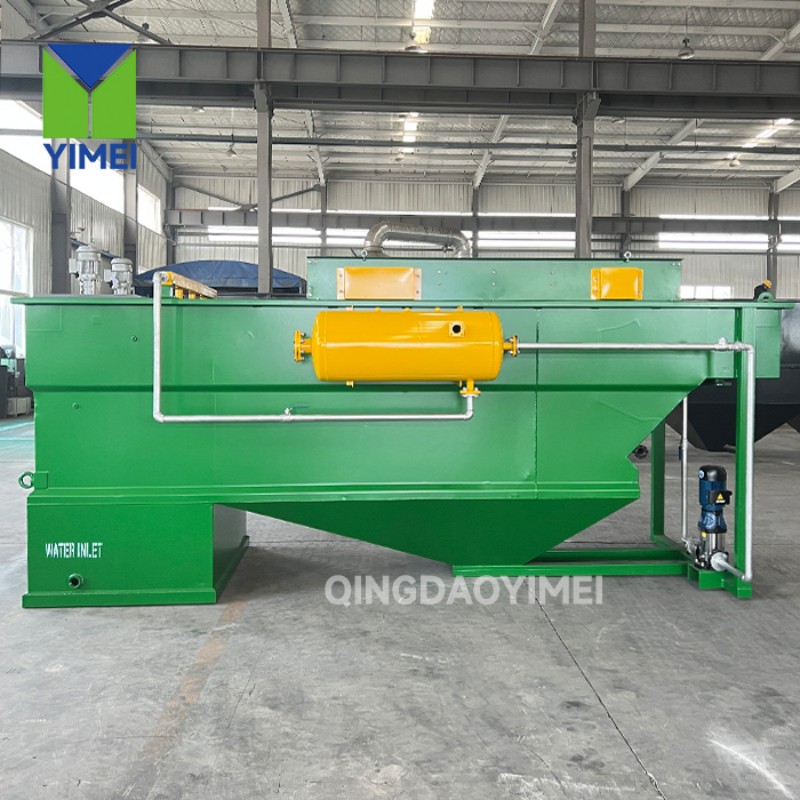
You must evaluate the mechanical components rigorously before making a final technological selection. A Dissolved Air Flotation Machine relies on precise fluid dynamics and multiphase physics. Let us carefully examine the core engineering specifications required for optimal, uninterrupted operation.
The dissolution system forms the absolute heart of the separation unit. You must evaluate the high-pressure recycle pump and the central air compressor. The internal saturation tube also demands close engineering inspection. A higher gas dissolution efficiency yields smaller, much denser micro-bubbles consistently. Superior micro-bubble formation improves target solid attachment rates significantly. You must evaluate the exact air-to-solid ratio capabilities of the proposed unit. This specific metric ensures the machine can float your maximum daily contaminant load effectively. Poor saturation leads directly to sinking flocs and unacceptably cloudy effluent.
Manufacturing facilities often face severe physical space constraints indoors. You must balance the necessary hydraulic loading rate against your truly available floor space. Rectangular structural configurations maximize active surface area in exceptionally tight layouts. Conversely, circular tank configurations often suit larger, open outdoor industrial installations much better. Discuss strict footprint-to-capacity ratios early in the structural design phase. A high-rate vertical design handles far more gallons per square foot. This architectural choice saves valuable facility real estate for other critical production machinery.
Choosing the right structural material ensures decades of operational reliability. Mismatched materials inevitably lead to rapid, catastrophic structural failure under chemical stress.
Coated Carbon Steel: Offers a standard structural alternative for light duty. It works exceptionally well in dry, pH-neutral indoor environments where chemical exposure remains low.
304 Stainless Steel: Remains the absolute standard for most common industrial applications. It resists typical organic corrosion effectively and handles moderate daily chemical exposure.
316L Stainless Steel: Becomes strictly mandatory for highly corrosive or extreme saline environments. It provides maximum elemental defense against chloride pitting and harsh chemical degradation.
Top surface skimmers remove the floated sludge blanket continuously from the water. You must evaluate counter-current versus co-current skimmer mechanical designs carefully. Counter-current designs often produce significantly drier sludge outputs for easier handling. Co-current mechanisms handle massive, rapidly forming sludge volumes much better without jamming. Base your final mechanical selection on your anticipated maximum daily sludge volume. Your overall dry-solids concentration targets also drive this crucial mechanical decision.
Industrial separation requires matching the precise technological mechanics to the specific chemical contaminant. You might logically consider entirely different Wastewater Treatment Equipment during the initial procurement process. Here is how core separation technologies compare objectively against one another.
Dispersed air flotation produces significantly larger bubbles during standard operation. These larger bubbles work remarkably well for heavy, dense mining slurry operations. They also suit highly aggressive crude oil recovery applications perfectly. However, they struggle immensely with fine, delicate industrial chemical emulsions. Massive bubbles create excessive tank turbulence which shears fragile solids apart. Micro-bubbles provide the gentle, steady lifting force strictly required for delicate chemical flocculants.
Suspended air flotation uses completely different internal bubble generation mechanics. It often utilizes specialized chemical surfactants to create frothy, highly stiff bubbles. Chemical dosing requirements differ significantly between these two operational systems. You must confirm your specific organic load genuinely requires micro-bubble physical attachment. Traditional micro-bubble generation usually handles complex FOG emulsions far better. It actively avoids the heavy surfactant chemical reliance seen in suspended air setups.
Gravity settling relies purely on natural particle density differences over extended time periods. Standard clarifiers require massive spatial footprints to function properly. They also demand extremely long retention times to achieve acceptable optical clarity. Micro-bubble buoyancy accelerates the entire solid separation process dramatically. This active lifting physically replaces passive, inherently slow settling dynamics. It maximizes space efficiency and accelerates total processing time. FOG and extremely light biological particulates simply will not settle effectively without mechanical assistance.
Separation Technology Comparison Matrix
Technology Type | Typical Bubble Size | Primary Target Contaminant | Facility Footprint Requirement |
|---|---|---|---|
Dissolved Air Flotation | 30 - 50 microns | FOG, Fine TSS, Delicate Emulsions | Moderate Space Needed |
Dispersed Air Flotation | 1000+ microns | Heavy Oil, Dense Mining Ores | Moderate to Large Space Needed |
Suspended Air Flotation | Variable Chemical Froth | High Solids utilizing Surfactants | Compact to Moderate Space Needed |
Gravity Settling Clarifier | Not Applicable | Heavy Settleable Solids, Dense Grits | Extremely Large Space Needed |
Different manufacturing sectors present entirely distinct wastewater treatment challenges. You must fully customize the selected equipment for your specific industry demands to ensure operational success.
Modern slaughterhouses and busy commercial dairies generate immense, difficult organic loads daily. You will frequently encounter extreme biological oxygen demand (BOD) and chemical oxygen demand (COD) levels. These food processing facilities require strict sanitary compliance components everywhere. You also need heavy-duty, reinforced steel scraping mechanisms. Animal fats coagulate quickly and form incredibly dense, stubborn surface blankets upon cooling. Standard, lightweight plastic skimmers will literally snap under these harsh mechanical conditions. Proper scaling prevents chain snapping and premature motor burnout.
Large petrochemical plants must remove dangerous emulsified hydrocarbons continuously. Workplace safety regulations dictate incredibly strict electrical standards here. You must specifically require Class 1 Division 1 or Division 2 explosion-proof components. Flammable volatile organic compounds (VOCs) often release naturally during the vigorous aeration process. Spark-proof scraping materials prevent catastrophic facility ignition events effectively. Explosion-proof control panels keep your specialized operators completely safe during routine monitoring.
High-volume paper mills focus heavily on achieving maximum wood fiber recovery. Textile plants must actively remove stubbornly suspended chemical dyes and synthetic colors. Influent chemical compositions shift suddenly and unpredictably in these specific continuous-run facilities. The separation system must adapt to wildly varying polymer requirements very rapidly. Robust chemical dosing automation handles these sudden shifts effectively. It ensures the final effluent remains completely clear despite rapidly changing upstream production runs.
Vendor selection requires rigorous, uncompromising technical vetting. Ask highly demanding engineering questions before ever authorizing equipment deployment.
Never acquire heavy separation systems based solely on polished marketing brochures. You must demand extensive bench-scale or full on-site physical pilot tests. Pilot testing remains an absolutely non-negotiable step in modern procurement. It objectively validates manufacturer sizing claims against your actual site-specific water chemistry. Real-world testing reveals hidden emulsion challenges and chemical dosing issues immediately. Treat any vendor refusing a comprehensive pilot test with extreme technical caution.
Always request strict, legally binding contractual performance guarantees. Vague promises of crystal clear water mean absolutely nothing in applied engineering. Tie all performance guarantees directly to specific, legally measurable effluent laboratory metrics. For example, demand a written guarantee of 95 percent TSS reduction at 300 gallons per minute continuous flow. Hold the manufacturer technically accountable for their initial sizing calculations.
Unexpected equipment downtime stops critical production lines entirely. You must assess replacement part lead times extremely carefully during evaluation. Ask the vendor directly if the system uses heavily proprietary internal parts. Proprietary components often cause severe, multi-week maintenance delays when failures occur. Commercially available off-the-shelf (COTS) components ensure rapid, local mechanical repairs. Standardized pumps, universal valves, and common motors keep your facility running smoothly year-round.
Selecting optimal separation technology requires deeply methodical analysis and precise data gathering. Your ideal equipment specification relies on completing a clear engineering matrix. You must combine highly accurate influent data with your strict site layout constraints. Over-specifying your system creates unnecessary engineering bloat and footprint issues. Conversely, under-specifying leads directly to immediate compliance violations and operational headaches. You must strike the perfect structural and mechanical balance for your specific application.
Your actionable next steps remain straightforward and highly focused. Schedule a comprehensive, independent water quality analysis immediately to secure baseline data. Reach out to multiple manufacturers and formally request an on-site pilot test using your live effluent. Finally, consult a specialized application engineer to review the empirical findings. They will verify your flow calculations and approve your final material selections. Proper engineering due diligence guarantees long-term compliance and continuous system reliability.
A: A commercial unit typically lasts 15 to 20 years under continuous operation. However, this lifespan depends heavily on your initial structural material choices. Proper anti-corrosion maintenance extends system longevity significantly. Routine visual inspections of stainless steel components prevent localized chemical pitting and catastrophic mechanical failure.
A: Sizing requires calculating your absolute maximum peak flow rate accurately. You must add the system's internal recycle flow rate to this specific baseline number. Finally, apply the required hydraulic retention time based on your solid loading profile. A qualified application engineer will plot these exact metrics to specify exact physical dimensions.
A: Yes, you can easily retrofit older separation equipment. Facilities frequently upgrade standard internal saturation tubes for much better gas dissolution efficiency. You can also add advanced chemical dosing automation sensors. These targeted modular upgrades improve micro-bubble formation and boost overall plant treatment capacity substantially.
A: Systems typically generate highly dense bubbles strictly in the 30 to 50 micron range. This specific micron size creates optimal surface area for particle collision. It provides a gentle, consistent vertical lifting force without causing shear. This precise engineering metric dictates overall separation efficiency for fragile flocs and fine emulsions.
