

Views: 240 Author: Site Editor Publish Time: 2026-08-31 Origin: Site


Stricter environmental regulations, escalating water scarcity, and aggressive ESG targets now dominate industrial planning. Decentralized facilities and remote job sites must prioritize water reuse to survive these pressures. They face mounting mandates to recycle every single drop. Traditional, civil-engineered wastewater infrastructure rarely suits these demanding environments. Massive concrete plants are often too slow to deploy. They also prove spatially impossible for localized applications. Their massive capital requirements easily break budgets for small-to-medium scale operations.
Fortunately, Package Sewage Treatment Plants offer a highly efficient, rapid-deployment alternative. They consistently achieve the stringent effluent quality required for non-potable and indirect potable reuse. You will learn how these modular systems operate effectively. We will explore why they scale seamlessly across various industries. You will also discover what site implementation truly requires.
Modular Compliance: Package systems provide scalable pathways to meet local and federal (e.g., EPA) water reuse standards without the footprint of traditional civil works.
Advanced Biological Treatment: Integration of technologies like a Containerized MBBR Treatment Plant ensures resilience against fluctuating influent loads, producing high-grade effluent.
Rapid Deployment & Commissioning: Pre-engineered and factory-tested units drastically reduce site preparation and installation timelines.
Risk Mitigation: Automated monitoring and modular redundancy protect against compliance breaches, making them ideal for remote job sites and decentralized communities.
Companies face intense pressure regarding localized water recycling. Agricultural irrigation, cooling towers, and industrial washing demand massive fluid volumes daily. Sourcing fresh water costs too much in today’s market. Municipal limits heavily restrict traditional disposal methods. We see decentralized reuse shifting from optional to entirely mandatory.
Custom-built civil plants routinely fail mid-sized projects during the planning stage. We can identify three primary reasons for this failure:
Extended engineering timelines delay critical site operations.
Massive land requirements waste valuable operational footprint.
Inflexible upfront expenditures freeze company cash flow permanently.
Package systems shift this financial model completely. They transform massive upfront expenditures into scalable, phased investments. You buy only the capacity you need today. You can scale capacity later alongside actual demand. This modular advantage accelerates project approvals significantly.
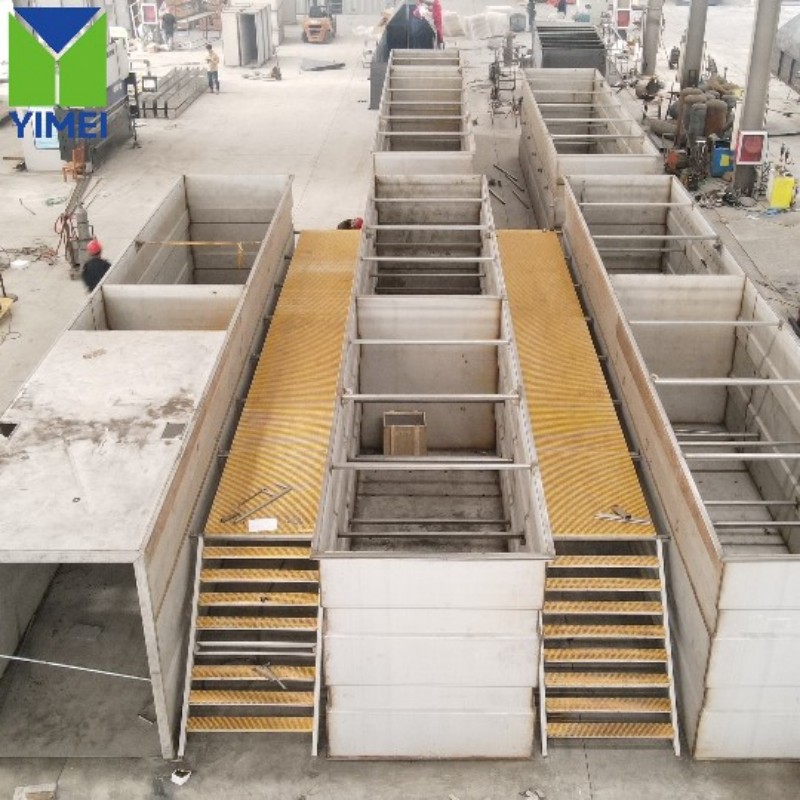
How do these systems achieve high reuse standards? We must examine their multi-stage treatment architecture. A standard package unit utilizes several sequential processes internally. Each stage plays a vital role in purification.
Primary Screening: Mechanical screens remove large solids, plastics, and abrasive debris.
Biological Treatment: Microorganisms consume and break down complex dissolved organic matter.
Clarification: Gravity settles out the treated water from the active sludge.
Tertiary Filtration: Advanced membranes polish the effluent for safe end-use.
The biological phase heavily dictates your overall treatment success. A Containerized MBBR Treatment Plant excels in this exact role. MBBR stands for Moving Bed Biofilm Reactor. Millions of plastic media carriers circulate inside a compact containerized footprint. These carriers provide immense active surface area for bacteria.
This biological design strongly resists toxic shock loads. It also ensures stable operation under wildly varying flow rates. Remote camps and industrial sites often experience extreme flow variations. MBBR technology handles these peaks without washing out the beneficial bacteria.
Achieving safe reuse requires one final, crucial step. We must integrate tertiary polishing within the package framework. Ultrafiltration (UF) and reverse osmosis (RO) strip away micro-pollutants completely. Ultraviolet (UV) light and chlorine disinfection destroy any remaining pathogens. These specific additions transition your effluent from "safe to discharge" to "safe to reuse."
Meeting EPA guidelines and local mandates requires precise engineering. Package plants target specific threshold reductions based on intended reuse. Unrestricted public irrigation demands much stricter metrics than restricted industrial applications. We design systems to hit these targets flawlessly.
Effluent Quality Metrics by Water Reuse Tier
Parameter | Restricted Irrigation (e.g., Timber) | Unrestricted Reuse (e.g., Parks) | Cooling Tower Makeup |
|---|---|---|---|
BOD (Biochemical Oxygen Demand) | < 30 mg/L | < 10 mg/L | < 10 mg/L |
TSS (Total Suspended Solids) | < 30 mg/L | < 5 mg/L | < 5 mg/L |
Fecal Coliforms | < 200 CFU/100mL | Non-detectable | Non-detectable |
Turbidity | Not strictly regulated | < 2 NTU | < 1 NTU |
Regulators demand verifiable, real-time data during site audits. Integrated SCADA and PLC systems provide this critical transparency. They automate data logging for continuous compliance tracking. Operators can pull historical reports instantly.
We must view these systems through a skeptical-friendly lens. These units are never "set-and-forget" appliances. Consistent compliance demands active, professional oversight. You cannot install them and ignore them.
Calibrate your dissolved oxygen sensors routinely. This ensures accurate blower control and saves energy. Inspect MBBR media regularly to confirm healthy biofilm growth. Maintain a strict schedule for chemical replenishment.
Ignoring routine sludge removal often leads to catastrophic system failure. Assuming automation completely replaces trained operators guarantees non-compliance. Skipping winterization protocols causes severe pipe ruptures in colder climates.
Site rollout involves highly specific preparation requirements. You need proper concrete pad specifications for weight distribution. Poorly leveled pads cause internal tank stresses and subsequent leaks. Utility tie-ins must align precisely during the installation phase. You need reliable power and raw water access points ready.
Cold climates demand strict winterization and heavy container insulation. Exposed pipes freeze rapidly without proper heat tracing. Manufacturers often install internal space heaters to keep biological processes warm.
We must differentiate between physical deployment and biological commissioning. Physical installation often takes just a few days. Cranes drop the units, and technicians connect the pipes swiftly. However, biological acclimation requires several weeks.
The bacteria must grow, multiply, and stabilize inside the reactors. They will not produce reuse-quality effluent on day one. You must plan for this lag phase during your project timeline.
Operations and maintenance require highly realistic assumptions. Aeration blowers consume the most energy within the entire system. You must size them efficiently. Sludge management frequency varies based on your daily influent load. Operators need specialized training to manage advanced biological systems effectively.
Choosing the right vendor determines your long-term project success. You must demand application-specific track records from potential partners. Ask for vendor case studies mirroring your exact reuse application. A remote mining camp differs vastly from a suburban golf course.
Evaluate the hardware and its overall environmental longevity. Key questions arise regarding containerized solutions. How long will the internal MBBR media truly last? Do the steel tanks feature robust, anti-corrosion marine coatings? Does the vendor use standardized, easily replaceable pumps?
Proprietary parts often cause massive delays during emergency breakdowns. Always insist on universally available components like standard motor brands. This ensures your local technicians can source replacements quickly.
Initiate a site-specific influent characterization immediately. Test your raw wastewater to understand its precise chemical makeup. You cannot design a system blindly. Once you have this data, request a customized modular scaling proposal from your preferred vendor.
Package systems bridge the gap between strict reuse mandates and decentralized site limitations.
Always match your tertiary treatment technology directly to your specific reuse goals.
Plan your biological commissioning timeline well in advance to avoid regulatory fines.
Prioritize modular designs to accommodate future capacity expansions effortlessly.
Consult with applications engineers today. Run a thorough footprint-to-effluent viability assessment for your specific project. Proactive planning ensures you meet environmental standards while maintaining operational efficiency.
A: Yes, but it requires highly advanced configurations. Most standard package plants handle non-potable applications like irrigation or cooling. Direct potable reuse demands extensive reverse osmosis and advanced oxidation processes. You must specifically design for potable standards from the very beginning.
A: Scaling is remarkably straightforward due to modularity. You simply add parallel containerized trains to your existing setup. This plug-and-play nature eliminates the need for massive new civil construction. You easily integrate the new modules into your central control system.
A: A well-maintained unit lasts 15 to 20 years. Lifespan depends heavily on environmental exposure and maintenance habits. High-quality epoxy marine coatings protect the steel from corrosive wastewater. Proactive maintenance extends the operational life significantly.
A: Engineers adapt them specifically for harsh climates. Manufacturers install heavy internal insulation and space heaters. Heat tracing protects exposed external piping from freezing solid. Remote telemetry allows off-site operators to monitor the system continuously.


