

Have you ever watched a plant shut down just because a screen blinded? I have. Sticky fats and heavy grease can choke water flow in minutes. The entire treatment process grinds to a halt. It is a frustrating and incredibly expensive problem. Fortunately, automated spray cleaning offers a proven way out. Let us break down exactly how hydrodynamic cleaning mechanisms operate. We will also explore why they are non-negotiable for optimizing liquid-solid separation.
Continuous Efficiency: Automated spray cleaning prevents screen blinding proactively. You get uninterrupted wastewater flow and optimal solid capture rates without bottlenecking the primary treatment phase.
Reduced Labor Costs: Hydrodynamic cleaning eliminates hazardous manual scrubbing. Say goodbye to frequent maintenance shutdowns and bloated operational overhead.
Extended Equipment Lifespan: High-pressure washing stops corrosive biological buildup. It shields your drive motors from the excess weight of retained water.
Material Synergy: Premium metallurgy paired with robust spray systems resists harsh chemicals and abrasive grit.
Superior to Alternatives: A spray-cleaned rotary drum handles sticky solids much better than traditional mechanical raking systems while taking up significantly less space.
At the core of mechanical screening, a highly engineered Drum Screen is built for relentless operation. It features a rotating cylinder crafted from precision wedge wire or perforated mesh. Depending on the specific model and influent requirements, gap sizes typically range from 0.25mm to 2.5mm. As raw influent hits the screen, liquid effortlessly passes through these precise apertures. Meanwhile, solid particulates larger than the gap stay on the surface. An internal flight or external scraper then conveys this captured waste to a discharge chute. Ultimately, this continuous separation mechanism slashes total suspended solids and biochemical oxygen demand in primary treatment stages.
Because of its high efficiency and compact footprint, this screening technology dominates multiple demanding sectors. Different industries face unique influent challenges that require reliable filtration.
Industry | Typical Influent Characteristics | Screening Priority |
|---|---|---|
Municipal Wastewater | Rags, plastics, organic matter, grit | Preventing downstream pump blockages |
Food & Beverage | Vegetable scraps, fruit pulps, sticky sugars | High-volume organic solid recovery |
Slaughterhouses | Feathers, offal, high concentrations of fats | Managing highly viscous and cohesive solids |
Pulp & Paper | Wood fibers, chemical residues, bark | Fiber recovery and water recycling |
For plant operators, downtime is not just a headache. It bleeds money. The efficiency of primary screening directly dictates the performance of every downstream process. If a screen bottlenecks, influent backs up fast. Consequently, this triggers environmental bypass events or overloads secondary biological systems. Maintaining continuous operation is simply a mandatory requirement.
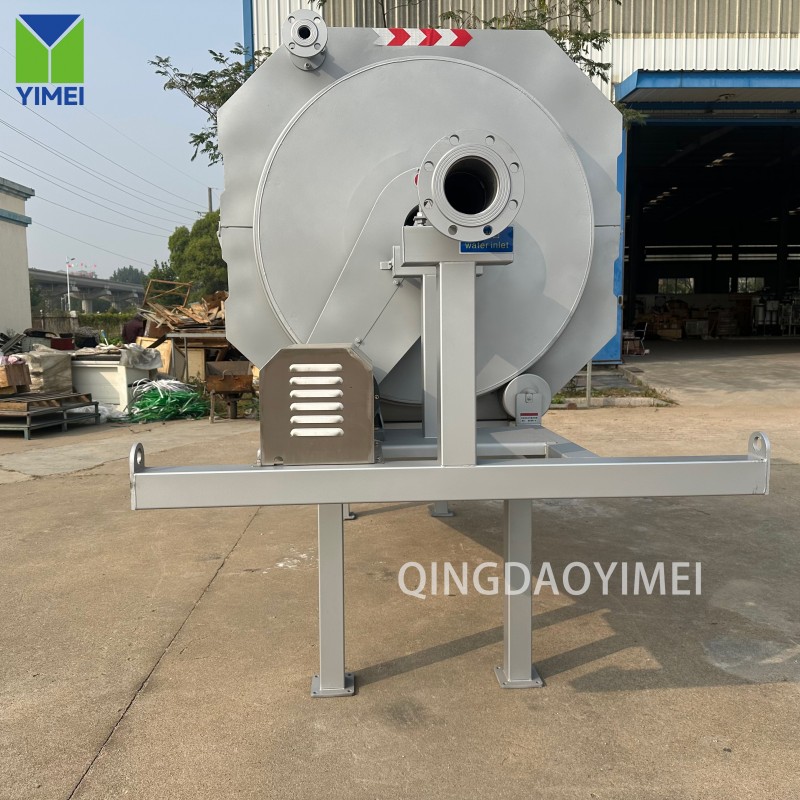
Looking at the current wastewater management landscape, there is a massive shift toward smart and low-maintenance separation. Environmental regulations regarding effluent discharge are tightening globally. Facilities are being forced to achieve finer screening without sacrificing flow rates. Therefore, facility managers are abandoning reactive maintenance models. The current industry trend heavily favors proactive hydrodynamic cleaning systems integrated with programmable logic controllers. We are seeing more plants processing high-viscosity industrial waste like never before. Standard mechanical screening fails here. Automated washing ensures primary stages handle these complex volumes efficiently without constant human intervention.
Screen blinding happens when filtering apertures get completely plugged. Hard solids rarely cause this issue. Fats, oils, and grease drive the worst blinding scenarios. Imagine a slaughterhouse floor during a peak shift. Warm grease enters the wastewater, cools down, and coagulates. It adheres like glue to the stainless steel wedge wire. Smaller particles get trapped in this sticky matrix. Soon, the screen surface is sealed shut.
The operational fallout of a blinded screen is severe.
Decreased Flow Rates: The open area of the mesh shrinks. The volumetric capacity drops drastically, causing dangerous upstream pooling.
Wastewater Overflow: Severe blinding forces untreated wastewater into emergency bypass channels. You risk massive regulatory fines and environmental damage.
Mechanical Strain: Trapped water adds immense weight to the drum. This forces the drive motor and trunnion wheels to work well past their rated limits. Premature mechanical failure is inevitable.
Operators used to scrub drums with stiff brushes or handheld hoses. This is a nightmare for modern fast-paced plants. It exposes workers to biological hazards and volatile organic compounds. Furthermore, manual cleaning is purely reactive. By the time someone notices the blinding, the facility has already lost critical processing efficiency.
Automated spray cleaning tackles blinding head-on. A stationary header pipe sits parallel to the rotating cylinder. High-pressure water pumps into this header and blasts through precision nozzles. This hydrodynamic shear force strikes the mesh from the opposite side of the debris. It forcefully dislodges cohesive biofilms and pushes them straight into the discharge trough.
You can configure spray systems to run continuously or intermittently based on your specific influent profile.
Continuous Spraying: Perfect for highly viscous meat processing where grease accumulation is relentless. It delivers constant shearing force.
Intermittent Spraying: Triggered by differential pressure sensors. When upstream water rises, the pump activates. Once the screen clears and water levels drop, it shuts off. This smart method saves massive amounts of water and energy.
The effectiveness of the cleaning system relies entirely on nozzle selection. Most industrial spray bars utilize flat fan nozzles. They create a distinct V-shaped spray pattern. When spaced correctly along the header pipe, these patterns overlap slightly. You get absolute 100 percent coverage with zero unwashed blind spots left behind to harbor bacteria.
Hydraulic throughput is the primary metric of screening success. By constantly removing obstructions from the perforated mesh, the spray system keeps the open area at its theoretical maximum. You can process peak flows without experiencing frustrating bottlenecks.
A partially blinded screen actually filters worse. When a screen is clogged, hydraulic pressure forces water through fewer slots at higher velocity. This increased speed pushes soft plastics and deformable organics right through the mesh. Keeping the screen uniformly clean maintains a gentle flow velocity. The mesh captures fine particles exactly as engineered.
Automation yields a rapid return on investment. Calculate the labor hours spent on manual scrubbing. The financial savings become glaringly evident. Additionally, preventing motor strain saves heavy costs on bearing replacements and emergency maintenance.
Stagnant organic matter breeds anaerobic bacteria rapidly. This biological breakdown produces noxious hydrogen sulfide gas. High-pressure washing removes organics instantly. It prevents biofilm establishment and keeps the facility compliant with occupational health standards.
A clean screen acts as an impenetrable barrier against damaging solids. By preventing bypass events, the spray system shields expensive downstream assets. Aeration basin diffusers and centrifugal pumps are protected from physical damage and catastrophic clogging.
High-pressure water and chemical exposure demand serious metallurgy. Investing in a Stainless Steel Drum Screen is an absolute necessity for abrasive influent. Grades like SUS304 or 316L form a passive chromium oxide layer. This resists rust naturally. It is particularly critical if you use chemical clean-in-place solutions that would quickly destroy standard carbon steel.
Hydrodynamic jets cause structural fatigue in weak materials over time. However, stainless steel wedge wire is engineered for localized blasting. The high tensile strength ensures the precise aperture gaps do not warp or widen over years of continuous washing. The machine maintains its original filtration rating.
Premium stainless steel costs more upfront. Yet, its synergy with automated cleaning creates a highly resilient system. You eliminate premature corrosion. The equipment operates reliably for decades, drastically lowering the total cost of ownership.
In the mechanical separation landscape, a Fine bar screen serves a different purpose. Typically installed at a 60 to 75-degree angle in deep concrete channels, it uses parallel metal bars with spacings often between 1mm and 20mm. It traps bulky debris before main processing streams in municipal headworks.
The fundamental difference lies in how they handle debris.
Bar Screen Cleaning: Relies on mechanical action. Automated rakes scrape the bar rack face to lift debris out of the channel.
Drum Screen Cleaning: Combines rotational conveyance with hydrodynamic shear. The high-pressure spray cleans the microscopic apertures that rakes simply cannot reach.
When evaluating performance against highly viscous industrial wastewater, spray-cleaned rotary drums win every time. Mechanical rakes tend to smear sticky grease across the bar rack. This makes blinding worse. In contrast, the reverse-jetting of a spray system pushes cohesive materials completely out of the wedge wire. You get superior liquid-solid separation in the most challenging environments.
Implementing an automated mechanism is a highly effective strategy. However, fluid dynamics require a different maintenance approach than managing mechanical friction. You must manage water quality, pressure consistency, and nozzle integrity.
Nozzles suffer from mineral scaling and physical erosion. A clogged nozzle drops pressure and creates a blind spot on the rotating cylinder. Unwashed sections quickly accumulate sticky solids. Implement a weekly visual check. Verify all nozzles produce a uniform overlapping spray. Soak any sputtering nozzles in a mild descaling acid and gently brush them clean.
You need to find the sweet spot for water pressure. Operating too low merely wets the grease. Operating too high causes the water to atomize into a fine mist. It loses its kinetic impact energy. For standard municipal wastewater, 40 to 50 PSI works exceptionally well. For heavy industrial fats, dial it up to 65 to 80 PSI. Sometimes heated water is required to melt coagulated grease effectively.
Using municipal drinking water to wash screens is economically unviable. Best practices dictate using treated plant effluent. This creates a highly efficient closed-loop system. Just make sure to install an inline Y-strainer upstream of the spray pump. This stops micro-solids from plugging your fine spray nozzles.
The volume of water consumed depends on the equipment size and automation settings. Modern facilities rarely run spray systems continuously. By utilizing level sensors, the spray system activates only when debris begins to blind the mesh. This demand-based strategy reduces water usage by up to 70 percent. When facilities utilize recycled plant effluent, the net environmental cost drops to near zero.
Yes, retrofitting is entirely possible. The process involves mounting a stainless steel header pipe, installing nozzles, routing supply lines, and integrating a solenoid valve into the control panel. However, you must evaluate the costs carefully. If the existing equipment is nearing the end of its lifecycle, investing in a new unit with a factory-tested spray system is often more reliable.
The ideal water pressure typically ranges between 40 to 80 PSI. For standard wastewater, 40 to 50 PSI is sufficient. In industrial applications laden with viscous fats, the system must operate around 65 to 80 PSI to break cohesive bonds. Exceeding 80 PSI is rarely recommended as it causes the water to atomize and lose cleaning power.
A standard maintenance schedule involves daily visual inspections of the discharge chute and spray pattern. Weekly tasks include checking the trunnion wheels for wear and cleaning the spray nozzles if scaling occurs. Monthly maintenance requires lubricating the drive chain and inspecting the wedge wire for any impact damage. Following this routine prevents unexpected breakdowns.
A rotary drum screen reduces biochemical oxygen demand and total suspended solids by physically intercepting organic particulates before they dissolve in the water. By continuously removing solids like food scraps and grease through the rotating mesh, it prevents these materials from breaking down and consuming oxygen in the downstream biological treatment phases.
A fine bar screen relies heavily on heavy-duty mechanical rakes to scrape solids upward. Spray cleaning is usually a supplemental feature for these machines. It is often used as a low-pressure wash at the discharge chute to dislodge clinging debris from the rakes. Drum screens feature microscopic perforations that cannot be scraped, making high-pressure spray systems absolutely essential.
A well-maintained screening system is the backbone of any reliable treatment plant. Automated spray cleaning transforms a standard machine into a high-performance asset. It prevents clogging, protects downstream pumps, and slashes maintenance overhead. Are you dealing with sticky influent or frequent screen blinding? Stop wasting money on reactive maintenance. Upgrade your facility with a custom-engineered solution. Visit Qingdao Yimei Environment Project today to explore our full range of advanced filtration equipment, request a technical consultation, and find the perfect match for your specific wastewater challenges.
