
| Availability: | |
|---|---|
| Quantity: | |
Key Features & Advantages
1. Unmatched High-Efficiency Performance
This plant is engineered for Optimized Energy Efficiency and Process Performance.It utilizes an advanced biological treatment process,often enhanced with precise aeration control and optimized reactor hydraulics,to achieve exceptional removal rates of BOD,COD,and nutrients.This High-Efficiency Community Sewage Treatment translates into significantly lower operational costs,reduced power consumption,and minimal sludge production,ensuring a cost-effective lifecycle for the community.
2. Simplified Above-Ground Installation & Maintenance
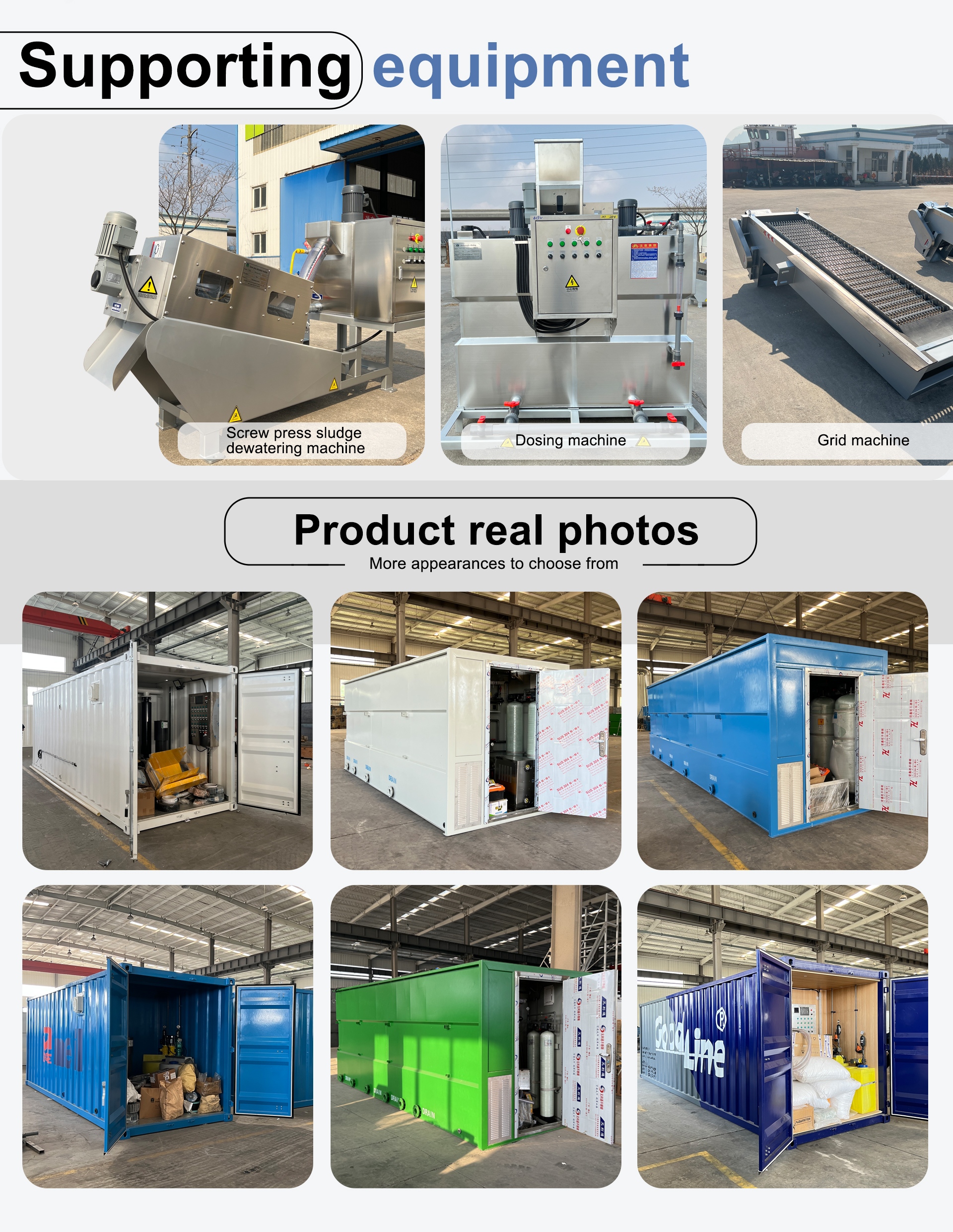
The Above-Ground Packaged Plant design revolutionizes project execution. All major components are integrated into easily transportable modules that are installed directly on a prepared ground-level foundation. This approach offers Rapid Deployment for Community Projects, drastically reducing complex civil works, construction time, and associated risks. Furthermore, all equipment remains fully accessible for effortless Easy-Access Operation and Maintenance, simplifying daily checks and servicing.
3. Robust & Reliable Community-Focused Design
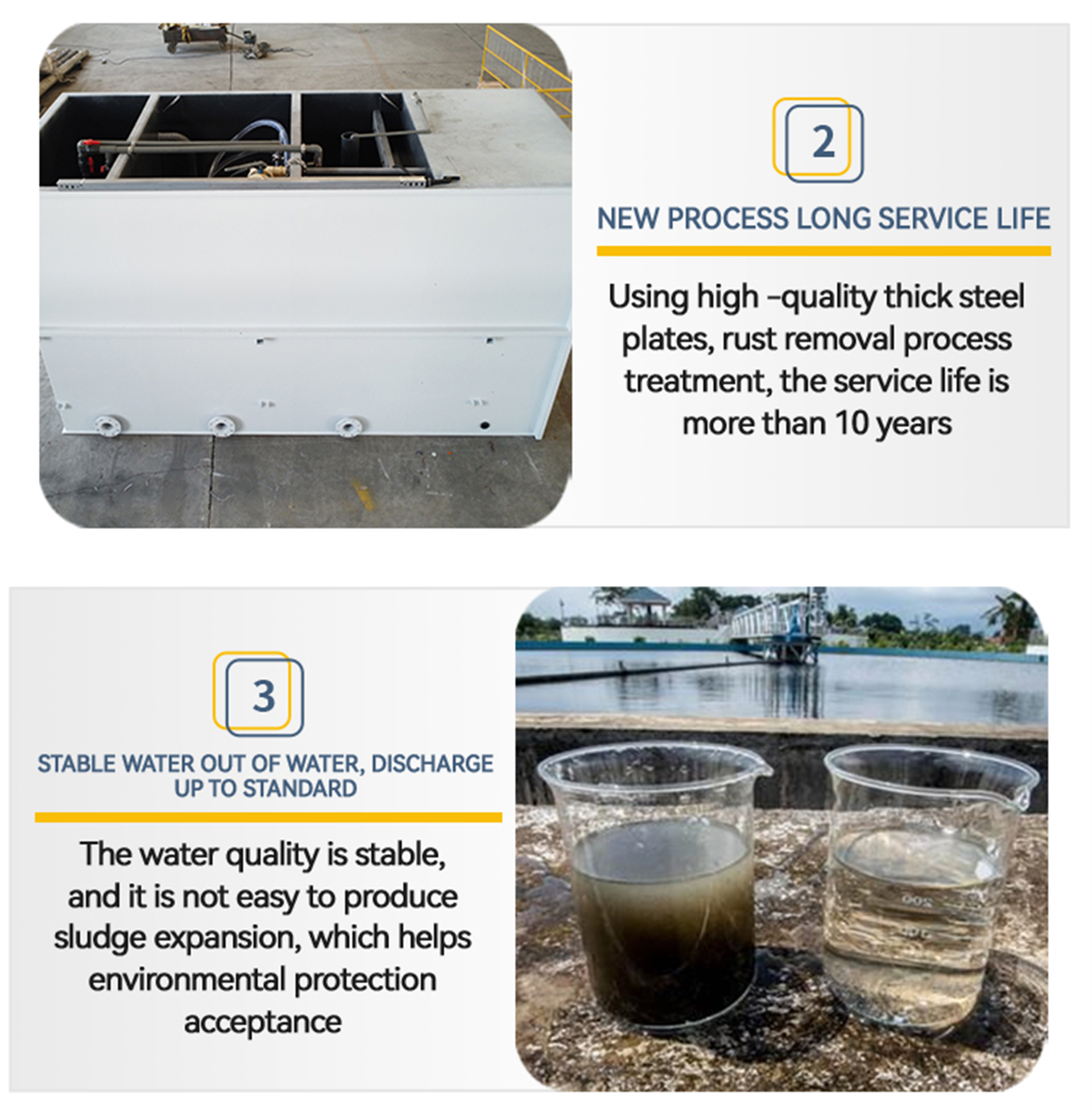
Built with durability and simplicity in mind, this system is a Durable Above-Ground Sewage Solution for Towns. Its robust construction withstands various climatic conditions. The process is designed for stability to handle typical diurnal and seasonal flow variations of a community. The focus on Reliable, Low-Maintenance Community Infrastructure ensures long-term, trouble-free operation, making it a trustworthy asset for municipal managers.
Application Scenarios
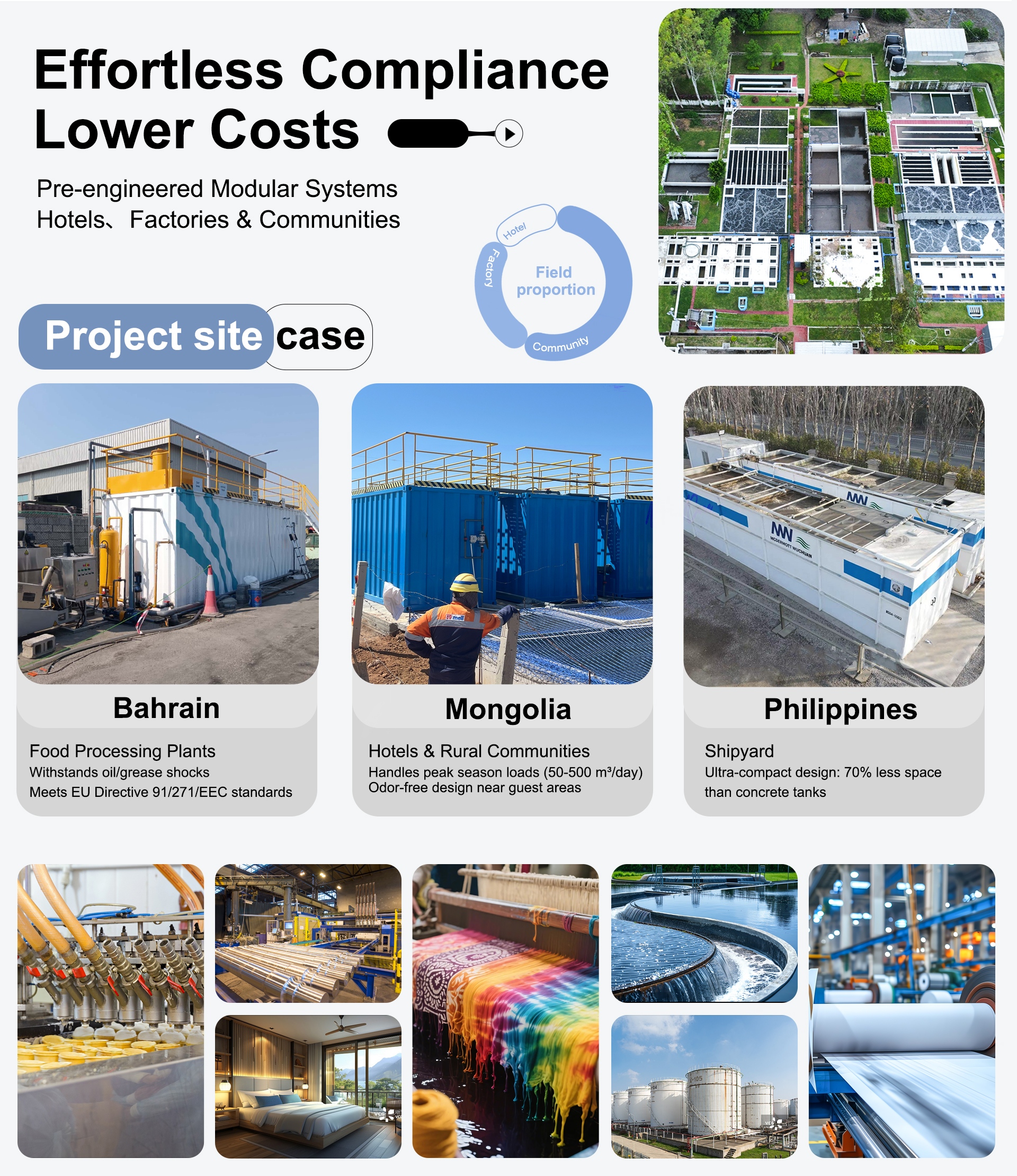
1. Decentralized Communities & Peripheral Urban Areas
Ideal for new residential developments, urban fringe areas, or villages lacking central sewer networks. Its above-ground, modular nature allows for flexible placement and phased expansion alongside community growth.
2. Remote Towns & Island Settlements
A perfect turnkey solution for remote locations, islands, or mountainous regions where traditional concrete construction is logistically challenging and expensive. The system can be shipped and installed quickly.
3. Disaster Relief & Temporary Settlements
Can be rapidly deployed to provide immediate and effective wastewater treatment for refugee camps, construction worker bases, or following natural disasters, ensuring sanitation and public health.
4. Eco-Tourism Sites & Small Resorts
Serves small clusters of eco-lodges or resorts committed to environmental protection. Its efficient treatment and compact footprint protect sensitive surrounding ecosystems.
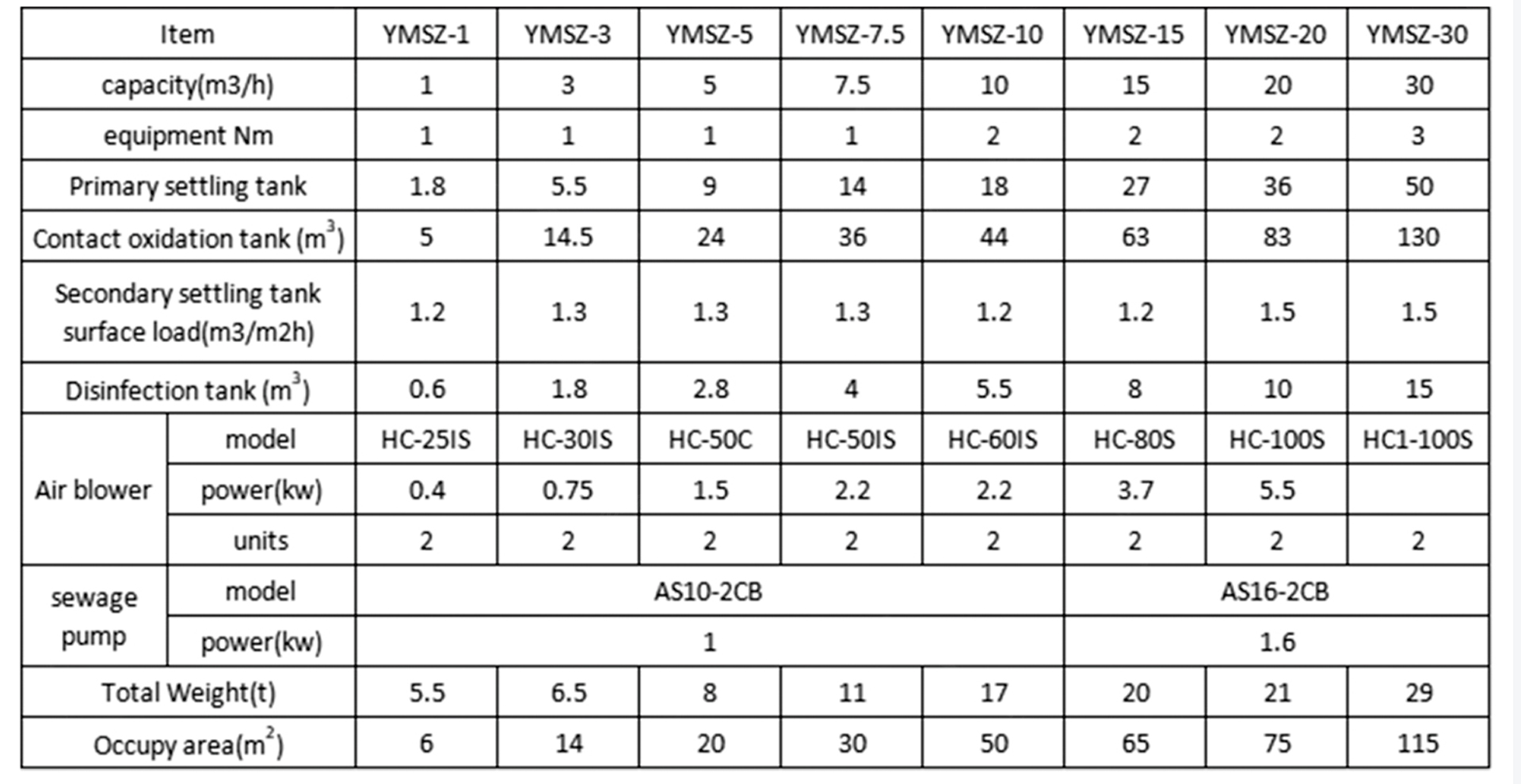
Product Parameters
Item | YMSZ-1 | YMSZ-3 | YMSZ-5 | YMSZ-7.5 | YMSZ-10 | YMSZ-15 | YMSZ-20 | YMSZ-30 | |
capacity(m3/h) | 1 | 3 | 5 | 7.5 | 10 | 15 | 20 | 30 | |
equipment Nm | 1 | 1 | 1 | 1 | 2 | 2 | 2 | 3 | |
Primary settling tank | 1.8 | 5.5 | 9 | 14 | 18 | 27 | 36 | 50 | |
Contact oxidation tank(m³) | 5 | 14.5 | 24 | 36 | 44 | 63 | 83 | 130 | |
Secondary settling tank | 1.2 | 1.3 | 1.3 | 1.3 | 1.2 | 1.2 | 1.5 | 1.5 | |
Disinfection tank(m³) | 0.6 | 1.8 | 2.8 | 4 | 5.5 | 8 | 10 | 15 | |
Air blower | model | HC-25IS | HC-30IS | HC-50C | HC-50IS | HC-60IS | HC-80S | HC-100S | HC1-100S |
power(kw) | 0.4 | 0.75 | 1.5 | 2.2 | 2.2 | 3.7 | 5.5 | ||
units | 2 | 2 | 2 | 2 | 2 | 2 | 2 | 2 | |
sewage | model | AS10-2CB | AS16-2CB | ||||||
power(kw) | 1 | 1.6 | |||||||
Total Weight(t) | 5.5 | 6.5 | 8 | 11 | 17 | 20 | 21 | 29 | |
Occupy area(m²) | 6 | 14 | 20 | 30 | 50 | 65 | 75 | 115 | |
FAQ
Q: What is the required installation footprint and setup time?
A: As a packaged plant, it is highly compact. Site preparation primarily involves a level concrete base and connection points. The pre-assembled nature allows for commissioning within weeks, not months.
Q: How skilled does the operating staff need to be?
A: The system is designed for ease of use. We provide comprehensive training and a detailed manual. The automated control system handles most process adjustments, requiring only routine monitoring from the operator.
Q: Can it handle fluctuating wastewater flow and composition, common in industrial settings?
A: Yes. The hybrid biological process is renowned for its stability and resilience to shock loads, making our Industry Wastewater Packaged Sewage Treatment Plant ideal for variable industrial discharges.
Q: What are the advantages of the Stainless Steel MBR model?
A: The Stainless Steel MBR Packaged Sewage Treatment Plant offers the highest effluent quality via membrane filtration, a smaller footprint, and maximum durability. It is the premium choice for strict discharge standards and corrosive environments
Q: How do you support clients in remote locations?
A: We offer remote troubleshooting support via video call and a network of local partners. The design prioritizes ease of maintenance, and we ensure critical spare parts are readily available.

Product Introduction |
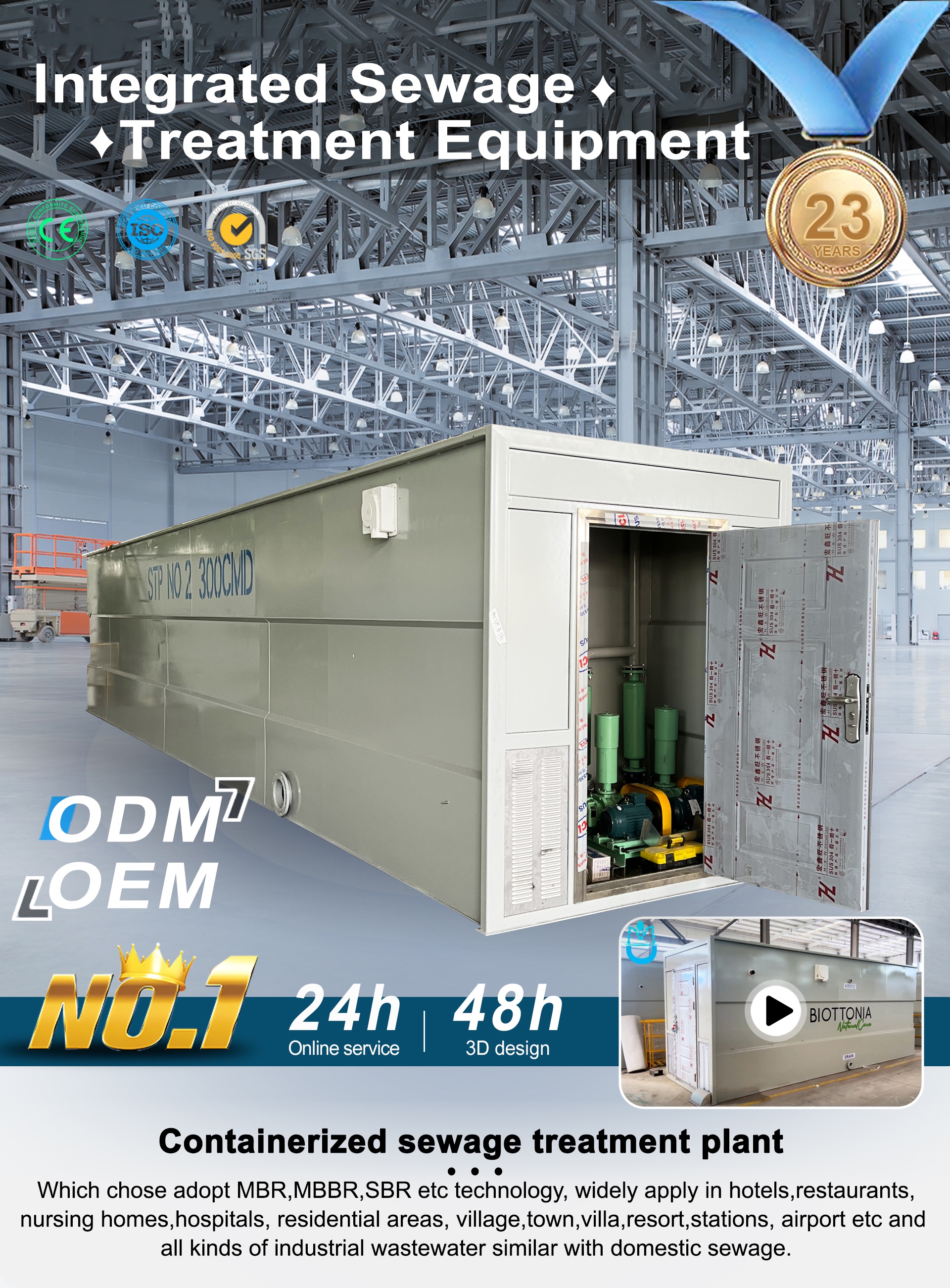
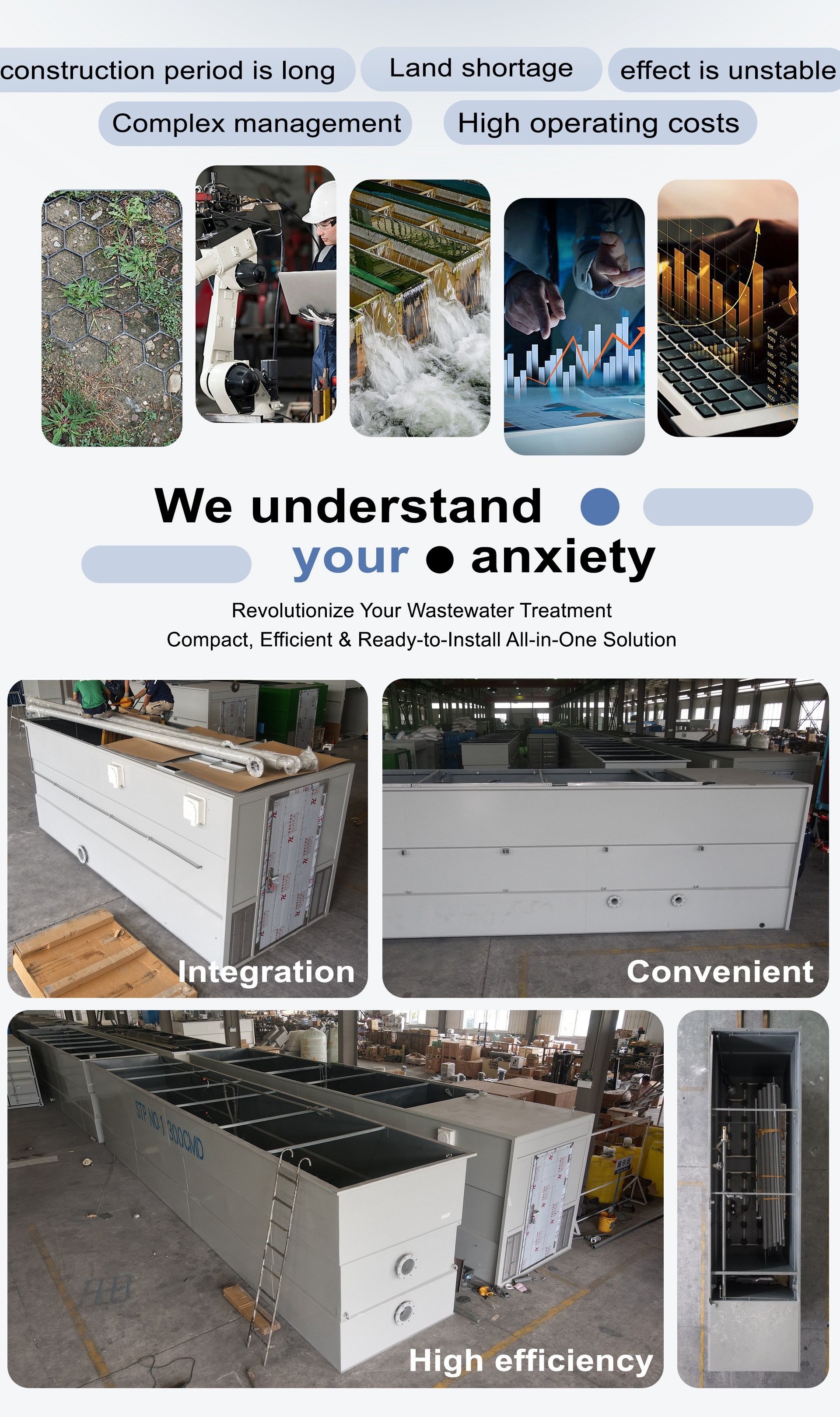
The High-Efficiency Above-Ground Community Packaged Sewage Treatment Plant is a fully prefabricated wastewater treatment system developed for small and medium-sized communities, remote towns, residential developments, and decentralized settlements. Unlike conventional treatment facilities that depend heavily on underground tanks and extensive excavation, this system is installed above ground on a prepared foundation, simplifying project construction and keeping the main treatment equipment accessible.
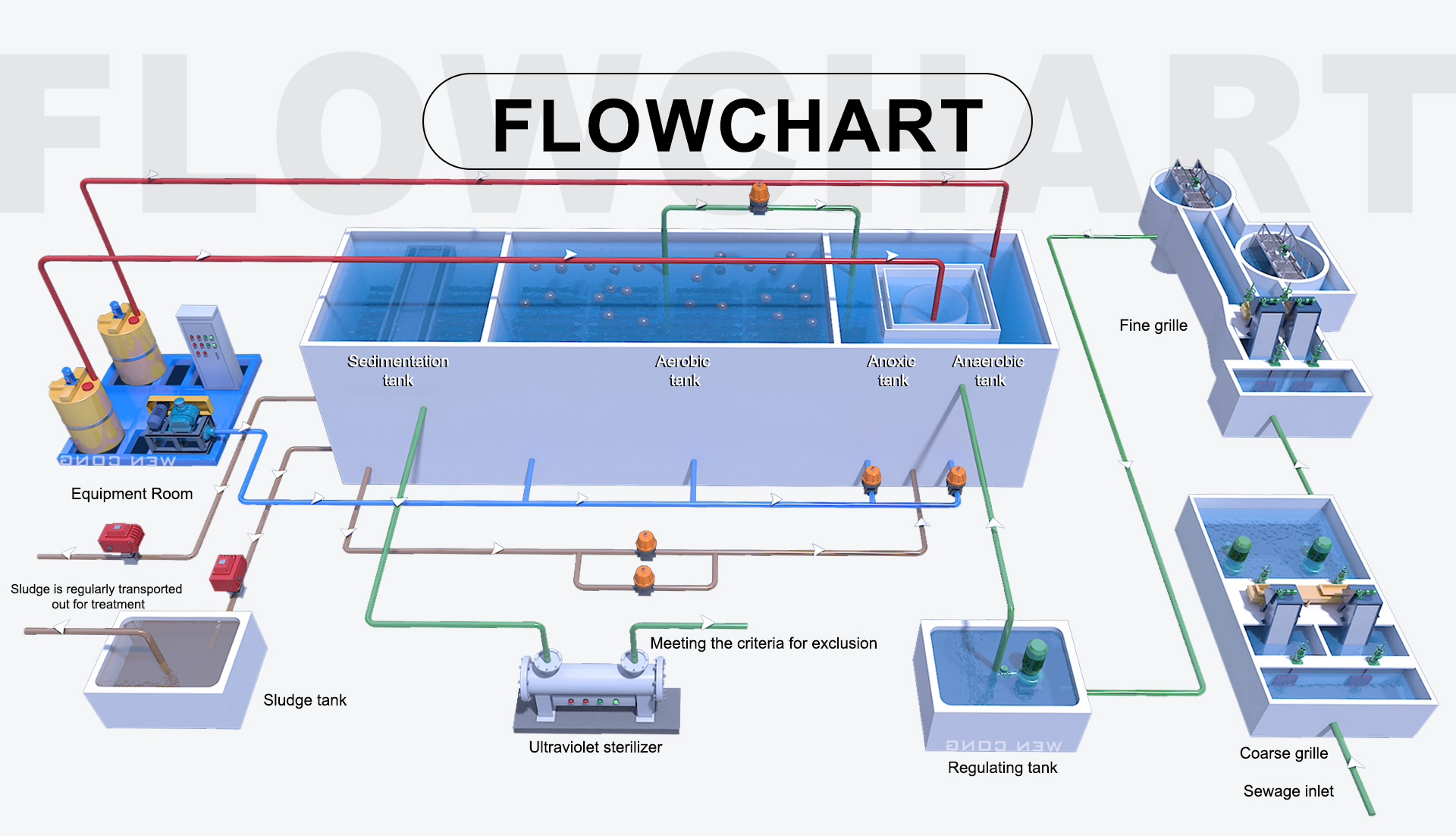
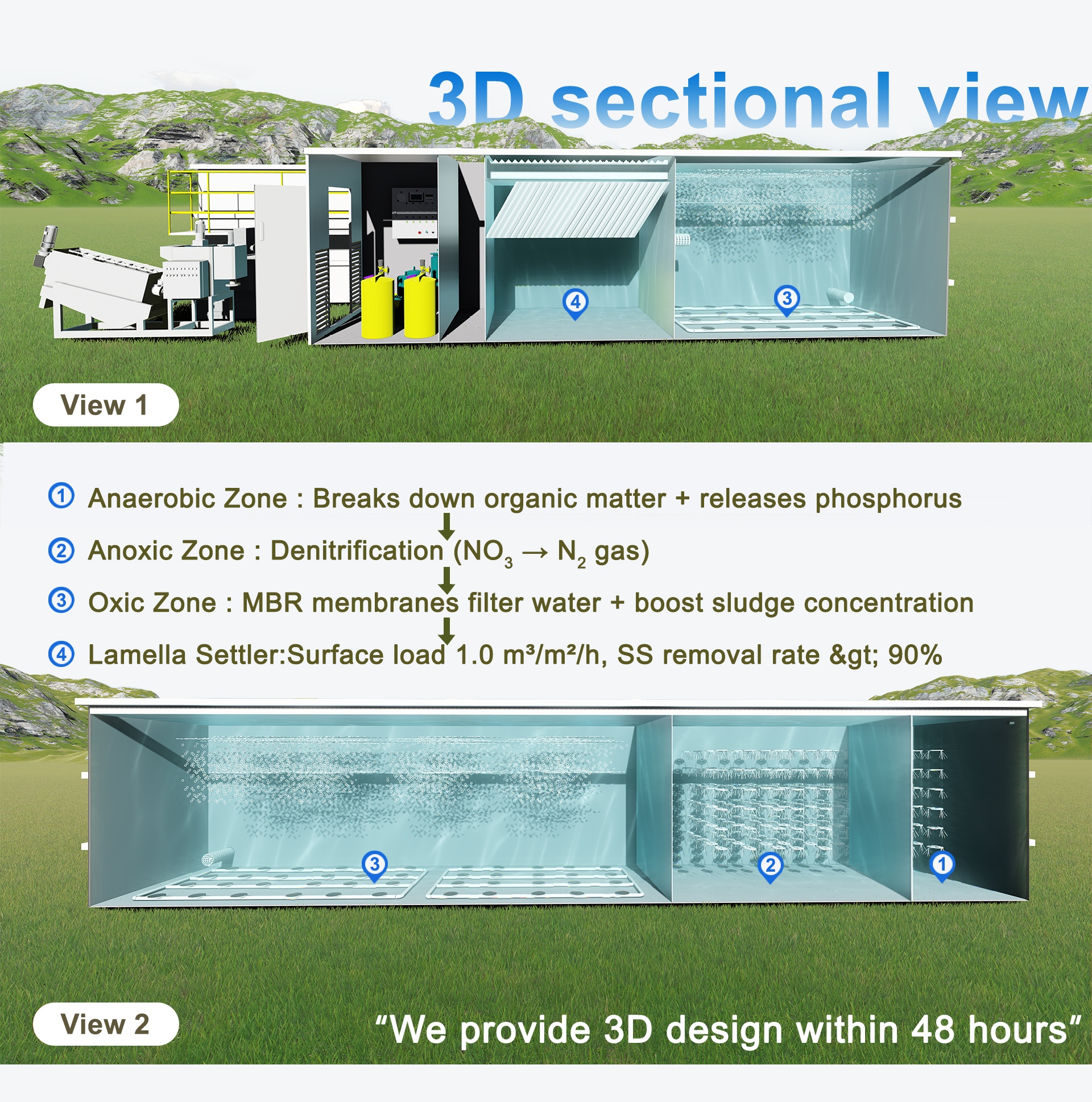
The plant integrates the major wastewater treatment stages into transportable modules. Its biological treatment process combines primary settling, contact oxidation, secondary settling, aeration, and disinfection within the YMSZ packaged treatment configuration. The system is designed to treat community sewage in locations where centralized sewer infrastructure is unavailable, difficult to extend, or uneconomical to construct.
A major advantage of the above-ground arrangement is easier project implementation. Instead of carrying out extensive underground civil construction, the treatment modules can be positioned directly on a suitable ground-level base and connected to the required inlet, outlet, power, aeration, and sewage pumping systems. This approach is particularly useful for remote communities, island settlements, mountainous areas, and rapidly developing residential zones where conventional concrete treatment works can be difficult to build.
The surface-mounted design also improves equipment accessibility. Pumps, blowers, biological treatment sections, settling areas, and other major components remain easier to inspect and service than equipment buried below ground. This allows routine checks and maintenance work to be carried out without depending on complex underground access.
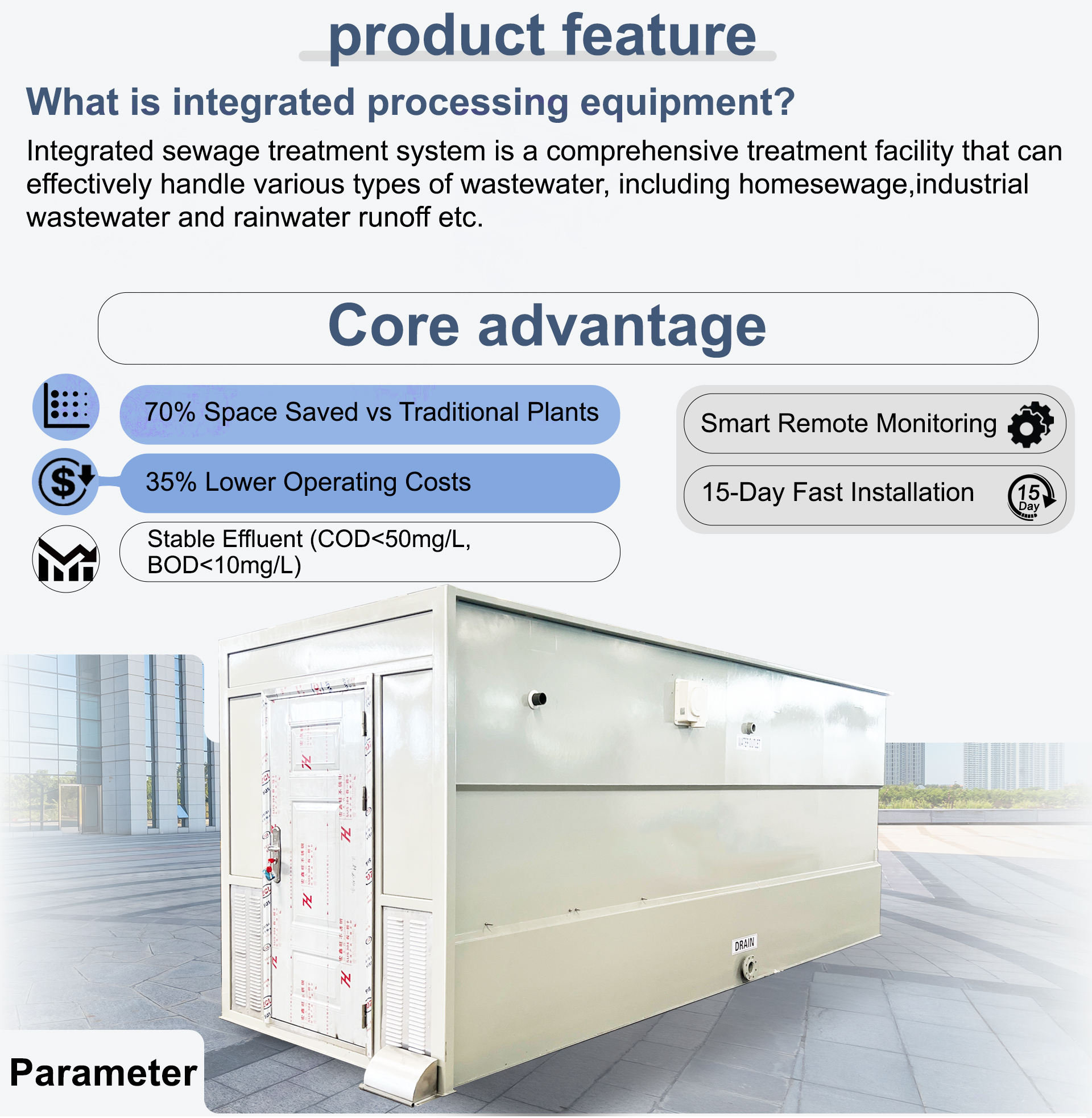
The YMSZ series provides treatment capacities from 1 m³/h to 30 m³/h, allowing the plant configuration to be selected according to the wastewater volume of different communities. Larger models use additional equipment modules, supporting treatment projects that need more capacity while retaining the packaged concept.
By combining biological wastewater treatment, modular construction, above-ground installation, and a broad capacity range, the system provides a practical treatment option for decentralized community sanitation projects where construction efficiency, equipment accessibility, and future development are important considerations.
Product Parameters
Item | YMSZ-1 | YMSZ-3 | YMSZ-5 | YMSZ-7.5 | YMSZ-10 | YMSZ-15 | YMSZ-20 | YMSZ-30 | |
capacity(m3/h) | 1 | 3 | 5 | 7.5 | 10 | 15 | 20 | 30 | |
equipment Nm | 1 | 1 | 1 | 1 | 2 | 2 | 2 | 3 | |
Primary settling tank | 1.8 | 5.5 | 9 | 14 | 18 | 27 | 36 | 50 | |
Contact oxidation tank(m³) | 5 | 14.5 | 24 | 36 | 44 | 63 | 83 | 130 | |
Secondary settling tank | 1.2 | 1.3 | 1.3 | 1.3 | 1.2 | 1.2 | 1.5 | 1.5 | |
Disinfection tank(m³) | 0.6 | 1.8 | 2.8 | 4 | 5.5 | 8 | 10 | 15 | |
Air blower | model | HC-25IS | HC-30IS | HC-50C | HC-50IS | HC-60IS | HC-80S | HC-100S | HC1-100S |
power(kw) | 0.4 | 0.75 | 1.5 | 2.2 | 2.2 | 3.7 | 5.5 | ||
units | 2 | 2 | 2 | 2 | 2 | 2 | 2 | 2 | |
sewage | model | AS10-2CB | AS16-2CB | ||||||
power(kw) | 1 | 1.6 | |||||||
Total Weight(t) | 5.5 | 6.5 | 8 | 11 | 17 | 20 | 21 | 29 | |
Occupy area(m²) | 6 | 14 | 20 | 30 | 50 | 65 | 75 | 115 | |
Features & Advantages |
The defining feature of this model is its above-ground configuration. Major treatment components are installed on a prepared surface foundation rather than relying on a deeply buried treatment structure.
This installation concept can significantly simplify site construction. Conventional underground sewage treatment facilities may require substantial excavation, concrete structures, waterproofing, backfilling, and underground maintenance access. With an above-ground packaged plant, site work can focus more directly on preparing a stable base and providing the necessary hydraulic and electrical connections.
This is particularly valuable in locations where excavation is difficult because of terrain, limited construction resources, remote transportation conditions, or project schedules.
Above-ground installation also makes the treatment equipment easier to access after commissioning. Routine inspection of pumps, blowers, tanks, piping, and treatment sections can be performed without entering deeply buried equipment spaces.
The plant is built around prefabricated treatment modules that integrate the major wastewater treatment functions before installation at the final site.
Pre-assembly reduces the amount of fabrication required during project construction and helps simplify the installation sequence. Once the site foundation and utilities are ready, the packaged modules can be positioned and connected as part of the complete community wastewater treatment system.
This modular design is also useful for phased community development. A residential area, remote settlement, or tourism site may not generate its final design wastewater volume during the first stage of development. The packaged concept allows treatment capacity to be planned around current demand while providing a more flexible basis for future expansion.
The product page identifies phased expansion as an important advantage for communities that continue to grow over time.
The treatment plant uses a biological wastewater treatment process intended to remove organic pollutants and nutrients from community sewage.
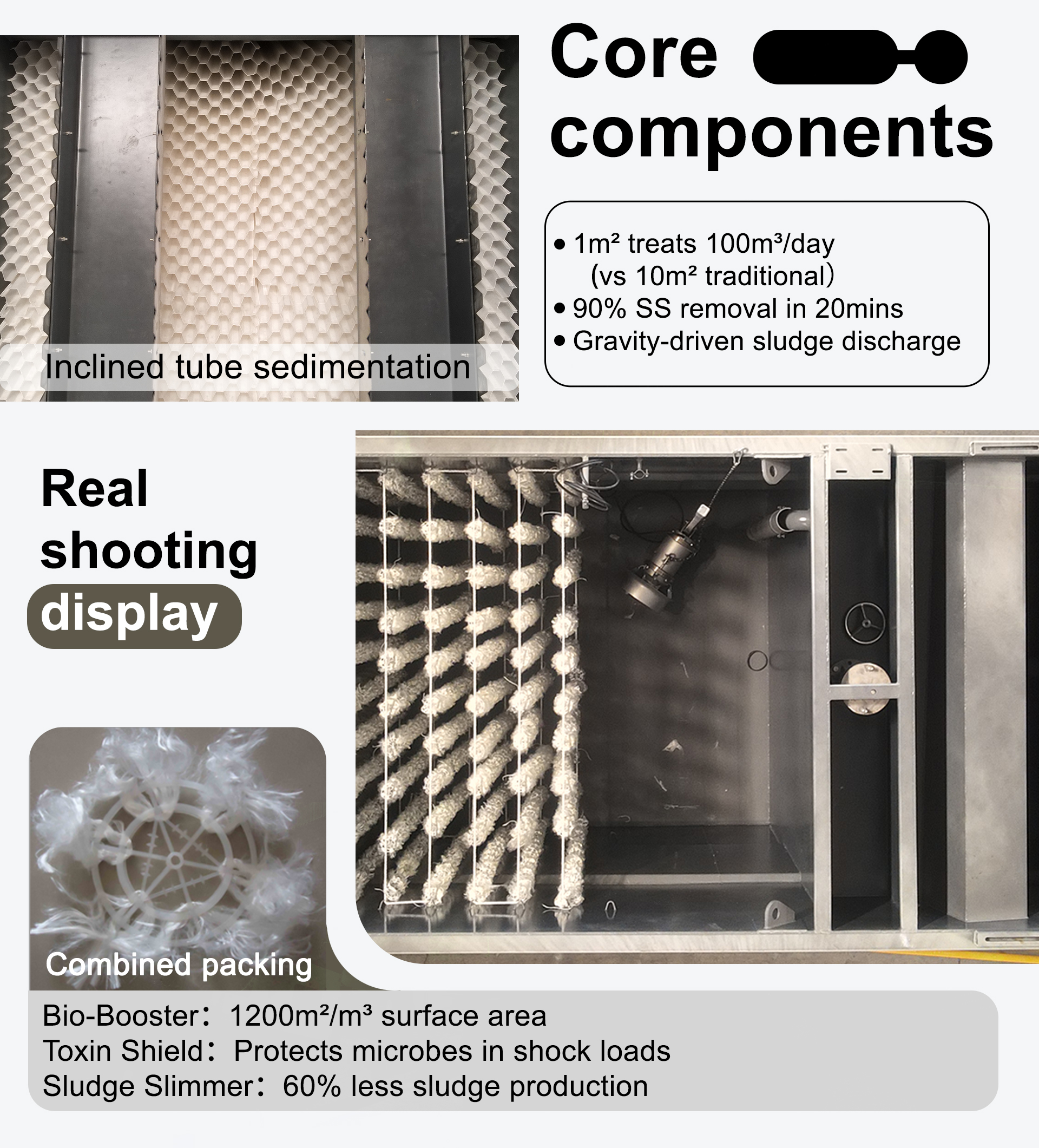
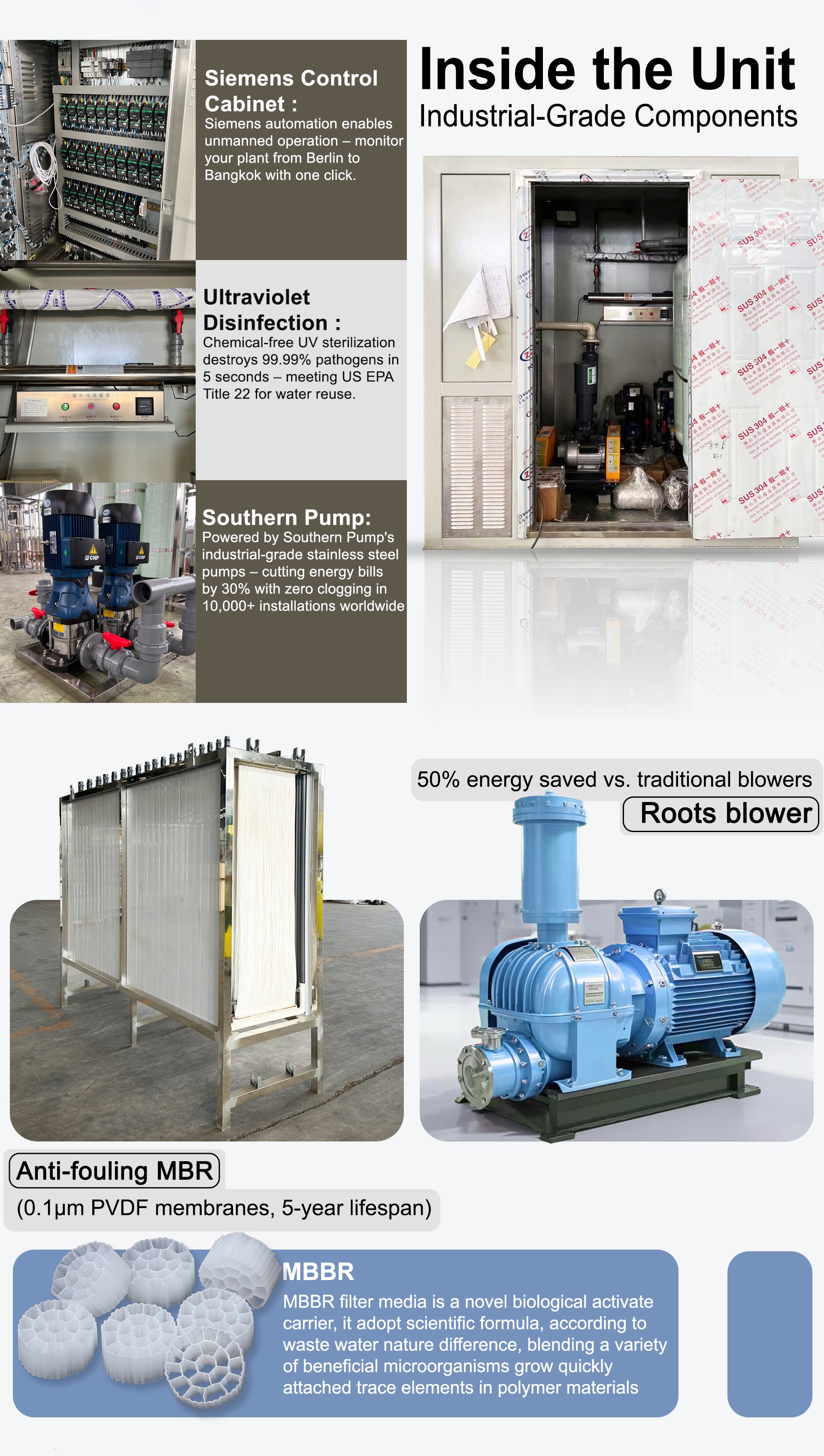
The published YMSZ configuration includes a primary settling tank, contact oxidation tank, secondary settling stage, and disinfection tank. Aeration is supplied by air blowers, while sewage pumps support wastewater movement within the treatment system.
Primary settling provides an initial stage for separating settleable material before biological treatment. Wastewater then enters the contact oxidation section, where the biological process treats the organic pollution load. The secondary settling stage separates biological solids from treated water before the effluent enters the disinfection section.
The product information also emphasizes precise aeration control and optimized reactor hydraulics as part of its high-efficiency treatment concept. These operating features are intended to support stable biological treatment while controlling power use during operation.
The YMSZ series provides eight listed treatment capacities:
YMSZ-1: 1 m³/h
YMSZ-3: 3 m³/h
YMSZ-5: 5 m³/h
YMSZ-7.5: 7.5 m³/h
YMSZ-10: 10 m³/h
YMSZ-15: 15 m³/h
YMSZ-20: 20 m³/h
YMSZ-30: 30 m³/h
This range allows the treatment plant to be matched to different community sizes and wastewater loads rather than relying on a single fixed treatment capacity.
The smaller YMSZ-1 through YMSZ-7.5 models are listed as single equipment units. The YMSZ-10, YMSZ-15, and YMSZ-20 configurations use two equipment units, while the YMSZ-30 model uses three units.
This progression reflects the modular design concept of the plant as treatment demand increases.
The published model data include several treatment stages within the YMSZ configuration.
The primary settling tank volume increases with plant capacity, ranging from 1.8 on the YMSZ-1 model to 50 on the YMSZ-30 model according to the original product data.
The contact oxidation section similarly increases from 5 m³ on YMSZ-1 to 130 m³ on YMSZ-30.
The listed secondary settling surface load ranges from 1.2 to 1.5 m³/m²·h across the model series, while the disinfection tank increases from 0.6 m³ on the smallest model to 15 m³ on the largest.
These model differences provide a basis for selecting the treatment configuration according to the required wastewater capacity.
Aeration is an important part of the biological treatment process.
The YMSZ series uses two air blower units across the listed models. Blower models vary according to treatment capacity, beginning with HC-25IS for YMSZ-1 and increasing through HC-30IS, HC-50C, HC-50IS, HC-60IS, HC-80S, HC-100S, and HC1-100S across the larger configurations.
Published blower power starts at 0.4 kW for YMSZ-1 and increases with treatment capacity.
Providing two blower units supports the aeration requirements of the biological treatment stage across the different plant sizes.
The packaged system is designed to provide complete sewage treatment without requiring a large conventional treatment works.
The published occupied areas are:
YMSZ-1: 6 m²
YMSZ-3: 14 m²
YMSZ-5: 20 m²
YMSZ-7.5: 30 m²
YMSZ-10: 50 m²
YMSZ-15: 65 m²
YMSZ-20: 75 m²
YMSZ-30: 115 m²
These figures provide project planners with a practical reference when matching treatment capacity to available installation space.
Because the treatment plant remains above ground, major components stay accessible for routine inspection and servicing.
Operators can check pumps, air blowers, tanks, pipe connections, and other treatment components without depending on deeply buried maintenance areas.
This is particularly important for small communities and remote treatment sites where operating personnel may not have access to the same maintenance infrastructure as a large municipal wastewater treatment plant.
Community sewage flow is not constant throughout the day or throughout the year.
Residential wastewater volumes can change between daytime and nighttime, weekdays and weekends, and different seasons. The product is designed with stability in mind so that the biological process can handle the typical daily and seasonal flow variation associated with community wastewater.
This characteristic makes the system more appropriate for decentralized residential treatment than equipment intended only for a fixed industrial production flow.
Applications |
The plant is suitable for new housing developments, residential communities, urban fringe areas, and villages that do not have convenient access to a centralized municipal sewer network.
Instead of conveying sewage over long distances to a large treatment works, wastewater can be treated closer to the location where it is generated.
The modular capacity range allows the selected treatment plant to correspond to the wastewater volume of the residential development.
For growing communities, the packaged concept also provides a basis for phased treatment expansion as additional housing and population are added.
Remote towns often face greater challenges when constructing conventional wastewater treatment infrastructure.
Transporting construction materials, carrying out large-scale excavation, building reinforced concrete tanks, and maintaining underground equipment can be more difficult in isolated locations.
The prefabricated above-ground plant reduces the amount of site construction required. Once the foundation and service connections have been prepared, the packaged equipment can be installed as an integrated treatment system.
This makes it particularly relevant where local construction resources are limited.
Island communities are another application identified for this system.
Building conventional wastewater infrastructure on islands can be complicated by transportation limitations, construction costs, and restricted available land.
A prefabricated treatment plant can be manufactured as equipment modules before shipment to the project location. The above-ground configuration also reduces dependence on extensive underground construction once the equipment reaches the site.
Mountainous settlements can face similar problems because excavation, concrete construction, and transportation of heavy construction materials may be difficult.
The modular packaged approach allows more of the treatment system to be prepared before delivery.
This can simplify wastewater treatment projects in areas where a conventional centralized sewage treatment works would be difficult to construct.
Rapidly expanding urban fringe areas may develop faster than the municipal sewer network can be extended.
An above-ground community packaged sewage treatment plant can provide decentralized treatment during this stage of development.
Its modular nature also allows the wastewater treatment capacity to grow alongside the residential area rather than requiring the final maximum capacity to be installed at the beginning of the project.
The product page also identifies temporary settlement applications where wastewater treatment needs to be deployed without constructing a permanent conventional treatment facility.
Examples include construction worker bases and temporary accommodation areas.
The prefabricated design makes this type of application more practical because much of the treatment equipment is already integrated before arriving at the site.
Rapid sanitation infrastructure can be important following natural disasters.
The product is identified for disaster-relief settlements where temporary or semi-permanent wastewater treatment must be established relatively quickly.
Its above-ground modular construction reduces dependence on complex underground civil works and allows the treatment equipment to be installed on a prepared site.
Eco-lodges, nature tourism developments, and small resort clusters may be located far from municipal sewer infrastructure.
In these settings, wastewater treatment needs to support sanitation while limiting the impact on the surrounding environment.
The packaged plant provides a local biological treatment solution for these types of developments, while its compact footprint helps reduce the area occupied by treatment infrastructure.
Small resorts can experience wastewater flows that vary according to occupancy and tourism seasons.
The community-focused biological treatment system is designed to accommodate the typical flow variations associated with this type of application.
Above-ground installation also makes routine maintenance easier at sites where dedicated wastewater treatment staff may be limited.
FAQs |
It is a prefabricated wastewater treatment system in which the main process equipment is installed above ground on a prepared foundation instead of relying on extensive underground treatment structures.
The product is designed primarily for small and medium communities, remote towns, villages, urban fringe developments, island settlements, temporary settlements, eco-tourism locations, and small resorts.
The YMSZ series includes capacities of 1, 3, 5, 7.5, 10, 15, 20, and 30 m³/h.
The published YMSZ configuration includes primary settling, contact oxidation biological treatment, secondary settling, and disinfection. Air blowers and sewage pumps are also included in the model configuration.
No. This model is specifically designed for above-ground installation. Major equipment modules are installed directly on a prepared ground-level foundation.
The product page states that site preparation mainly involves a level concrete base and the required connection points for the packaged treatment system.
Above-ground installation reduces the amount of excavation and underground civil construction required. This can simplify wastewater treatment projects in islands, mountainous areas, remote towns, and other locations where conventional construction is difficult.
Yes. The major treatment components are integrated into transportable packaged modules before installation at the project site.
The modular nature of the system is identified as suitable for phased expansion. This is particularly useful for communities and residential developments where wastewater volume increases as the population grows.
The published occupied area depends on the selected YMSZ model. It ranges from 6 m² for YMSZ-1 to 115 m² for YMSZ-30.
The above-ground configuration keeps the main treatment equipment accessible for routine inspection and servicing. This is one of the main advantages of the surface-mounted design.
Yes. The product page states that an automated control system handles most process adjustments, while operators mainly perform routine monitoring.
The product is designed to handle typical daily and seasonal flow variations found in community wastewater treatment applications.
The product page states that remote troubleshooting through video calls is available, together with local partner support and access to critical spare parts.
Product Showcase |
