
| Availability: | |
|---|---|
| Quantity: | |
Key Features & Advantages
1. High-Rate Settling Efficiency
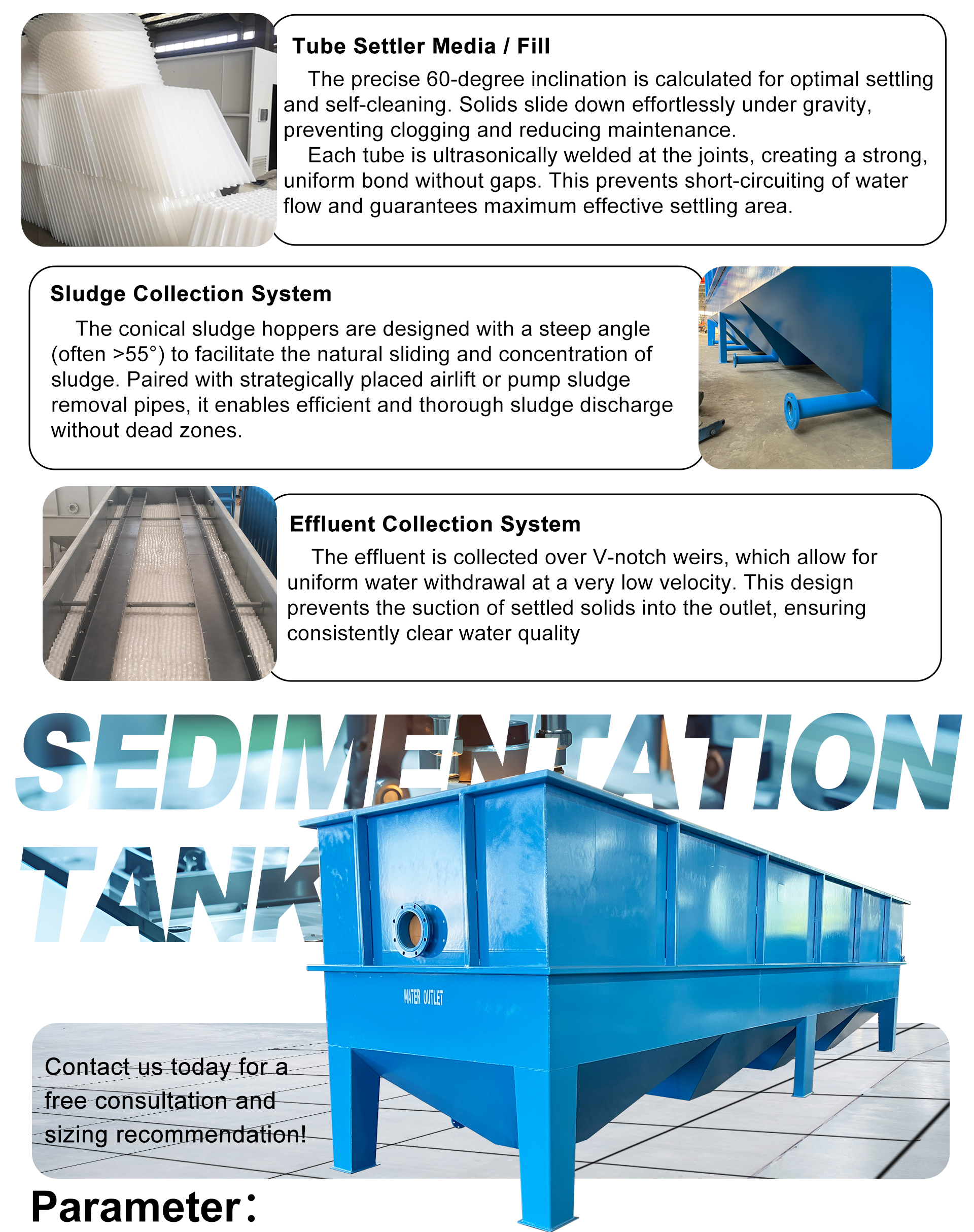
Utilizing closely spaced inclined plates (lamella), this clarifier dramatically increases the effective settling area. This High-Rate Lamella Design significantly shortens the settling path of particles, enabling Rapid Solids Separation and allowing it to handle much higher hydraulic loads compared to conventional clarifiers of the same size, maximizing treatment capacity.
2. Complete Packaged & Rapid Deployment
The system is supplied as a Fully Packaged Clarifier Unit, pre-assembled and factory-tested. This turnkey approach minimizes on-site construction work, leading to Fast Installation and Commissioning. It arrives ready for placement on a simple foundation, drastically reducing project timelines, labor costs, and installation complexity.
3. Durable & Corrosion-Resistant Fiberglass Construction
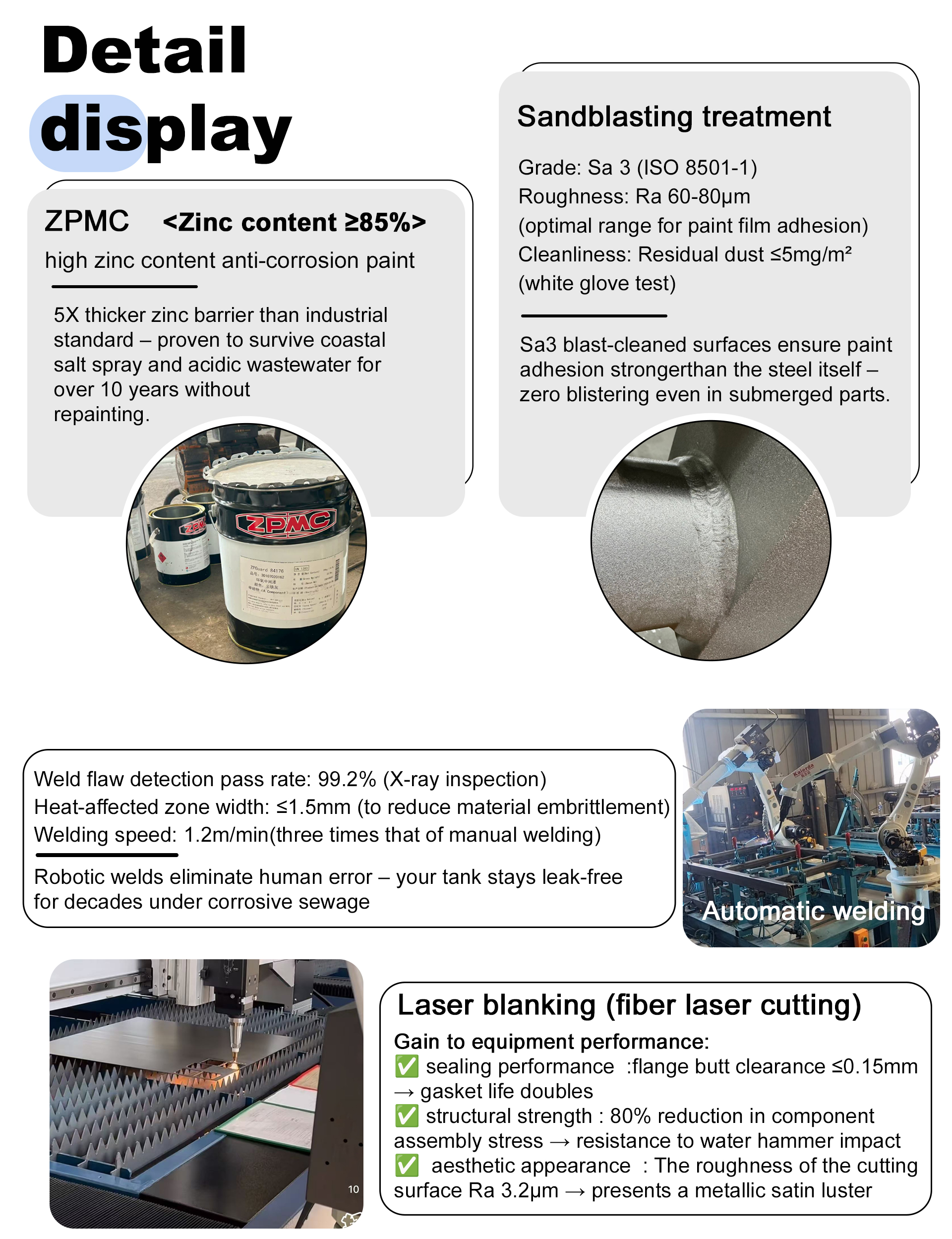
The main tank and critical components are crafted from High-Strength Fiberglass (FRP). This material offers exceptional Corrosion Resistance against a wide range of chemicals and wastewater, ensuring a long service life with minimal maintenance. Its lightweight nature simplifies transportation and handling while maintaining structural integrity.
Application Scenarios
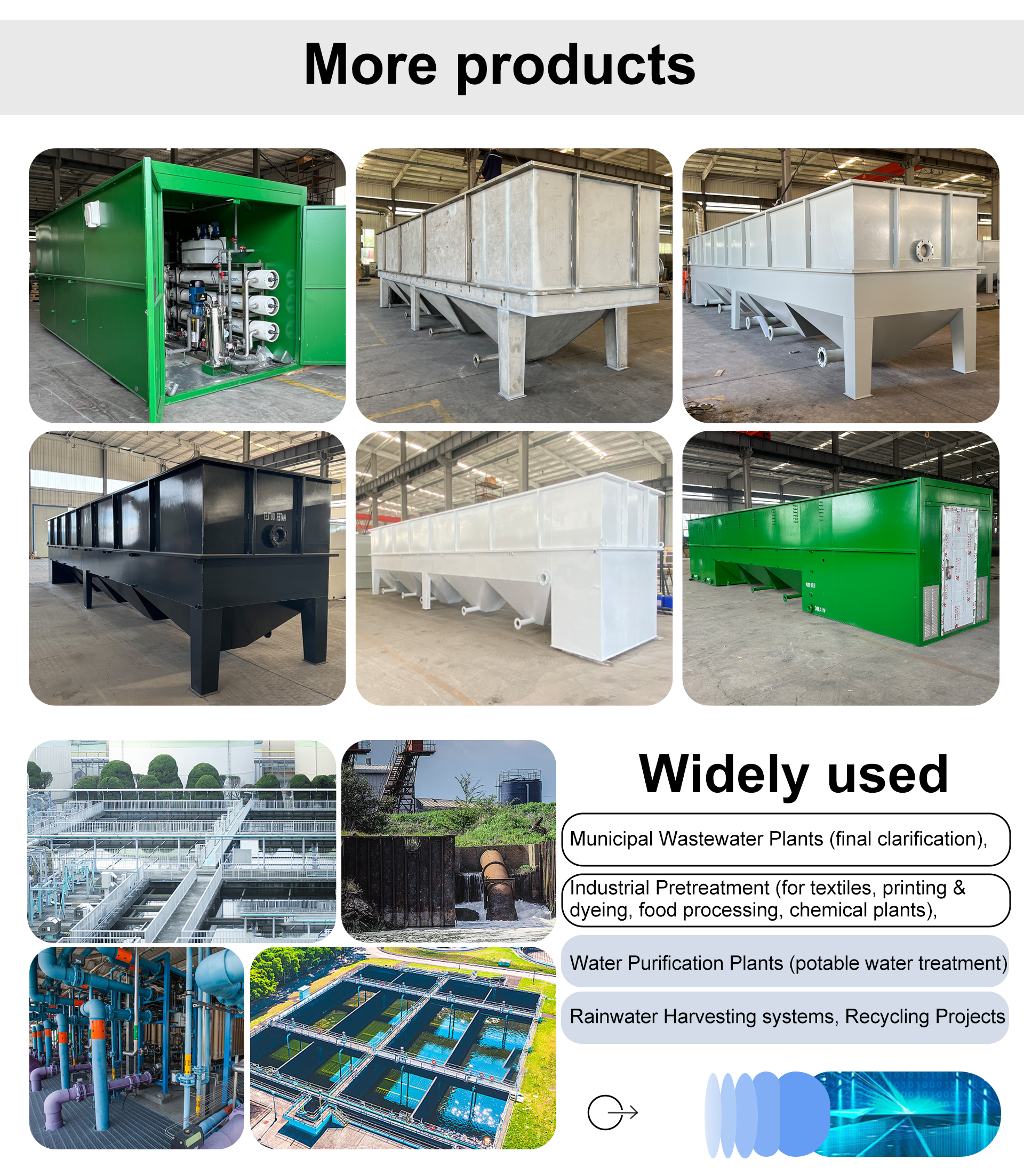
1. Industrial Wastewater Pretreatment
Ideal for removing suspended solids, metals, or precipitates from industrial effluents in sectors like mining, metal finishing, or chemical production before further treatment or discharge.
2. Compact Municipal & Decentralized Plants
Perfect for satellite treatment facilities, small communities, or plant upgrades where space is limited and a durable, low-maintenance clarifier is needed for primary or tertiary treatment.
3. Food & Beverage Processing
Effectively separates organic solids, fats, and greases from process water. The fiberglass construction is resistant to wash-down chemicals and acidic/alkaline conditions common in this industry.
4. Prefabricated Water Treatment Plants
Serves as a core clarification module within skid-mounted or containerized water treatment systems for potable water production or desalination pretreatment.
Product Parameters
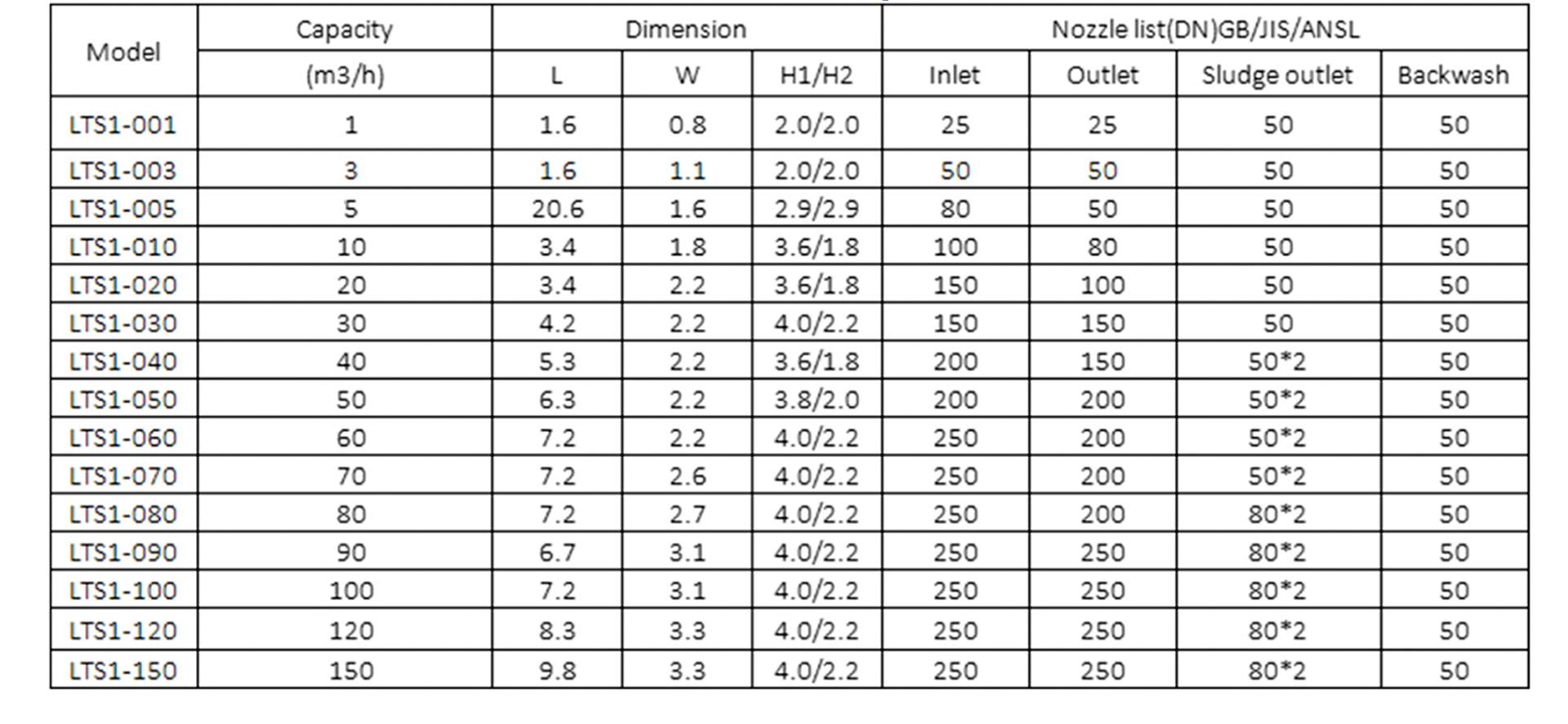
Model | Area (m²) | Plate size (mm) | Cake thickness (mm) | Filter chamber volume (L) | Plate Qty (pcs) | Filtration pressure (Mpa) | Motor Power (Kw) | Weight (Kg) | Dimensions | Foundation Size(mm) | ||||||||||||||||||||
L | B | D | H | |||||||||||||||||||||||||||
X^Z100/1250-30UR | 100 | 1250×1250 | 30 | 1468 | 36 | ≥0.6 | 4.0 | 8307 | 5430×1900×1630 | 3970 | 850 | 1740 | 995 | |||||||||||||||||
X^Z120/1250-30UR | 120 | 1746 | 43 | 9308 | 5880×1900×1630 | 4430 | ||||||||||||||||||||||||
XZ150/1250-30UR | 150 | 2250 | 55 | 11000 | 6400×1900×1630 | 5210 | ||||||||||||||||||||||||
X^Z160/1250-30UR | 160 | 2341 | 58 | 11492 | 6860×1900×1630 | 5400 | ||||||||||||||||||||||||
XZ180/1250-30Uk | 180 | 2619 | 65 | 12494 | 7315×1900×1630 | 5860 | ||||||||||||||||||||||||
X^Z200/1250-30U& | 200 | 2896 | 72 | 13504 | 7770×1900×1630 | 6310 | ||||||||||||||||||||||||
X^Z220/1250-30Uk | 220 | 3214 | 80 | 14652 | 8290×1900×1630 | 6830 | ||||||||||||||||||||||||
X^Z250/1250-30UR | 250 | 3650 | 91 | 16227 | 9010×1900×1630 | 7550 | ||||||||||||||||||||||||
X^Z200/1500-35Uk | 200 | 1500×1500 | 35 | 3500 | 49 | ≥0.6 | 11 | 20030 | 6570×2200×1820 | 5250 | 1170 | 1990 | 1070 | |||||||||||||||||
X^Z250/1500-35Uk | 250 | 4375 | 61 | 22978 | 7395×2200×1820 | 6090 | ||||||||||||||||||||||||
X^Z300/1500-35Uk | 300 | 5250 | 74 | 26026 | 8300×2200×1820 | 6990 | ||||||||||||||||||||||||
XMZ350/1500-35Uk | 350 | 6125 | 86 | 29220 | 9120×2200×1820 | 7840 | ||||||||||||||||||||||||
X^Z400/1500-35Uk | 400 | 7000 | 99 | 32574 | 10050×2200×1820 | 8750 | ||||||||||||||||||||||||
X^Z450/1500-35Uk | 450 | 7875 | 111 | 35586 | 10860×2200×1820 | 9590 | ||||||||||||||||||||||||
X^Z500/1500-35Uk | 500 | 8750 | 123 | 38606 | 11730×2200×1820 | 10430 | ||||||||||||||||||||||||
X^Z600/2000-40Uk | 600 | 2000×2000 | 40 | 12000 | 85 | ≥0.6 | 15 | 49000 | 11100×3000×2500 | 9200 | 1660 | 2000 | 1050 | |||||||||||||||||
X^Z700/2000-40Uk | 700 | 14000 | 99 | 53000 | 12200×3000×2500 | 10300 | ||||||||||||||||||||||||
X^Z800/2000-40Uk | 800 | 16000 | 113 | 57000 | 13350×3000×2500 | 1450 | ||||||||||||||||||||||||
X^Z900/2000-40Uk | 900 | 18000 | 127 | 61000 | 14500×3000×2500 | 12600 | ||||||||||||||||||||||||
X^Z1000/2000-40U& | 1000 | 20000 | 141 | 65000 | 15600×3000×2500 | 13830 | ||||||||||||||||||||||||
FAQ
Q: What is the typical installation and commissioning timeline?
A: As a pre-engineered Compact Lamella Clarifier, installation is swift—mainly involving placement, leveling, and connection. Commissioning can typically be completed within a few days to weeks.
Q: How skilled do operators need to be?
A: The system is designed for easy operation . We provide comprehensive manuals and training. Basic routine checks are sufficient for daily operation.
Q: Can it handle high-temperature or corrosive wastewater?
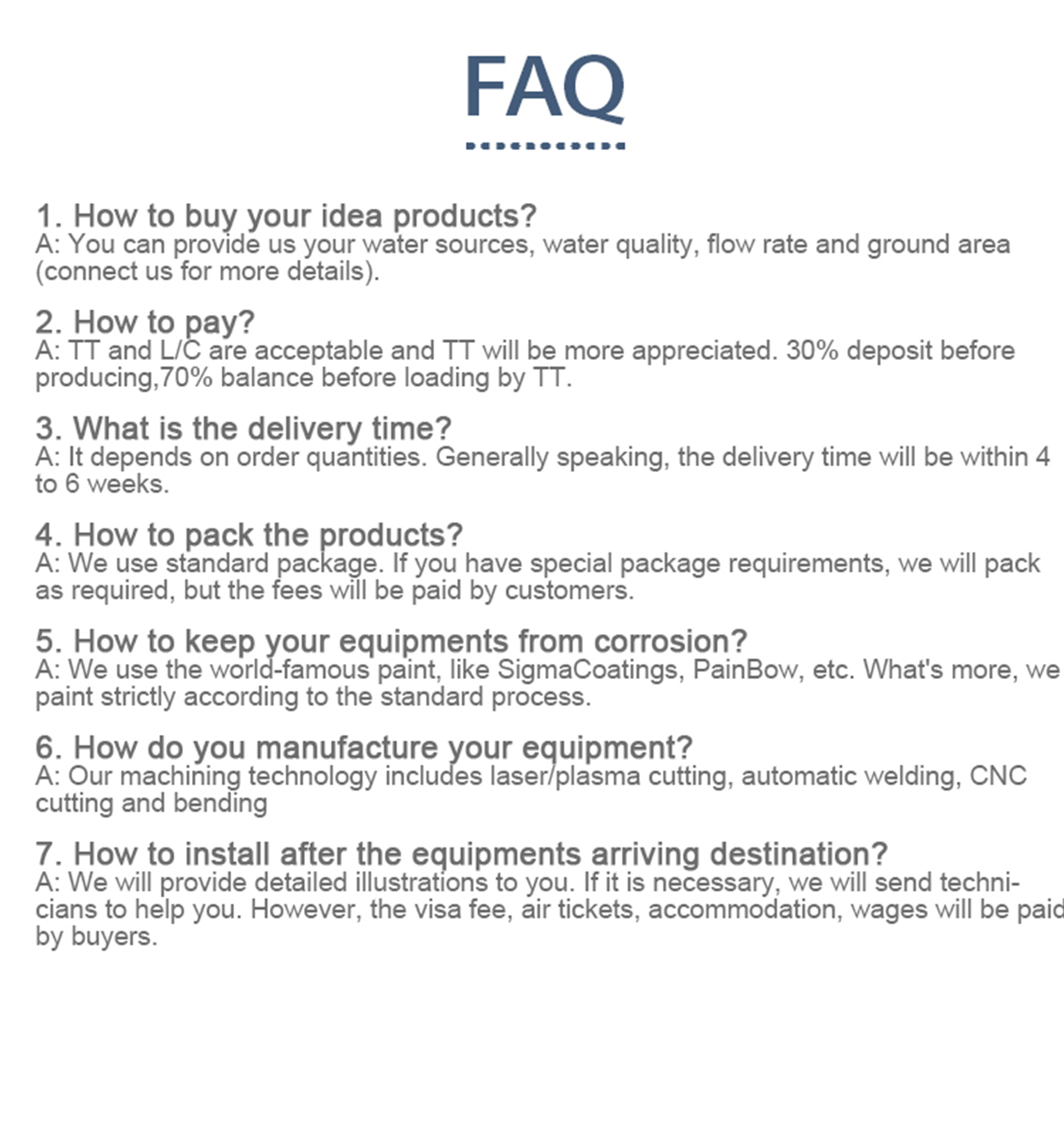
A: Yes. The Stainless Steel Lamella Clarifier variant offers excellent corrosion resistance. The inclined plates are made of chemically resistant polymers (PP/PVC) suitable for a wide pH range.
Q: What maintenance does it require?
A: Maintenance is minimal. The non-clogging design of the inclined plates (with a 60° angle) prevents sludge adhesion. Periodic sludge discharge and occasional visual inspection are typically sufficient.
Q: Do you offer overseas technical support?
A: Yes. We provide 24-hour online support , video technical guidance , and optional overseas installation and operation services .








Product Introduction |
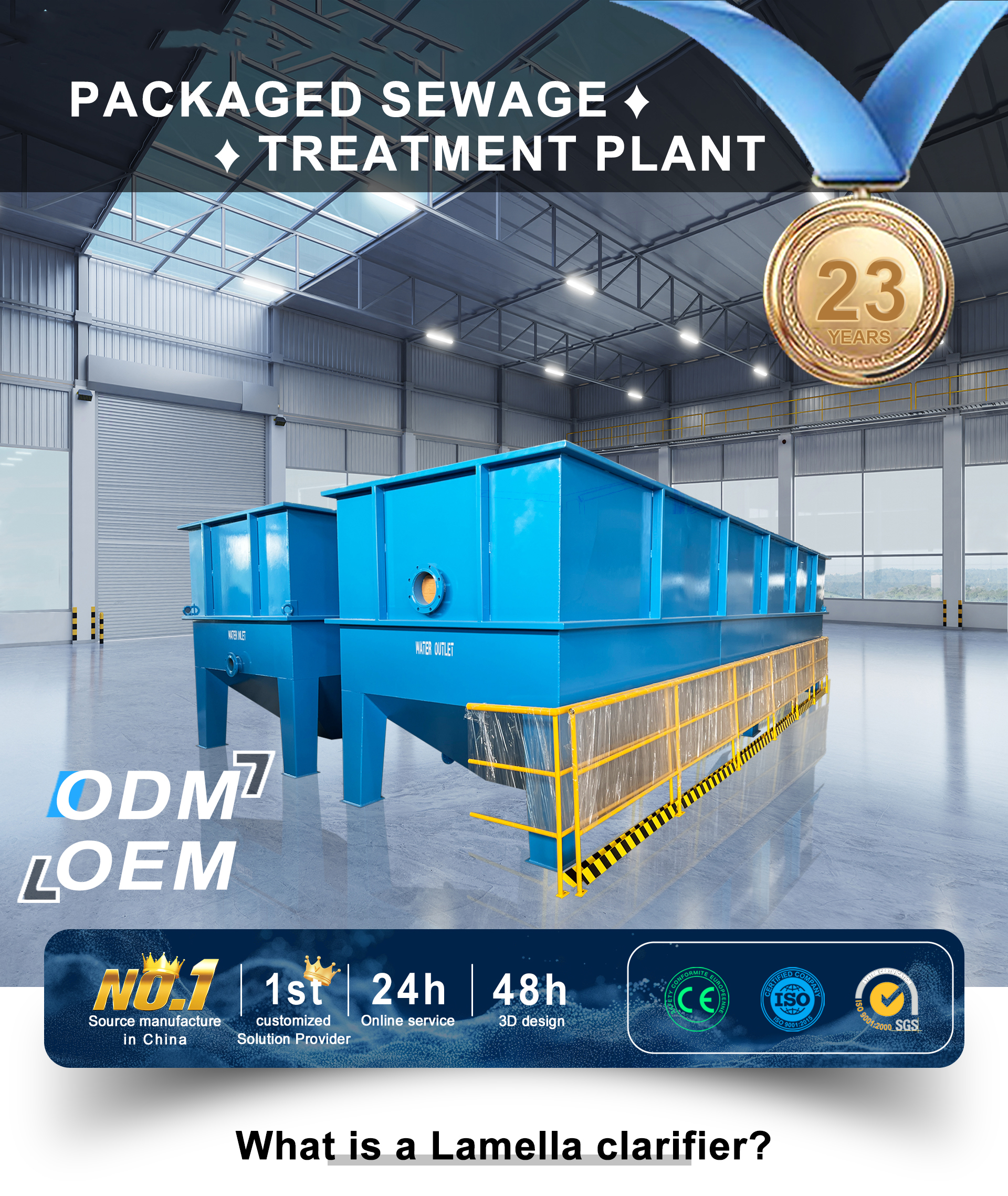
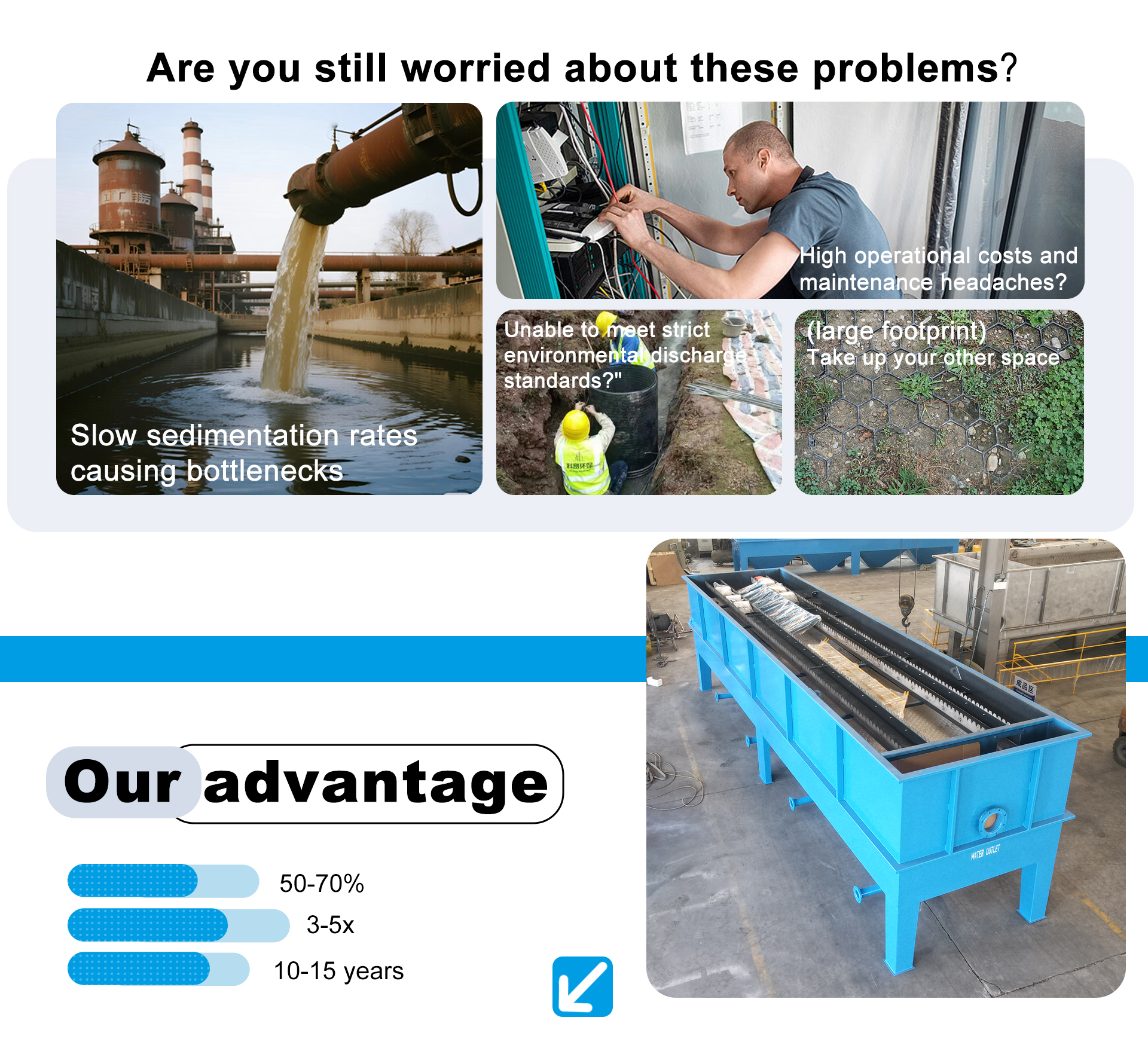
The High-Rate Packaged Fiberglass Lamella Clarifier is a pre-engineered solid-liquid separation system designed for projects that require compact clarification, corrosion-resistant construction, and simplified site installation. Unlike conventional site-built settling tanks, the main clarification components are integrated into a packaged unit that can be transported to the project site and installed on a prepared foundation.
A defining feature of this model is its fiberglass-reinforced plastic construction. The main tank and critical structural components use high-strength FRP, providing a lightweight alternative for wastewater projects where corrosion resistance and transportation convenience are important considerations. The material configuration makes the unit particularly relevant to industrial and process-water environments involving chemicals, variable pH conditions, or frequent wash-down operations.
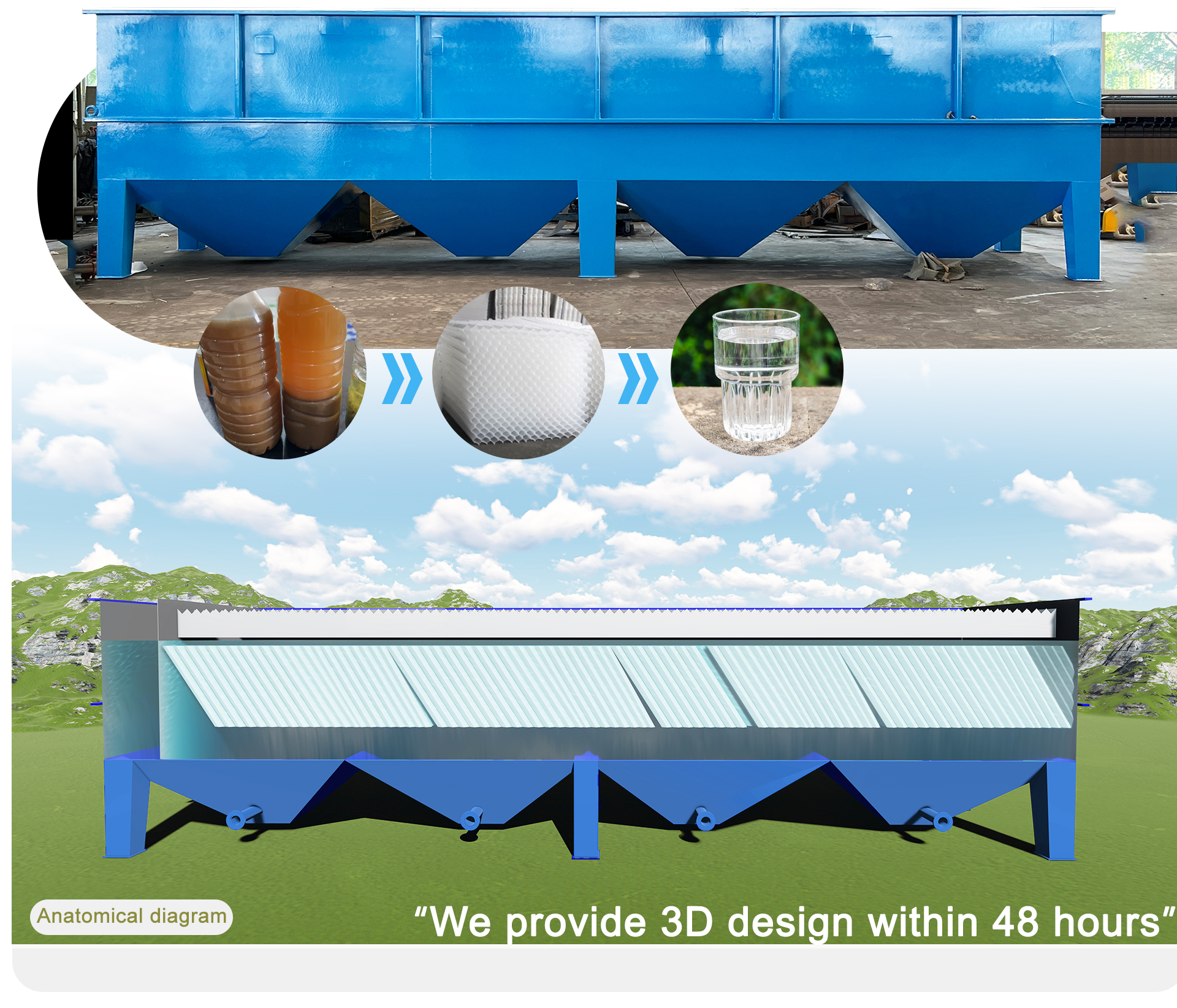
The clarification process uses closely spaced inclined plates to increase the effective settling surface inside the tank. By creating multiple shallow settling zones, the equipment reduces the distance suspended particles need to travel before separation. This allows the clarifier to handle higher hydraulic loading within a smaller footprint than a conventional clarification basin of similar ground area.
The packaged construction is another important difference. The unit is described as pre-assembled and factory-tested, reducing the amount of fabrication and assembly required at the final installation site. Once the foundation and required process connections are prepared, installation mainly involves positioning, leveling, connecting the inlet and outlet piping, arranging sludge discharge, and completing commissioning.
This combination of high-rate clarification, FRP construction, compact equipment layout, and packaged delivery makes the clarifier suitable for industrial wastewater pretreatment, decentralized municipal treatment, food and beverage processing, and prefabricated water treatment systems.
Product Parameters
Model | Area (m²) | Plate size (mm) | Cake thickness (mm) | Filter chamber volume (L) | Plate Qty (pcs) | Filtration pressure (Mpa) | Motor Power (Kw) | Weight (Kg) | Dimensions | Foundation Size(mm) | ||||||||||||||||||||
L | B | D | H | |||||||||||||||||||||||||||
X^Z100/1250-30UR | 100 | 1250×1250 | 30 | 1468 | 36 | ≥0.6 | 4.0 | 8307 | 5430×1900×1630 | 3970 | 850 | 1740 | 995 | |||||||||||||||||
X^Z120/1250-30UR | 120 | 1746 | 43 | 9308 | 5880×1900×1630 | 4430 | ||||||||||||||||||||||||
XZ150/1250-30UR | 150 | 2250 | 55 | 11000 | 6400×1900×1630 | 5210 | ||||||||||||||||||||||||
X^Z160/1250-30UR | 160 | 2341 | 58 | 11492 | 6860×1900×1630 | 5400 | ||||||||||||||||||||||||
XZ180/1250-30Uk | 180 | 2619 | 65 | 12494 | 7315×1900×1630 | 5860 | ||||||||||||||||||||||||
X^Z200/1250-30U& | 200 | 2896 | 72 | 13504 | 7770×1900×1630 | 6310 | ||||||||||||||||||||||||
X^Z220/1250-30Uk | 220 | 3214 | 80 | 14652 | 8290×1900×1630 | 6830 | ||||||||||||||||||||||||
X^Z250/1250-30UR | 250 | 3650 | 91 | 16227 | 9010×1900×1630 | 7550 | ||||||||||||||||||||||||
X^Z200/1500-35Uk | 200 | 1500×1500 | 35 | 3500 | 49 | ≥0.6 | 11 | 20030 | 6570×2200×1820 | 5250 | 1170 | 1990 | 1070 | |||||||||||||||||
X^Z250/1500-35Uk | 250 | 4375 | 61 | 22978 | 7395×2200×1820 | 6090 | ||||||||||||||||||||||||
X^Z300/1500-35Uk | 300 | 5250 | 74 | 26026 | 8300×2200×1820 | 6990 | ||||||||||||||||||||||||
XMZ350/1500-35Uk | 350 | 6125 | 86 | 29220 | 9120×2200×1820 | 7840 | ||||||||||||||||||||||||
X^Z400/1500-35Uk | 400 | 7000 | 99 | 32574 | 10050×2200×1820 | 8750 | ||||||||||||||||||||||||
X^Z450/1500-35Uk | 450 | 7875 | 111 | 35586 | 10860×2200×1820 | 9590 | ||||||||||||||||||||||||
X^Z500/1500-35Uk | 500 | 8750 | 123 | 38606 | 11730×2200×1820 | 10430 | ||||||||||||||||||||||||
X^Z600/2000-40Uk | 600 | 2000×2000 | 40 | 12000 | 85 | ≥0.6 | 15 | 49000 | 11100×3000×2500 | 9200 | 1660 | 2000 | 1050 | |||||||||||||||||
X^Z700/2000-40Uk | 700 | 14000 | 99 | 53000 | 12200×3000×2500 | 10300 | ||||||||||||||||||||||||
X^Z800/2000-40Uk | 800 | 16000 | 113 | 57000 | 13350×3000×2500 | 1450 | ||||||||||||||||||||||||
X^Z900/2000-40Uk | 900 | 18000 | 127 | 61000 | 14500×3000×2500 | 12600 | ||||||||||||||||||||||||
X^Z1000/2000-40U& | 1000 | 20000 | 141 | 65000 | 15600×3000×2500 | 13830 | ||||||||||||||||||||||||
Features & Advantages |
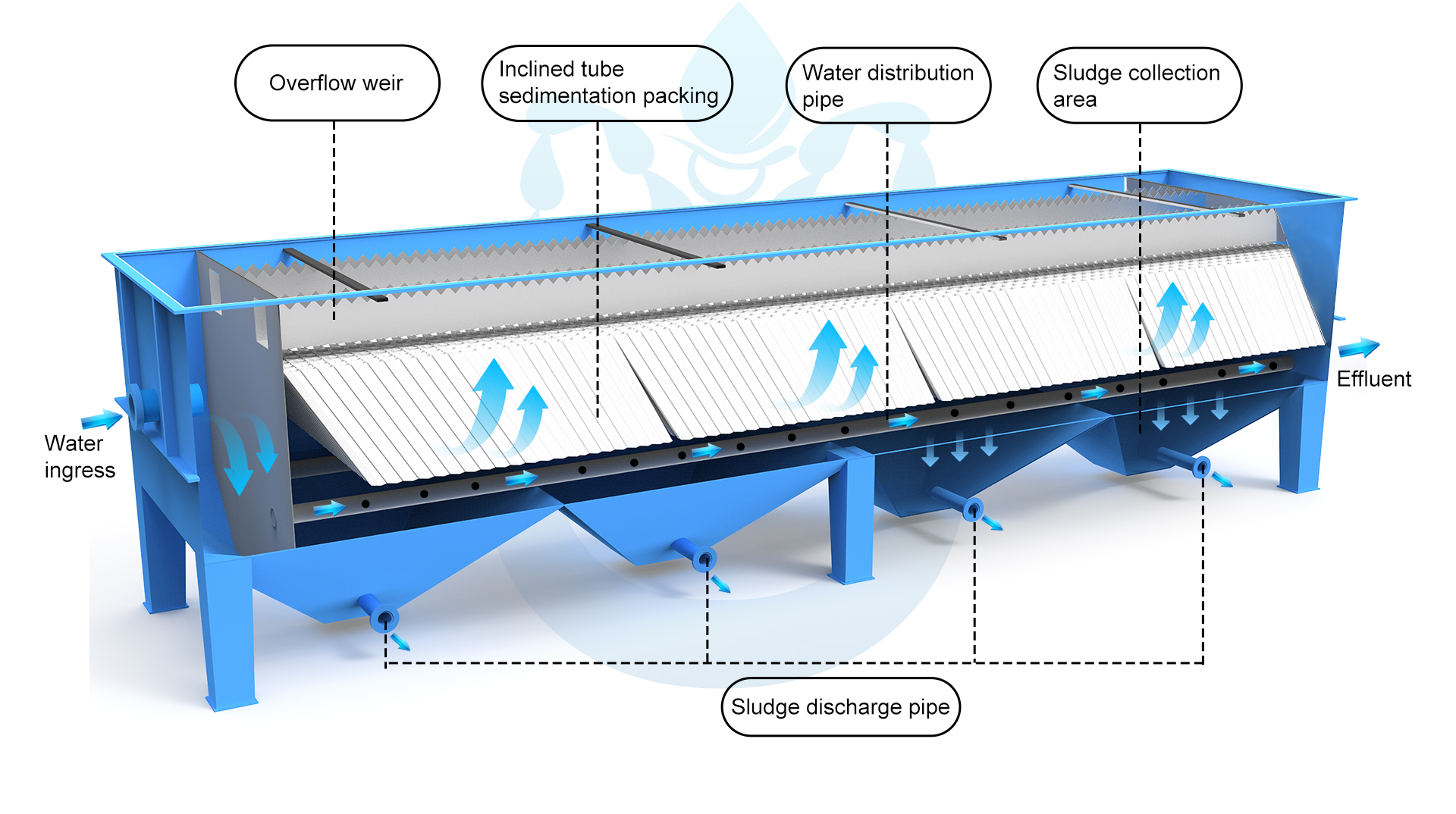
Closely spaced lamella plates provide a large effective settling area within the clarification tank. Instead of relying on one large open settling surface, the internal plate pack divides the clarification zone into multiple shallow settling passages.
As suspended solids enter the inclined plate section, the shorter settling path allows particles and flocs to reach a separation surface more quickly. Settled material then moves downward toward the sludge collection area while clarified water continues toward the outlet.
This high-rate configuration is particularly useful for projects where treatment capacity needs to be increased without proportionally increasing the physical size of the clarifier.
The clarifier is supplied as a complete packaged unit rather than as a collection of individual components that must be extensively fabricated on site.
The product is pre-assembled and factory-tested before delivery. This configuration reduces the amount of mechanical construction required during installation and simplifies coordination between the clarification tank, inclined plate section, sludge collection area, and hydraulic connections.
For treatment projects with tight construction schedules, remote installation sites, or limited local fabrication resources, a packaged system can simplify project execution.
Site preparation can focus on providing a suitable foundation and the required process connections rather than constructing a large conventional settling basin from the ground up.
High-strength fiberglass is used for the main tank and critical components. FRP is particularly relevant in wastewater applications because corrosion conditions can vary considerably depending on the influent chemistry and treatment process.
The material is also relatively lightweight, which can simplify equipment transportation, lifting, and positioning during installation.
This construction characteristic distinguishes the product from conventional steel clarifiers and makes it suitable for projects where chemical resistance and equipment handling are important selection considerations.
The combination of inclined plate clarification and packaged tank construction concentrates a large settling area into a comparatively compact system.
This makes the equipment appropriate for wastewater treatment plant upgrades, decentralized plants, production facilities, and prefabricated treatment systems where the available installation area is limited.
A compact clarifier can also simplify integration with upstream chemical dosing, flocculation, biological treatment, or downstream filtration equipment because the separation stage does not require a large open sedimentation basin.
The inclined plates are arranged at approximately 60 degrees. This geometry helps separated solids move downward along the plate surfaces toward the sludge collection section.
The angled arrangement supports continuous solids movement and reduces the likelihood of sludge remaining permanently on the settling surfaces.
The product information identifies PP/PVC materials for the inclined plate section. These polymer materials are selected for their resistance to chemical exposure in wastewater environments.
Because the equipment is supplied in a packaged configuration, installation work is concentrated around placement, leveling, piping connections, sludge discharge connections, and commissioning.
This differs from a conventional clarifier project where a significant portion of the tank and separation structure may need to be constructed or assembled directly at the treatment site.
The packaged approach is therefore particularly useful for skid-mounted and prefabricated water treatment projects.
The inclined plate configuration is designed to support downward sludge movement, while routine maintenance primarily focuses on sludge discharge and inspection of the plate section.
Operators should periodically confirm that solids are being removed from the lower collection zone and that the passages between inclined plates remain clear.
The relatively simple clarification mechanism also reduces dependence on complex moving equipment inside the settling section.
Applications |
The packaged fiberglass lamella clarifier can be used as a pretreatment or intermediate clarification stage for industrial wastewater.
The product page specifically identifies wastewater containing suspended solids, metals, and precipitated material from industries such as mining, metal finishing, and chemical production.
In these applications, chemical treatment may first convert dissolved or finely dispersed contaminants into larger flocs or precipitates. The wastewater can then enter the lamella clarifier, where the formed solids are separated before the water proceeds to additional biological treatment, filtration, or discharge treatment.
The FRP construction is particularly relevant where the wastewater environment creates corrosion concerns for conventional materials.
Small communities, decentralized treatment facilities, satellite plants, and municipal upgrade projects can use the packaged clarifier where available site area is restricted.
In these systems, the unit can provide primary or tertiary clarification depending on the overall treatment process.
The inclined plate design allows additional effective settling area to be incorporated without requiring a large conventional settling basin, making the equipment useful when an existing plant needs additional clarification capacity but has limited room for expansion.
The packaged configuration also reduces the amount of construction required at smaller or remote municipal treatment locations.
Food and beverage wastewater can contain suspended organic material, fats, grease, and other process solids that need to be removed before further treatment.
The lamella clarifier can provide a solid-liquid separation stage after suitable upstream conditioning. The product page specifically identifies food and beverage processing as an application and notes that the fiberglass structure is suitable for environments involving frequent wash-down and acidic or alkaline conditions.
The compact equipment layout can be incorporated into factory wastewater treatment rooms or external treatment systems where available space needs to be used efficiently.
One of the strongest applications for this model is integration into prefabricated treatment plants.
Because the clarifier itself is supplied as a packaged unit, it can function as a clarification module within a larger skid-mounted or containerized water treatment system.
The product page identifies both potable-water treatment and desalination pretreatment as possible applications for this configuration.
In such systems, the clarifier can be positioned after coagulation and flocculation to remove suspended solids before the water enters downstream filtration or other treatment equipment.
This modular approach allows system designers to combine clarification with dosing, filtration, biological treatment, or other process units according to the requirements of the complete treatment plant.
The compact footprint and packaged construction also make the clarifier suitable for existing treatment facilities that require additional solid-liquid separation capacity.
Instead of constructing another large sedimentation tank, a packaged lamella unit can be integrated into the available plant area and connected to the existing process line.
This can be useful where treatment flow has increased or where the existing clarification stage needs additional capacity before downstream treatment.
FAQ |
The unit uses closely spaced inclined plates to create additional effective settling area inside a compact tank. This shortens the settling distance of suspended particles and allows higher hydraulic loading within a smaller physical footprint.
The main tank and critical components are constructed from high-strength fiberglass. FRP provides corrosion resistance for wastewater environments while also keeping the equipment relatively lightweight for transportation and site handling.
No. The product is designed as a packaged clarifier and is described as pre-assembled and factory-tested before shipment. This reduces the amount of assembly and fabrication required at the installation site.
Installation mainly involves preparing a suitable foundation, positioning and leveling the equipment, connecting the process piping and sludge discharge line, and completing commissioning.
The product information identifies chemically resistant PP/PVC materials for the inclined plate section.
The inclined plates use an approximately 60° arrangement. This angle assists the downward movement of settled solids toward the sludge collection zone.
The product page identifies industrial wastewater containing suspended solids, metals, or precipitated contaminants, including wastewater associated with mining, metal finishing, and chemical production.
Yes. The product is positioned for compact municipal and decentralized plants, including small communities, satellite facilities, and treatment-plant upgrades where installation space is limited.
Yes. Food and beverage processing is one of the specified applications. The clarifier can be used to separate organic solids, fats, and grease from suitably conditioned process wastewater.
Yes. The packaged configuration is suitable for skid-mounted or containerized treatment systems. The product page specifically identifies prefabricated potable-water treatment and desalination pretreatment systems as application scenarios.
Routine maintenance mainly includes periodic sludge discharge and inspection of the inclined plate section. Operators should ensure that sludge is removed normally and that the passages through the plate pack remain clear.
The product page states that online technical support, video guidance, and optional overseas installation and operation services are available.
Product Showcase |
