
English 

Views: 0 Author: Site Editor Publish Time: 2026-09-11 Origin: Site


Strict compliance mandates and rising labor shortages are accelerating a massive shift in facility management today. Operators are moving away from manual interventions toward data-driven, automated operations. However, bolting random digital features onto modernized Package Sewage Treatment Plants rarely yields financial returns without a structured strategy. You need deliberate automation to handle complex biological variations seamlessly and reliably.
Ultimately, selecting the right control systems dictates your daily operational expenses, compliance consistency, and long-term equipment viability. Moving from basic remote monitoring to advanced predictive analytics ensures your facility remains robust over time. A fully automated Integrated Wastewater Treatment Plant depends entirely on strategic, well-planned technology layers. We will explore exactly which automation functions drive real efficiency, how to mitigate implementation risks, and what specific metrics matter most. Understanding these tools helps you make highly informed upgrade decisions.
Core Efficiency: Foundational automation (SCADA, automated dosing, smart alarms) directly targets the highest operational costs: labor, energy, and chemical waste.
Risk Mitigation: Predictive maintenance and real-time compliance tracking shift operators from reactive troubleshooting to proactive facility management.
Smart Scaling: Advanced AI and machine learning functions are highly effective but should only be layered over a robust, standardized PLC infrastructure.
Vendor Evaluation: Avoid proprietary lock-in by prioritizing open-architecture control systems and vendors who offer transparent implementation roadmaps.
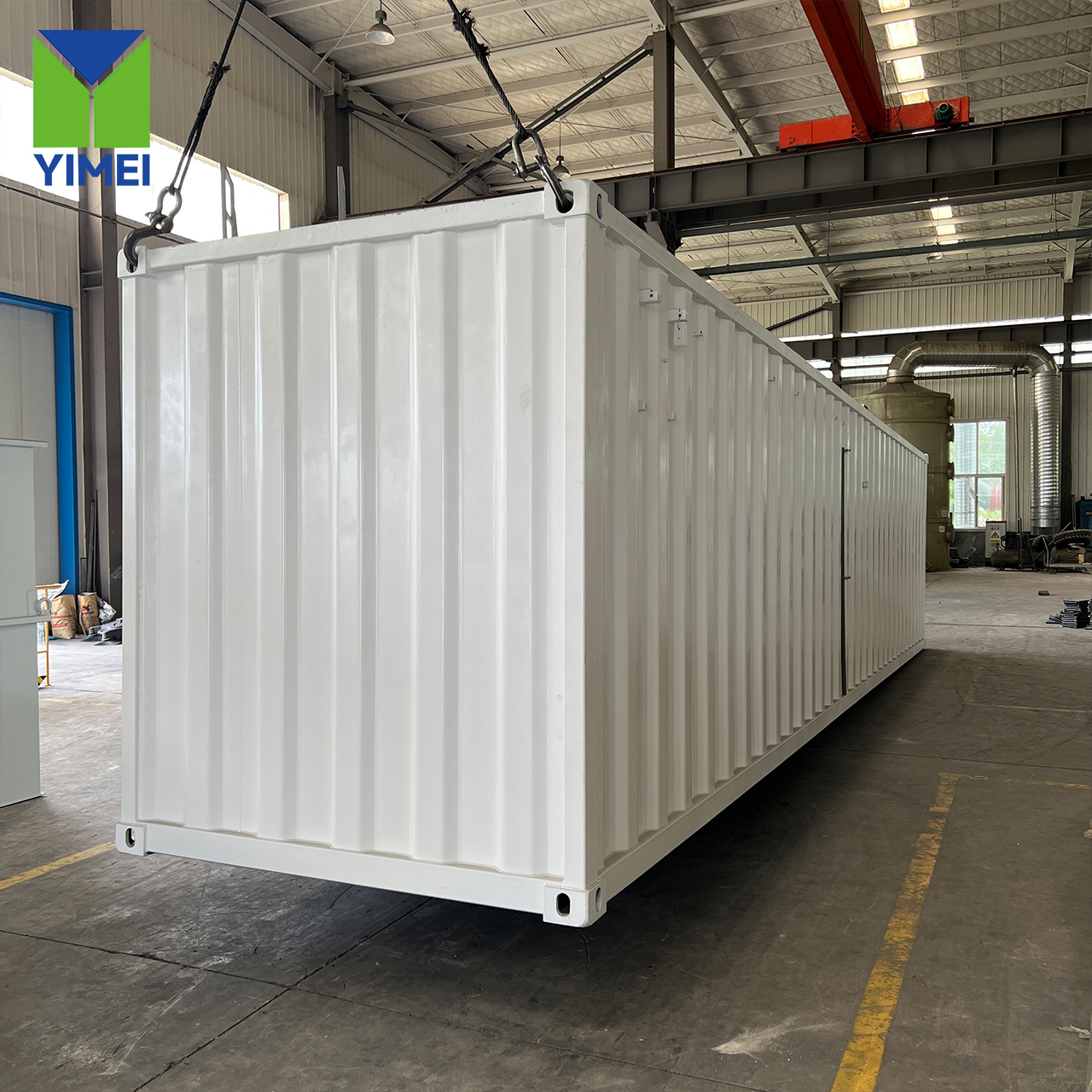
Manual operations introduce severe vulnerabilities into daily water treatment workflows. Non-automated systems suffer heavily because human operators cannot monitor biological processes continuously. This limitation frequently leads to chemical overdosing, as operators naturally err on the side of caution. Delayed responses to equipment failures also plague manual setups. When a primary blower trips offline at midnight, a manual facility might not discover the issue until morning. By then, the biological process suffers severe disruption. Furthermore, the high human-operator burden makes scaling these facilities unsustainably expensive.
You must frame automation correctly to maximize its value. Do not view it merely as a flashy technology upgrade. Frame automation as a dual compliance and financial strategy. It actively mitigates environmental risk while streamlining daily resource usage. Leaders should treat programmable logic controllers (PLCs) and sensors as foundational risk management tools.
To measure success, we need highly tangible evaluation criteria. Avoid vague goals like "better efficiency." Instead, establish clear benchmarks before deploying any new hardware.
Reduced energy consumption: Track your specific kilowatt-hours (kWh) per volume treated. Aeration blowers consume massive amounts of power. Automation should drop this metric noticeably.
Consistent effluent quality: Monitor Biochemical Oxygen Demand (BOD) and Chemical Oxygen Demand (COD) levels. Automated systems must keep these numbers within strict regulatory bands regardless of inflow spikes.
Reduced emergency maintenance: Count your after-hours callouts. Successful automation handles minor fluctuations autonomously, significantly reducing expensive emergency maintenance trips.
Supervisory Control and Data Acquisition (SCADA) systems form the brain of modern facilities. They provide centralized data collection across the entire site. Flow rates, tank levels, and pump statuses stream directly into a unified digital dashboard. Operators gain complete, real-time visibility into complex biological processes. This centralized approach eliminates the need for personnel to walk the plant visually checking analog gauges.
Secure, remote access completely transforms facility management. Off-site operators can adjust critical parameters using secure mobile or desktop portals. This capability minimizes weekend or after-hours site visits drastically. When an alert triggers, an operator can log in remotely, assess the live data, and reset a tripped pump without leaving their home. This level of control simplifies workforce management and improves operator quality of life.
Aeration represents the largest energy sink in any treatment facility. Automated aeration control directly solves this massive inefficiency. You achieve this by integrating Dissolved Oxygen (DO) sensors directly into Variable Frequency Drives (VFDs). The DO sensors continuously read oxygen levels in the biological basin. They send signals to the VFDs, adjusting blower speeds to match actual biological demand exactly. This dynamic adjustment slashes energy waste immediately, especially during low-flow nighttime hours.
Precision chemical feed systems operate on a similar principle. They tie directly into real-time influent data and turbidity sensors. Instead of dosing chemicals at a static rate, the system calculates the exact dosage required for the current organic load. This prevents expensive overdosing. It also stops sludge buildup caused by excess coagulants. Consequently, chemical supply costs drop significantly, and sludge disposal becomes much cheaper.
Alarm fatigue poses a severe danger in industrial environments. When every minor fluctuation triggers a loud siren, operators eventually ignore the warnings. Smart automation solves this by enforcing strict, categorized alarm hierarchies. Critical alarms, like a main pump failure, trigger immediate notifications. Informational alarms, such as a scheduled filter backwash, log silently in the background. This hierarchy ensures operators only respond to genuine emergencies.
Automated compliance reporting logs remove another massive administrative headache. Local environmental agencies require strict historical data to prove compliance. Automated systems generate these logs seamlessly without any manual data entry. They pull timestamped data directly from the sensors. This eliminates human transcription errors and guarantees tamper-proof records during regulatory audits.
An Integrated Wastewater Treatment Plant benefits immensely from moving beyond basic PLC programming. Historical data analysis and machine learning algorithms unlock entirely new performance tiers. Standard automation reacts to current conditions. Artificial intelligence analyzes years of historical data to uncover hidden process inefficiencies. It finds correlations between ambient temperature, influent loads, and optimal aeration rates.
Predictive maintenance completely changes how facilities manage their physical assets. Traditional maintenance relies on arbitrary runtime schedules. Predictive systems use live vibration analysis and power-draw trends to evaluate equipment health. If a sludge pump starts drawing 10% more amperage than its baseline, the system flags it immediately. You can predict a pump or blower failure weeks before a catastrophic breakdown actually occurs.
Flow and load prediction offers another powerful AI application. Machine learning models utilize local weather data and historical usage patterns to anticipate storm surges. They predict peak usage times accurately. The system then pre-adjusts treatment cycles to prevent hydraulic overloads. It might empty a holding tank early in anticipation of heavy rainfall.
However, operators must maintain a realistic view of ROI regarding AI. Smaller facilities should definitely prioritize foundational "quick wins" first. Automated DO control provides immediate, guaranteed returns. Master basic SCADA and sensor integration before investing in advanced predictive models. Layering AI over a broken or poorly calibrated sensor network only generates bad data faster.
Retrofitting modern technology onto legacy equipment often presents unexpected challenges. You cannot simply attach a sophisticated ultrasonic sensor to a badly corroded mechanical valve. Integration requires evaluating older mechanical components carefully. An older Package Sewage Treatment Plants setup might lack the necessary automated actuators. Facility managers must conduct a thorough physical audit of all existing infrastructure before buying software. Upgrading older pneumatic valves to electronic actuators often represents a necessary first step.
Operator adoption frequently becomes the biggest hurdle during rollout. The learning curve for new digital interfaces can feel incredibly steep for veteran staff. Automation should simplify the operator’s job fundamentally. It must not require them to become software engineers. Intuitive Human-Machine Interfaces (HMIs) are critical. Training programs must focus on practical, daily scenarios rather than abstract programming logic. When operators understand how the system saves them physical labor, adoption rates soar.
Cybersecurity vulnerabilities represent a very real threat to modern infrastructure. Connecting previously isolated industrial control systems (ICS) to cloud networks introduces external risks. Hackers increasingly target municipal and industrial water grids. Facilities must highlight the absolute necessity of air-gapping critical safety overrides. Implementing secure Virtual Private Networks (VPNs), multi-factor authentication, and strict user access controls is mandatory. Cyber hygiene matters just as much as routine physical maintenance in automated plants.
Selecting the right integration partner determines the long-term success of your digital upgrade. Decision-makers must demand non-proprietary PLC programming environments. You should insist on standard IEC 61131-3 languages, like Ladder Logic or Structured Text. Open architecture ensures you are never forced into expensive, single-vendor service contracts. If a vendor insists on locked, proprietary code, you lose all leverage regarding future maintenance pricing.
Compliance-aware engineering separates excellent vendors from average ones. You must evaluate if the vendor’s software natively supports local reporting formats. The system should generate reports required by the EPA or regional regulatory bodies straight out of the box. Custom coding basic compliance reports wastes valuable engineering hours and increases project costs unnecessarily.
Finally, carefully assess Service Level Agreements (SLAs) and post-installation support. A beautiful dashboard means nothing if the system crashes on a holiday weekend. Evaluate the vendor’s spare parts availability closely. Demand guaranteed response times for software bugs or critical system downtime. Get these support metrics clearly defined in writing before signing any procurement contracts.
Vendor Evaluation Criteria Matrix
Evaluation Category | Ideal Vendor Trait | Red Flag Warning |
|---|---|---|
System Architecture | Open, standard IEC 61131-3 programming. | Proprietary code requiring specific vendor tools. |
Compliance Reporting | Native, automated EPA/regional report generation. | Requires manual data export and formatting. |
Hardware Compatibility | Agnostic integration across multiple equipment brands. | Demands replacing all existing sensors to match their brand. |
Post-Install Support | Defined SLAs, guaranteed 24/7 remote troubleshooting. | Vague support terms, limited spare parts inventory. |
Focus on bottlenecks: The best automation functions directly solve specific operational bottlenecks. Do not buy technology for the sake of modernization; buy it to ensure compliance and reduce daily labor hours.
Master the basics first: Prioritize foundational upgrades like VFDs tied to DO sensors. These generate rapid energy savings, providing the financial justification for future AI integrations.
Protect your data: Treat cybersecurity as a core operational requirement. Secure remote access properly to protect your infrastructure from external threats.
Demand open systems: Protect your long-term budget by refusing locked, proprietary control systems. Open architecture allows you to scale efficiently and competitively.
We advise starting your journey by conducting a comprehensive automation audit. Identify your immediate "quick wins" before committing to a massive, full-scale digital transformation. Understand your current sensor capabilities and hardware limitations. We strongly encourage decision-makers to request a functional software demo. Consult a qualified integration engineer to scope the precise automation architecture needed for your specific site layout and biological load.
A: Most facilities see a full Return on Investment within 12 to 24 months. This rapid payback is primarily driven by significant energy savings from VFDs optimizing blower speeds. Additionally, precision automated dosing drastically reduces daily chemical costs and minimizes expensive sludge disposal fees.
A: Yes, through a phased retrofit process. While highly feasible, it requires carefully evaluating existing infrastructure. Engineers must check the compatibility of older mechanical pumps and manual valves to determine if they can accept modern electronic actuators and PLC integrations.
A: Automation ensures compliance through continuous, real-time effluent monitoring. It utilizes automated shut-offs or diversion valves during out-of-spec events to prevent illegal discharges. Furthermore, it generates tamper-proof digital historical logs, eliminating human error during regulatory reporting.
A: No. Modern automation systems are designed specifically for plant operators, not software engineers. They feature intuitive touch-screen HMIs. Additionally, facilities often utilize remote managed services for software updates and troubleshooting, negating the need for dedicated on-site IT personnel.


