
English 

Views: 0 Author: Site Editor Publish Time: 2026-06-19 Origin: Site


Treating industrial effluent is no longer just a basic environmental obligation. You must view it as a critical operational risk and a key cost-control vector. Local and federal discharge regulations continue to tighten worldwide. Strict regulatory frameworks, such as the EPA's National Pollutant Discharge Elimination System (NPDES), force modern facilities to adapt quickly. Furthermore, raw water prices and municipal surcharge fees rise steadily every year. This creates intense financial pressure on plant managers and environmental engineers.
This comprehensive guide bypasses overly basic definitions. Instead, we focus deeply on practical system architecture, strict technology evaluation, and strategic vendor selection. You will discover exactly how to approach major facility upgrades or entirely new installations. By the end, you will understand how to secure compliance, reduce operational expenses, and future-proof your facility's water infrastructure.
Industrial wastewater requires highly specialized, multi-stage processing based on specific production contaminants (e.g., heavy metals, high BOD/COD, fats/oils).
A properly sized industrial wastewater treatment system balances initial Capital Expenditure (CAPEX) with long-term Operational Expenditure (OPEX), chemical usage, and energy demands.
Proactive industrial wastewater management and industrial water recycling can offset treatment costs by reducing raw water intake and minimizing discharge penalties.
Never bypass pilot testing; theoretical contaminant removal rates rarely match facility-specific realities without empirical validation.
Municipal wastewater usually remains predictable. Industrial effluent behaves entirely differently. Production facilities generate highly variable flow rates on a daily basis. They also produce extreme pH levels and introduce toxic organic compounds into the drain. You cannot rely on standard municipal approaches. Specialized Industrial Wastewater Treatment protocols become mandatory. Heavy metals, solvents, and volatile organics demand precise chemical interventions. If your plant processes food, you face enormous biological oxygen demand (BOD) loads. If you run a petrochemical plant, hydrocarbon removal dominates your daily focus.
Regulatory compliance drives most facility upgrades today. Authorities enforce strict discharge limits under NPDES permits or local equivalent frameworks. You must meet these limits consistently. Missing your targets triggers severe daily non-compliance fines. In extreme cases, regulators may even mandate sudden operational shutdowns until you fix the discharge violations.
Inadequate treatment harms your entire business model. Poor water handling creates severe production bottlenecks. Corrosive effluent accelerates costly equipment degradation across your piping network. Repeated environmental violations destroy public trust. They also invite relentless local media scrutiny. Therefore, effective treatment acts as vital business insurance.
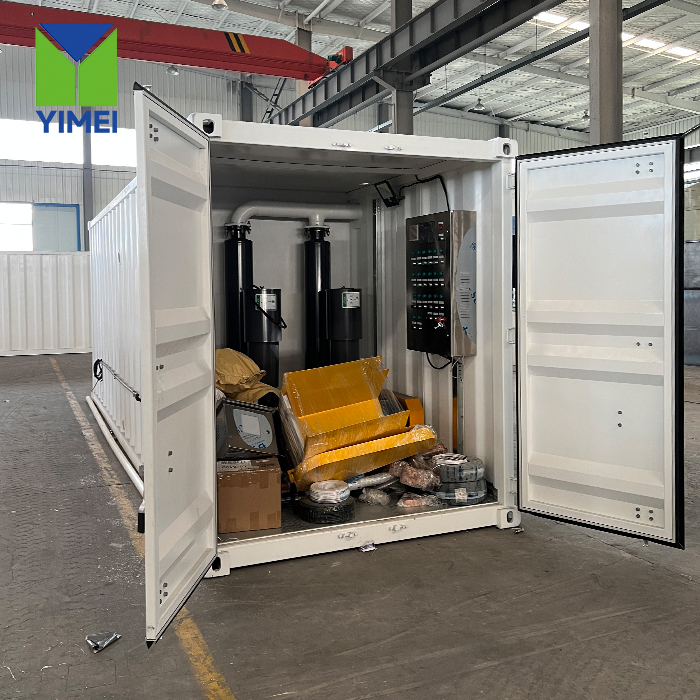
Designing an effective industrial wastewater treatment system requires strategic staging. You must sequence technologies carefully. Each phase targets specific contaminant profiles. We break this robust architecture down into four primary stages.
Physical and chemical processes kickstart the treatment journey. You must remove suspended solids and free oils immediately. Engineers rely heavily on Dissolved Air Flotation (DAF) units. DAF introduces microscopic air bubbles to float grease to the surface for skimming. Large clarifiers settle heavier particulates to the bottom. Upfront screening mechanisms catch large, damaging debris. Operators also apply rapid pH neutralization here. They inject specific acids or bases to stabilize the effluent before it enters sensitive biological stages.
Biological treatment handles dissolved organic matter safely. Specialized microorganisms consume soluble contaminants rapidly. This phase significantly reduces BOD and chemical oxygen demand (COD). Membrane Bioreactors (MBR) offer exceptional biological degradation in a compact footprint. Sequencing Batch Reactors (SBR) process effluent batches efficiently within single aeration tanks. Anaerobic digestion works perfectly for high-strength organic waste. It generates useful biogas, which facilities can capture for renewable energy.
Advanced treatment tackles strict regulatory hurdles head-on. You must remove trace contaminants and tough dissolved salts. Reverse Osmosis (RO) pushes water through dense semi-permeable membranes. Ultrafiltration stops microscopic particles and remaining bacteria. Advanced oxidation utilizes ozone or hydrogen peroxide effectively. These aggressive chemicals destroy complex, toxic organics. Evaporation systems handle extreme brine concentration when liquid discharge is prohibited.
Sludge management represents a massive operational expense. Every previous stage generates leftover biosolids or chemical sludge. You must dewater this sludge efficiently. Filter presses squeeze out excess moisture mechanically using high pressure. Centrifuges spin the wet sludge at high speeds to separate liquids. Drier sludge weighs much less. This drastically reduces your final landfill disposal and trucking costs.
Treatment Phase | Primary Objective | Common Technologies Used |
|---|---|---|
Primary Treatment | Remove suspended solids, grease, and free oils. | DAF, Clarifiers, Screens, pH Neutralization |
Secondary Treatment | Degrade soluble organic matter and reduce BOD/COD. | MBR, SBR, Aerobic Basins, Anaerobic Digesters |
Tertiary Treatment | Target trace contaminants and dissolved salts. | Reverse Osmosis, Ultrafiltration, Advanced Oxidation |
Sludge Management | Dewater and dispose of concentrated biological/chemical waste. | Filter Presses, Centrifuges, Thermal Dryers |
Plant managers need a robust decision framework. You cannot select heavy equipment based on generic marketing claims. Evaluate your options using these strict engineering criteria to ensure long-term viability.
Contaminant Profiling & Load Variability: Understand your specific peak production surges. Standard solutions often fail during sudden flow spikes. You must design for peak flow, not just average daily flow. Industrial batch processes release concentrated chemical dumps unpredictably. Equalization tanks help absorb these sudden hydraulic shocks before they overwhelm sensitive membranes.
Footprint Constraints: Floor space carries a high premium in manufacturing plants. Compare compact, modular systems against traditional setups. Membrane Bioreactors (MBRs) minimize your physical footprint significantly. Conversely, traditional aeration lagoons or large gravity clarifiers consume massive acreage. Evaluate your available real estate carefully before committing to a design concept.
CAPEX vs. Operational Expenses: Initial capital expenditure only tells a partial story. You must assess hidden operational drivers constantly. Chemical consumption heavily impacts your monthly budgets. Membrane replacement frequency dictates long-term maintenance costs. Energy intensity varies wildly between biological aeration blowers and thermal evaporation units. Look closely at utility demands before signing purchase orders.
System Scalability: Production facilities rarely stay static over a decade. You must design systems featuring modular expansion capabilities. Ensure your architecture can handle future facility growth seamlessly. Furthermore, environmental agencies constantly tighten discharge limits. A scalable setup prevents you from replacing the entire infrastructure later.
Excellent industrial wastewater management starts long before the effluent reaches the treatment plant. Source reduction provides immediate financial returns. Conduct a thorough operational audit first. Identify practical ways to segregate specific waste streams early in the process. Never mix highly toxic waste with lightly soiled wash water. Segregation reduces the total volume of heavily contaminated water. It simplifies your overall treatment process dramatically.
The economics of industrial water recycling look increasingly attractive to modern manufacturers. Facilities calculate the return on investment (ROI) aggressively. Many aim for Zero Liquid Discharge (ZLD) or near-ZLD status. ZLD eliminates liquid waste entirely. You can reuse treated effluent across various plant operations safely. Feed this purified water into cooling towers. Route it to high-pressure boiler feed systems. Use it for routine daily washdown processes. This recycling loop slashes municipal raw water purchasing costs and eliminates external discharge penalties.
Continuous monitoring ensures you maintain compliance constantly. Implement modern SCADA networks immediately. Install real-time sensor arrays across your critical piping. Track pH levels, turbidity, and flow rates instantly. Automated alerts warn operators of sudden chemistry changes. This proactive approach prevents accidental illegal discharges. It also allows your operators to optimize chemical dosing continuously.
The procurement phase carries significant financial risk. Approach vendor selection with healthy skepticism. Demand hard performance evidence over glossy brochures.
First, mandate rigorous pilot testing. Bench-scale and pilot-scale trials remain absolutely non-negotiable. You must conduct them before finalizing any system design. Theoretical contaminant removal rates rarely match facility realities. Facility-specific empirical validation prevents catastrophic design failures later. A localized pilot test reveals exactly how specific coagulants react to your unique effluent profile.
Second, actively avoid rigid vendor lock-in. Scrutinize any proprietary consumables closely. Some vendors supply cheap equipment upfront but mandate expensive proprietary chemicals. Others use uniquely sized filtration membranes. These tactics inflate your long-term operational expenses unfairly. Choose equipment that accepts standard, open-market replacement parts.
Finally, use a strict vendor evaluation checklist during the bidding phase:
Demand verifiable case studies within your specific industry sector (e.g., Food & Beverage vs. Petrochemical).
Require absolute clarity on performance guarantees and detailed Service Level Agreements (SLAs).
Confirm the local availability of post-installation support, comprehensive operator training, and emergency maintenance teams.
An optimized treatment strategy directly protects your bottom line. It ensures strict regulatory compliance daily. It also future-proofs your facility operations against tightening environmental laws. Treating water correctly elevates your brand reputation and prevents costly factory downtime.
Take these critical actionable steps today:
Initiate a comprehensive wastewater characterization audit to understand your true daily contaminant loads.
Schedule a detailed site assessment with a qualified, independent engineering firm.
Isolate and segregate your heavily contaminated waste streams immediately.
Demand a localized pilot test before requesting any major equipment bids.
A: System lifespan varies significantly based on maintenance schedules and environmental conditions. Concrete tanks and major structural components often last 20 to 30 years. Mechanical items like pumps and agitators usually require replacement every 7 to 10 years. Corrosive chemical environments accelerate wear considerably. Delicate components like RO membranes need replacement every 3 to 5 years. Strict preventative maintenance extends operational life.
A: You must perform a detailed breakeven analysis. First, calculate your current local discharge surcharges. Add your monthly raw water purchasing costs. Compare this combined total against the capital expenditure of advanced treatment equipment. Do not forget the energy required to run recycling membranes. If your combined water and surcharge costs exceed the equipment's annualized operational expense, recycling becomes highly cost-effective.
A: Certain individual components operate perfectly as off-the-shelf solutions. Standard Dissolved Air Flotation (DAF) units or filter presses fit many applications. However, the overall system integration must always be custom-tailored. Your facility generates a unique effluent chemistry. Flow profiles vary by industry. A generic, completely off-the-shelf system will eventually fail during production surges or fail to meet strict local discharge limits.


