| Availability: | |
|---|---|
| Quantity: | |
Integrated Clarification and Grease Separation Solution
This integrated system is specifically designed for facilities with limited space and features outstanding performance in both solid-liquid separation and grease removal, making it an ideal choice for industrial and municipal applications.
Advanced Multi-Stage Treatment Process
Adopting a precise multi-stage treatment process, chemical pretreatment is carried out first, followed by the application of innovative microbubble flotation technology. This system can generate millions of micrometer-sized bubbles, precisely adsorbing suspended solids and oil particles, and carrying them to the water surface for separation.
Space-Optimized Engineering Design
Compared with the traditional DAF system, it can save up to 40% of space. Integrated design integrates all components - including chemical reactors, flotation cells, sludge collection systems and control panels - into a compact unit.
Superior Performance Characteristics
Enhanced Clarification: Achieves superior turbidity removal and water clarification through optimized hydraulic retention and advanced bubble technology
Efficient Grease Removal: Specialized surface skimming system effectively removes fats, oils, and greases with removal efficiencies exceeding 95%
Compact Footprint: Revolutionary design reduces space requirements while maintaining full treatment capacity
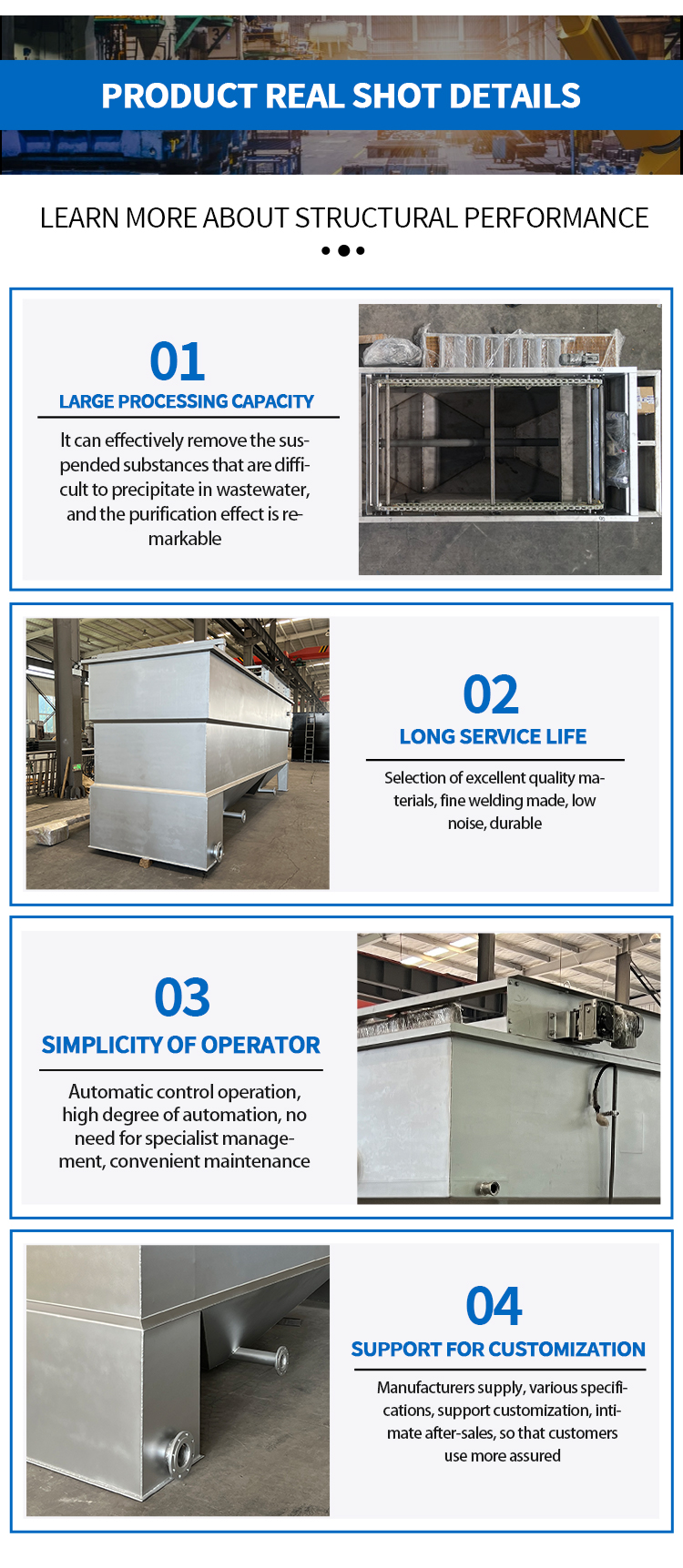
Automated Operation: Intelligent control system continuously monitors and adjusts treatment parameters for optimal performance
Low Maintenance: Simplified design with minimal moving parts reduces maintenance requirements and operational costs
Wide-Ranging Applications
The Compact Clarification Dissolved Air Flotation Machine demonstrates exceptional versatility across multiple sectors:
Food processing and packaging industries
Meat and poultry processing plants
Dairy and cheese production facilities
Restaurant and commercial kitchen wastewater
Automotive and metalworking shops
Municipal wastewater pretreatment
Product Parameters
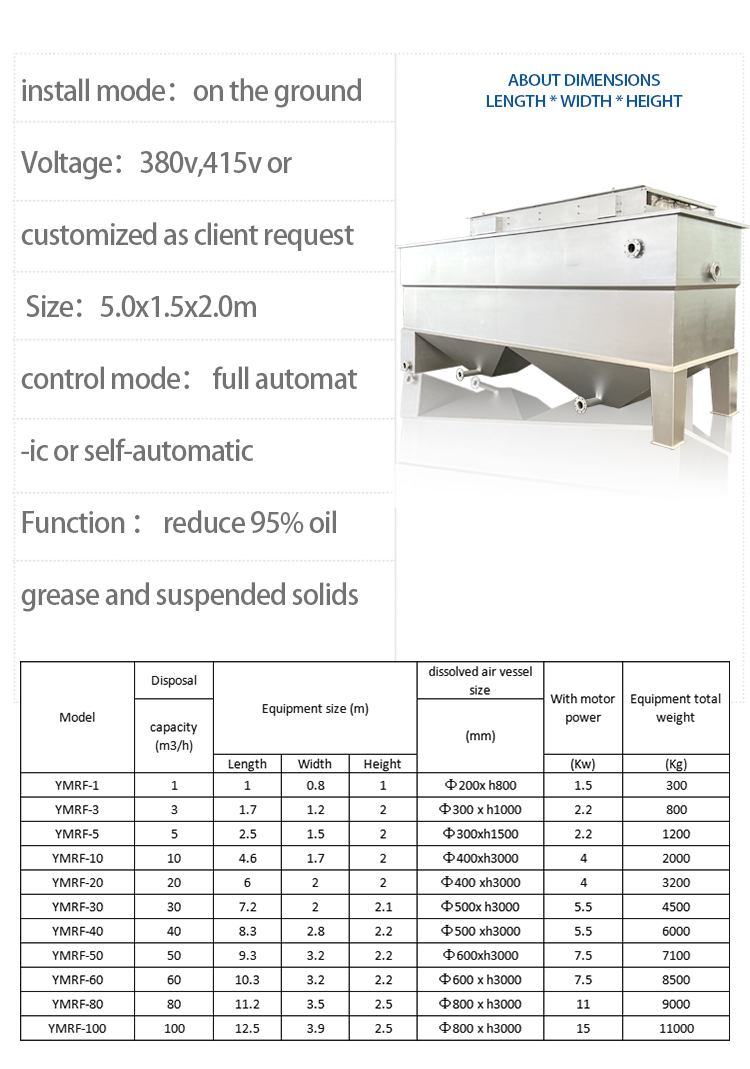
| Model | Disposal | Equipment size(m) | dissolved air vessel size |
With motor power |
Equipment total weight |
||
| capacity (m3/h) |
(mm) | ||||||
| Length | Width | Height | (Kw) | (Kg) | |||
| YMRF-1 | 1 | 1 | 0.8 | 1 | Φ200x h800 | 1.5 | 300 |
| YMRF-3 | 3 | 1.7 | 1.2 | 2 | Φ300xh1000 | 2.2 | 800 |
| YMRF-5 | 5 | 2.5 | 1.5 | 2 | Φ300xh1500 | 2.2 | 1200 |
| YMRF-10 | 10 | 4.6 | 1.7 | 2 | Φ400xh3000 | 4 | 2000 |
| YMRF-20 | 20 | 6 | 2 | 2 | Φ400xh3000 | 4 | 3200 |
| YMRF-30 | 30 | 7.2 | 2 | 2.1 | Φ500x h3000 | 5.5 | 4500 |
| YMRF-40 | 40 | 8.3 | 2.8 | 2.2 | Φ500 xh3000 | 5.5 | 6000 |
| YMRF-50 | 50 | 9.3 | 3.2 | 2.2 | Φ600xh3000 | 7.5 | 7100 |
| YMRF-60 | 60 | 10.3 | 3.2 | 2.2 | Φ600xh3000 | 7.5 | 8500 |
| YMRF-80 | 80 | 11.2 | 3.5 | 2.5 | Φ800xh3000 | 11 | 9000 |
| YMRF-100 | 100 | 12.5 | 3.9 | 2.5 | Φ800xh3000 | 15 | 11000 |
FAQ
Q: What is the main difference between YMWF CAF and traditional DAF?
A: The core difference is that our YMWF CAF system uses a cavitation air flotation mechanism without the need for capital-intensive components like pressure vessels and recirculation pumps. This results in lower investment, simpler operation, and reduced maintenance.
Q: How difficult is the installation?
A: Installation is straightforward due to the system's compact, pre-engineered design. It can be quickly installed on a simple foundation with minimal civil works, significantly reducing the project timeline.
Q: Is specialized training required to operate this equipment?
A: No. The system is designed for ease of use with simple controls. It does not require highly trained professionals for daily operation, making it ideal for regions with limited technical expertise.
Q: Can it handle the specific wastewater from our food processing plant?
A: Absolutely. The YMWF series is highly effective at removing fats, oils, grease, and suspended solids common in food industry wastewater. We can provide tailored recommendations for optimal chemical dosing.
Q: What is the advantage of the stainless steel model?
A: The Stainless Steel Dissolved Air Flotation Machine offers maximum resistance to corrosive chemicals and harsh environments, ensuring long-term durability and reliability, which is critical for industrial applications.
Product Introduction |
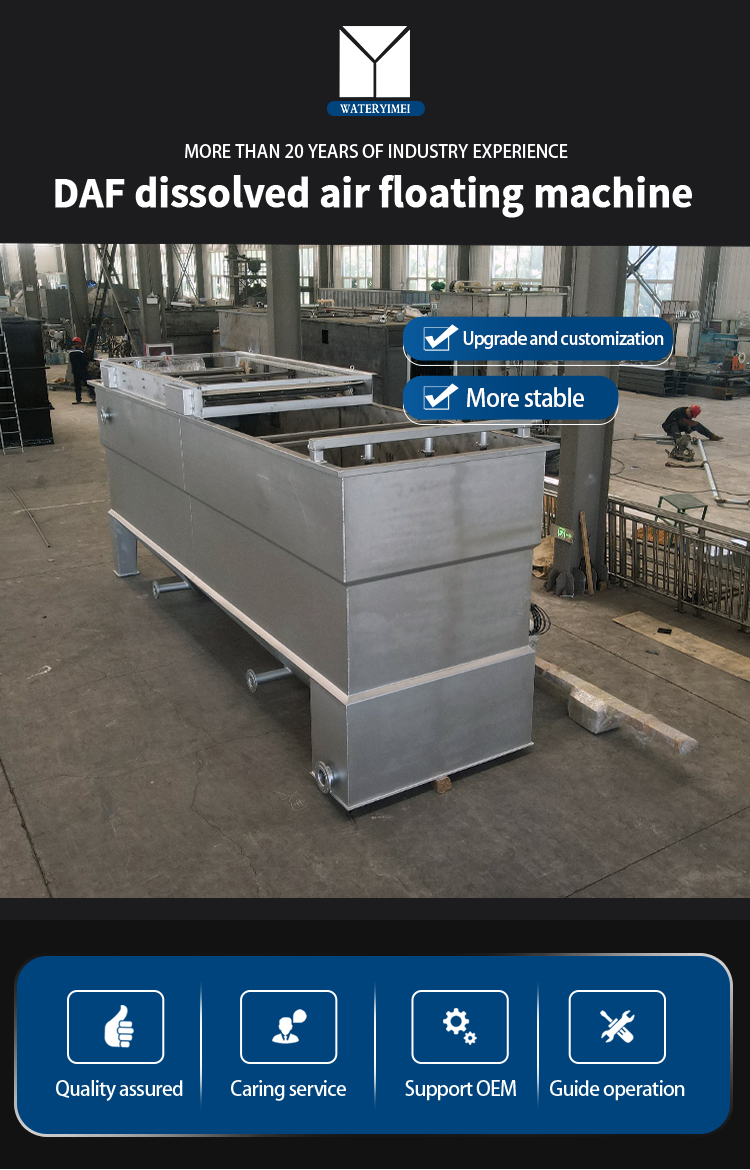
The Compact Clarification Grease Removal Dissolved Air Flotation Machine is an integrated wastewater treatment system developed for facilities that need efficient suspended-solids separation and grease removal within limited installation space. It combines chemical pretreatment, dissolved air flotation, surface skimming, sludge collection, and automatic control functions in one compact treatment unit.
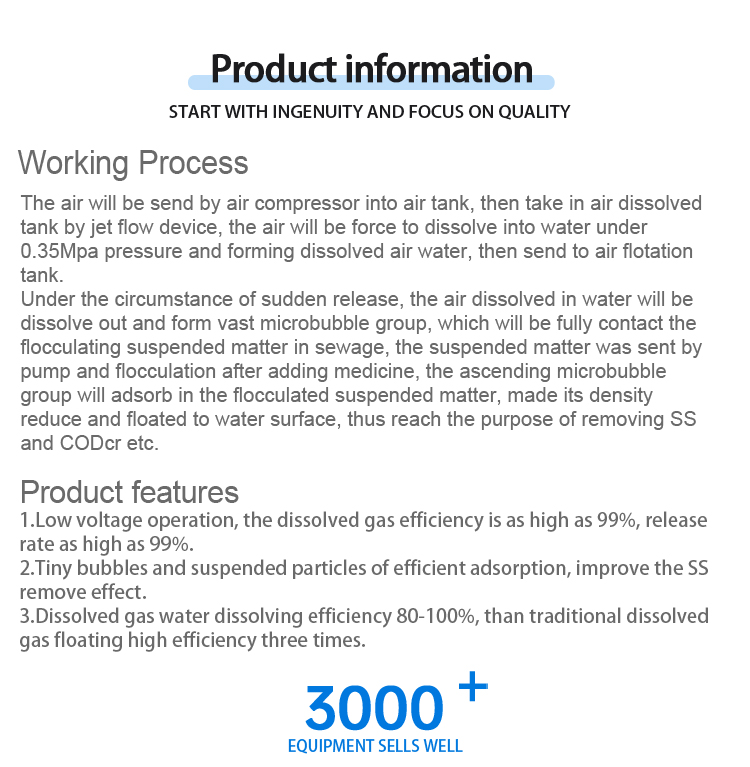
Unlike gravity clarification alone, dissolved air flotation uses large quantities of fine bubbles to separate contaminants that are difficult to settle naturally. After suitable chemical conditioning, micrometer-scale bubbles attach to suspended solids, oil droplets, grease, and formed flocs. The combined bubble-particle aggregates become more buoyant and rise toward the water surface, where they can be collected and removed by the skimming system.
This separation principle is particularly useful for wastewater containing fats, oils, grease, fine suspended matter, and other low-density contaminants. These materials may settle slowly or remain suspended in a conventional sedimentation tank, but flotation provides an upward separation mechanism that moves them toward the water surface.
The machine is designed around a multi-stage treatment process. Wastewater first passes through chemical pretreatment so that fine contaminants can form larger and more easily separable flocs. The conditioned wastewater then enters the flotation zone, where fine bubbles contact the suspended material and carry it upward. Floated sludge accumulates at the surface and is removed mechanically, while clarified water is separated from the collected contaminants.
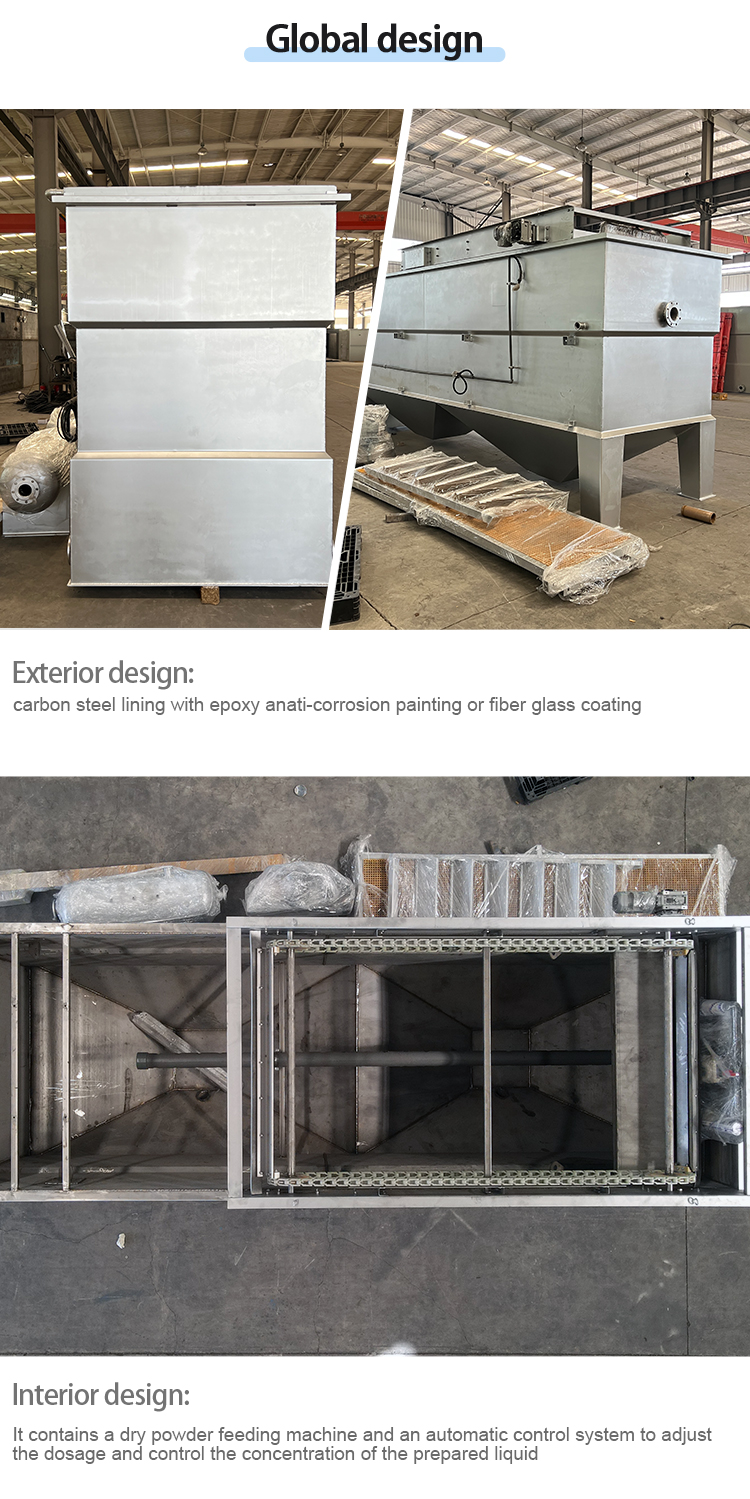
All major treatment sections are integrated into a compact equipment layout. The product page states that this design can save up to 40% of installation space compared with a traditional DAF arrangement. Chemical reaction sections, flotation cells, sludge collection equipment, and the control panel are consolidated into one machine rather than being installed as multiple separate process units.
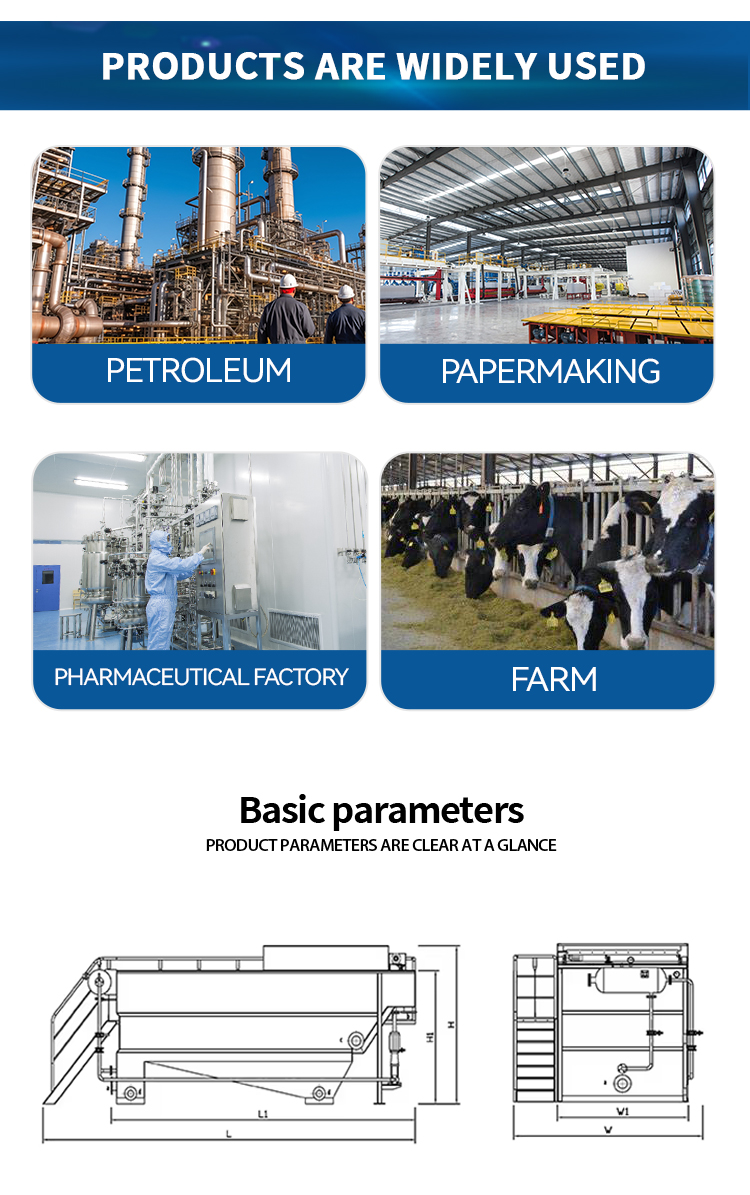
The YMRF series covers treatment capacities from 1 to 100 m³/h, providing multiple equipment sizes for different wastewater flows. Applications include food processing, meat and poultry plants, dairy production, restaurants and commercial kitchens, automotive and metalworking facilities, and municipal wastewater pretreatment.
Product Parameters
Model |
Disposal |
Equipment size(m) |
dissolved air vessel |
With motor |
Equipment total |
||
capacity |
(mm) |
||||||
Length |
Width |
Height |
(Kw) |
(Kg) |
|||
YMRF-1 |
1 |
1 |
0.8 |
1 |
Φ200x h800 |
1.5 |
300 |
YMRF-3 |
3 |
1.7 |
1.2 |
2 |
Φ300xh1000 |
2.2 |
800 |
YMRF-5 |
5 |
2.5 |
1.5 |
2 |
Φ300xh1500 |
2.2 |
1200 |
YMRF-10 |
10 |
4.6 |
1.7 |
2 |
Φ400xh3000 |
4 |
2000 |
YMRF-20 |
20 |
6 |
2 |
2 |
Φ400xh3000 |
4 |
3200 |
YMRF-30 |
30 |
7.2 |
2 |
2.1 |
Φ500x h3000 |
5.5 |
4500 |
YMRF-40 |
40 |
8.3 |
2.8 |
2.2 |
Φ500 xh3000 |
5.5 |
6000 |
YMRF-50 |
50 |
9.3 |
3.2 |
2.2 |
Φ600xh3000 |
7.5 |
7100 |
YMRF-60 |
60 |
10.3 |
3.2 |
2.2 |
Φ600xh3000 |
7.5 |
8500 |
YMRF-80 |
80 |
11.2 |
3.5 |
2.5 |
Φ800xh3000 |
11 |
9000 |
YMRF-100 |
100 |
12.5 |
3.9 |
2.5 |
Φ800xh3000 |
15 |
11000 |
Features & Advantages |
The treatment process begins with chemical pretreatment before wastewater enters the main flotation section.
Chemical conditioning helps destabilize fine particles and dispersed contaminants so that they can form larger flocs. This is especially important when the wastewater contains small suspended solids or oil particles that would otherwise remain dispersed in the liquid.
After chemical pretreatment, wastewater enters the dissolved air flotation zone. The system generates large quantities of micrometer-sized bubbles that interact with suspended solids and oil particles.
These fine bubbles provide the buoyancy required to lift contaminants toward the water surface instead of depending only on downward gravity settling.
This combination of chemical conditioning and flotation gives the machine a different separation mechanism from conventional sedimentation equipment.
Microbubble generation is the core of the DAF separation process.
Millions of small bubbles are introduced into the wastewater. Because the bubbles have a very small size, they can create extensive contact with fine suspended particles and oil droplets.
When the bubbles attach to these contaminants, the overall density of the bubble-solid or bubble-oil aggregate decreases. The material therefore rises toward the surface of the flotation tank.
This upward separation process is especially effective for contaminants that do not settle easily, including light suspended solids, emulsified or dispersed grease, and fine process residues.
Once floated material reaches the surface, it can be removed from the clarified water through the surface skimming system.
Grease removal is one of the main functions of this DAF machine.
The product is designed to separate fats, oils, and grease from wastewater streams where these contaminants are present in significant quantities.
The specialized surface skimming system removes the floated grease layer after microbubbles have carried it to the surface.
According to the product page, grease removal efficiency can exceed 95% under the stated treatment configuration.
This characteristic makes the equipment particularly relevant for wastewater produced by food preparation, meat processing, dairy production, restaurants, commercial kitchens, and similar operations where fats and oils can create problems for downstream biological treatment or sewer discharge.
The machine is not limited to grease removal.
It also provides clarification by separating suspended solids and treatment-generated flocs from wastewater.
The product uses optimized hydraulic retention together with fine-bubble flotation to improve turbidity removal and water clarification.
This allows the DAF machine to function as a pretreatment or intermediate separation stage before biological treatment, filtration, discharge, or other downstream wastewater processes.
The actual position of the DAF system depends on the composition of the influent and the complete wastewater treatment process.
Space efficiency is one of the strongest characteristics of this model.
Instead of separating chemical reaction, flotation, sludge collection, and control equipment into individual process units, the machine integrates these functions into one compact arrangement.
According to the product page, the design can reduce required installation space by up to 40% compared with a traditional DAF system.
This is particularly useful for factories and commercial facilities where wastewater treatment equipment must be installed inside an existing production site with limited available floor area.
The compact configuration also simplifies the physical relationship between different process stages because the major treatment sections are already integrated into the same system.
Contaminants separated by flotation accumulate at the surface rather than settling only at the bottom of the tank.
The machine therefore includes a dedicated surface skimming and sludge collection arrangement.
As floated solids and grease accumulate, the skimming system removes this material from the water surface and transfers it toward the sludge collection section.
Proper sludge removal is important for maintaining effective flotation and preventing excessive accumulation of separated contaminants inside the system.
Collected sludge can then proceed to the site's sludge handling or dewatering process according to the overall wastewater treatment configuration.
The product includes an intelligent control system that continuously monitors and adjusts treatment parameters.
Automation helps coordinate the operation of the flotation system without requiring constant manual process adjustment.
For industrial facilities where wastewater treatment is a supporting function rather than the main production activity, this can simplify daily plant management.
Operators still need to inspect the equipment, chemical system, skimmer, sludge collection area, and other process components, but automatic control reduces dependence on continuous manual regulation.
The product page describes the machine as having a simplified design with relatively few moving parts.
Reducing mechanical complexity can make routine inspection and maintenance more straightforward.
The main operating attention should focus on maintaining suitable chemical conditioning, checking the flotation process, observing the surface skimmer, removing collected sludge, and maintaining the dissolved air system.
Regular cleaning and inspection also help prevent grease or solids accumulation from interfering with the flotation and skimming sections.
The DAF machine is available in a broad YMRF model series ranging from 1 to 100 m³/h.
Available capacities include:
YMRF-1: 1 m³/h
YMRF-3: 3 m³/h
YMRF-5: 5 m³/h
YMRF-10: 10 m³/h
YMRF-20: 20 m³/h
YMRF-30: 30 m³/h
YMRF-40: 40 m³/h
YMRF-50: 50 m³/h
YMRF-60: 60 m³/h
YMRF-80: 80 m³/h
YMRF-100: 100 m³/h
Motor power increases with equipment size, from 1.5 kW for YMRF-1 to 15 kW for YMRF-100. The published equipment dimensions and dissolved air vessel sizes also increase progressively according to treatment capacity.
This broad model range allows the equipment to serve both relatively small commercial wastewater systems and substantially larger industrial treatment flows.
Applications |
Food processing is one of the primary applications of this compact DAF machine.
Wastewater from food production can contain suspended organic matter, fats, oils, grease, and other production residues.
These contaminants may create a significant load on downstream treatment equipment if they are not removed during pretreatment.
The DAF process combines chemical conditioning and flotation to separate suspended material and grease before wastewater proceeds to biological treatment or another process stage.
Its compact design is also relevant for food factories where production equipment occupies most of the available building area and wastewater treatment space is limited.
Meat and poultry processing plants can generate wastewater containing fats, proteins, fine organic solids, and suspended material.
Many of these contaminants are relatively light and may not settle efficiently in a conventional sedimentation tank.
Dissolved air flotation provides an alternative separation mechanism by attaching fine bubbles to the contaminants and moving them toward the surface.
The surface skimming system then removes the floated material from the treatment tank.
By reducing fats, grease, and suspended solids before biological treatment, DAF can provide an important pretreatment step in meat and poultry wastewater systems.
Dairy and cheese production facilities are another application identified for this machine.
Wastewater from these facilities can contain milk residues, fats, suspended organic solids, and production-related contaminants.
Chemical pretreatment can gather fine suspended material into separable flocs, while dissolved air flotation moves these solids and grease toward the surface.
The combination of clarification and grease separation makes the equipment suitable as an upstream treatment stage before biological wastewater treatment.
Restaurant and commercial kitchen wastewater frequently contains concentrated fats, oils, grease, and food-related suspended solids.
When these contaminants enter downstream treatment systems or sewer networks without adequate pretreatment, they can increase the solids and grease load.
The Compact Grease Removal Dissolved Air Flotation Machine can provide a centralized treatment step for commercial kitchen wastewater.
Microbubble flotation lifts grease and fine suspended contaminants to the water surface, where the skimming system removes them for subsequent sludge handling.
For commercial sites with limited utility space, the compact integrated configuration is particularly relevant because the chemical reaction, flotation, collection, and control functions occupy a comparatively concentrated area.
Automotive service and production facilities can generate wastewater containing oils and suspended solids.
Gravity settling may remove heavier material, but lighter oil droplets can remain dispersed within the wastewater.
The DAF process provides an upward separation mechanism for these contaminants.
After suitable chemical conditioning, fine bubbles attach to oil and suspended material, allowing them to rise to the surface for removal.
This provides a pretreatment option before additional wastewater processing or discharge according to the site's treatment requirements.
Metalworking wastewater can contain suspended particles, oils, and other process residues.
The machine can be incorporated into the pretreatment system to clarify wastewater and remove floating or dispersed contaminants before downstream treatment.
Where chemical precipitation or coagulation is used, the DAF stage can separate the resulting flocs after they have formed.
This combination of chemical treatment and flotation is useful where contaminants cannot be removed effectively by simple gravity settling alone.
Municipal wastewater pretreatment is also listed as an application for this DAF system.
The equipment can provide a compact separation stage where suspended solids, grease, and other floatable materials need to be removed before subsequent municipal treatment.
Because the machine combines multiple treatment functions into one compact unit, it is particularly suitable where available space restricts installation of a larger conventional pretreatment system.
The YMRF capacity range also provides multiple options for matching the equipment to different municipal or decentralized wastewater flows.
FAQ |
The machine is designed to separate suspended solids, fats, oils, grease, and treatment-generated flocs from wastewater using chemical pretreatment and fine-bubble flotation.
Wastewater is first chemically conditioned to help fine contaminants form separable flocs. Micrometer-sized bubbles then attach to suspended solids and oil particles, causing them to rise toward the surface, where they are removed by the skimming system.
Some contaminants, particularly grease, oils, and low-density suspended solids, do not settle efficiently under gravity. Dissolved air flotation moves these materials upward using fine bubbles so they can be removed from the water surface.
The product page states that the specialized surface skimming system can achieve grease removal efficiencies exceeding 95%.
According to the product information, the integrated configuration can save up to 40% of space compared with a traditional DAF system.
The product integrates chemical reaction sections, flotation cells, sludge collection systems, and the control panel into a compact treatment unit.
Yes. The product includes an intelligent control system that monitors and adjusts treatment parameters during operation.
The YMRF series covers treatment capacities from 1 to 100 m³/h, with eleven listed models for different wastewater flow requirements.
The YMRF-1 has a listed treatment capacity of 1 m³/h, 1.5 kW motor power, and total equipment weight of 300 kg.
The YMRF-100 has a listed treatment capacity of 100 m³/h, 15 kW motor power, and total equipment weight of 11,000 kg.
Yes. Food processing and packaging wastewater is specifically identified as one of the main applications.
Yes. Meat and poultry processing is listed as an application because the DAF process is suited to removing fats, grease, and suspended organic solids.
Yes. Dairy and cheese production facilities are among the applications identified for the equipment.
Yes. Restaurant and commercial kitchen wastewater is specifically listed, particularly where fats, oils, grease, and suspended food solids require pretreatment.
Yes. Automotive and metalworking facilities are identified as suitable applications for clarification and oil or suspended-solids separation.
Yes. Municipal wastewater pretreatment is listed as one of the intended applications.
Routine maintenance mainly involves checking chemical conditioning, observing the flotation process, maintaining the surface skimmer and dissolved air system, and regularly removing collected sludge.
No. Compact installation is one of the main design objectives. The major process components are integrated into a single unit to reduce the space required for DAF treatment.
Product Showcase |